
Ringless Honey Fungus
Clitocybe tabescens
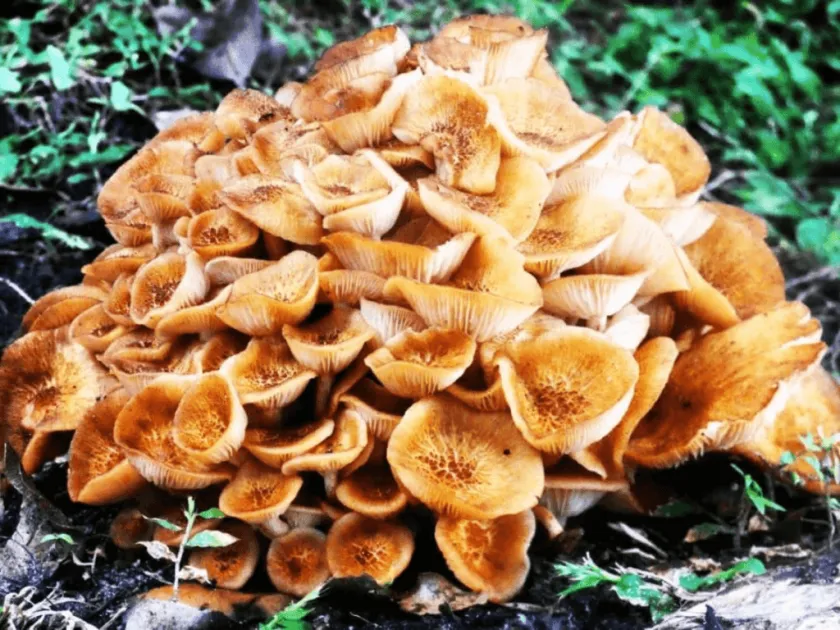
Description
How to identify
The Ringless Honey Fungus (Clitocybe tabescens, synonymous with Armillaria tabescens) is a wood-decaying fungus that acts as a significant phytopathogen. It is known for its ability to cause white rot in the root systems of various woody plants.
The most distinctive morphological feature of this fungus is the absence of a ring (annulus) on the stem of the fruit body. This differentiates it from other honey fungus species that often have a noticeable ring below the gills.
The fungus propagates through the production of rhizomorphs—dark, shoestring-like strands that grow through the soil. These structures allow the pathogen to spread from an infected tree to healthy neighbors via root contact.
It exists as both a parasite on living trees and a saprotroph on dead wood. This dual lifestyle ensures its long-term survival in the soil, making it a persistent problem in orchards and forest environments.
The development of the fungus is highly dependent on humidity and soil temperature. It thrives in moist soil conditions, which facilitate the rapid growth of mycelium and the production of sporocarps.
What it damages
The Ringless Honey Fungus is a serious threat to a wide range of fruit-bearing trees, including apple, pear, peach, plum, and apricot trees. It attacks the roots and the base of the stem, causing severe tissue degradation.
The fungus disrupts the vascular system of the tree, preventing the upward transport of water and nutrients. This inevitably leads to wilting, reduced vigor, and eventually the death of the tree.
In newly established orchards, the presence of old root debris in the soil is a major risk factor. Seedlings planted in such areas often contract the infection shortly after being placed in the ground.
Besides fruit trees, the pathogen commonly affects various hardwoods, such as oaks and maples, causing significant ecological damage in forested areas and parks.
The economic impact of this disease is substantial, as it necessitates the removal of entire trees and often renders the affected area unsuitable for replanting for several years.
Signs of infestation
Early symptoms of infection include chlorosis (yellowing of leaves), stunted shoot growth, and premature leaf drop. The canopy becomes sparse, and the tree may show signs of moisture stress despite adequate irrigation.
Beneath the bark of the root collar, one can observe white, fan-shaped mycelial mats. These mats are a hallmark sign of the pathogen's activity and are often accompanied by a distinct mushroom-like odor.
During late summer and autumn, clusters of fruit bodies appear at the base of the infected trunk or on the roots. Their presence confirms a advanced stage of infection and significant internal decay.
When examining the root system, dark, cord-like rhizomorphs can be found clinging to the root bark. These structures actively penetrate the bark to colonize the wood tissues beneath.
In late stages, the bark often cracks and sloughs off, exposing the decayed wood underneath, which may crumble into a soft, fibrous, white or yellow mass.
Control measures
The primary control strategy involves rigorous site preparation before planting. This includes the complete removal of stumps and all substantial root fragments from the soil to eliminate food sources for the fungus.
Proper orchard management is essential. Avoiding excessive soil moisture and maintaining optimal tree vigor can help plants withstand minor infections and resist pathogen attacks.
If an infection is detected, quarantine measures should be implemented immediately. Digging trenches around the infected site can help break the path of rhizomorph expansion in the soil.
- Perform regular inspections of tree bases for fungal growth.
- Ensure adequate soil drainage to prevent stagnant moisture.
- Remove and burn infected trees along with the entire root ball.
- Avoid using wood chips from infected areas as mulch in the garden.
When replanting in areas with a history of honey fungus, consider selecting resistant rootstocks and implementing soil fumigation if recommended by local agricultural extension experts.
Causes diseases · 1
Discussion
No discussions yet — be the first.