
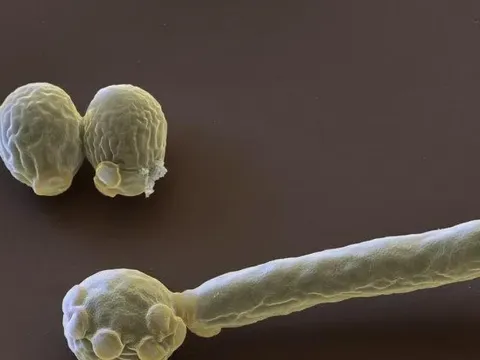
Candida
Candida
The genus Candida belongs to the kingdom Fungi and represents a group of yeast-like organisms that can act as opportunist plant pathogens. While well-known in medical microbiology, these fungi are increasingly recognized for their role in postharvest decay and the spoilage of fruit crops.
What the section contains
Candida
Biologically, Candida species are characterized by unicellular yeast cells that reproduce via budding and the potential formation of pseudohyphae. In agricultural environments, they act as rapid colonizers of plant tissues that have been weakened by primary pathogens or physical injury.
The life cycle of these fungi is driven by moisture and the availability of simple sugars, which are abundant in ripening fruits. They propagate efficiently, spreading through airborne droplets, insect vectors, and contaminated tools during the harvest process.
Environmental factors such as high relative humidity (above 80%) and temperatures between +20°C and +30°C provide an ideal environment for rapid development. Under such conditions, Candida can outcompete other microorganisms and quickly dominate the surface of plant tissues.
These fungi are resilient and can survive in soil, plant debris, and on the surfaces of crates or greenhouse structures, acting as a constant inoculum reservoir that persists from one growing season to the next if proper sanitation is not maintained.
Candida affects a wide variety of agricultural crops, with berries, grapes, stone fruits, and tomatoes being particularly susceptible. The primary economic impact occurs during the fruit ripening phase and throughout the supply chain in postharvest storage.
The damage caused by Candida is characterized by active fermentation of fruit tissues, which turns firm pulp into a soft, watery, and mushy mass. This decay process is often accompanied by an unpleasant alcoholic or sour odor, rendering the fruit commercially valueless.
In greenhouse settings, Candida can colonize leaves and stems under conditions of poor ventilation or excess humidity. This can lead to necrotic lesions that compromise the structural integrity of the plant and reduce photosynthetic capacity.
A significant aspect of its harmfulness is the rapid spread of infection within containers of stored produce. A single infected fruit can serve as a source of cross-contamination, leading to the rapid decay of an entire batch during transportation and storage.
Beyond direct losses, the presence of Candida can facilitate secondary infections by other, more aggressive pathogens by further weakening the plant's natural defenses and creating an entry point for further colonization.
The hallmark of a Candida infection is the appearance of a creamy-white, shiny, or powdery film on the surface of the fruit or plant tissue. This yeast-like growth is distinct from the filamentous mycelium of many other mold species.
Visual evidence includes the rapid appearance of sunken, water-soaked lesions that expand quickly across the surface. The internal tissue underneath these lesions often liquefies, losing its texture and structural firmness within a matter of days.
When examined under a microscope, infected samples show an abundance of budding yeast cells and short, budding pseudohyphae. This differentiates the infection from bacterial soft rots, which usually present with a more advanced state of tissue dissolution and stronger odors.
In high-humidity environments, a characteristic bubbling or effervescence may occur on the surface of the damaged tissue due to the release of carbon dioxide during the fermentation of plant sugars by the yeast.
Laboratory diagnostics typically involve culturing the pathogen on specialized agar media, where Candida forms smooth, convex, cream-colored colonies that emit a distinct, characteristic yeast scent, confirming the identification of the organism.
The primary strategy for controlling Candida is the maintenance of optimal environmental conditions. In greenhouses, this includes prioritizing airflow, avoiding overhead irrigation that leaves water on foliage, and controlling humidity to keep surfaces dry.
Harvesting practices are critical in preventing infection; it is essential to minimize bruising and mechanical injuries to fruit skins during picking and packing. Only healthy, intact fruit should be stored, as even minor cracks can lead to rapid colonization.
Chemical control may involve the use of broad-spectrum fungicides, particularly during the pre-harvest period. However, careful application and adherence to pre-harvest intervals are necessary to ensure the safety of the produce for consumers.
Sanitation is paramount in storage facilities. Regularly disinfecting crates, floors, and storage equipment with approved fungicides or sanitizers effectively disrupts the fungal life cycle and reduces the risk of future outbreaks.
Integrated Pest Management (IPM) is highly effective, as it focuses on reducing the insect populations that create physical entry points for the yeast. Furthermore, biocontrol agents such as antagonist bacteria are increasingly used to protect fruits postharvest.