
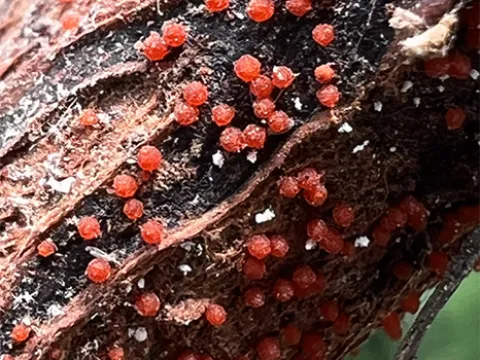
Calonectria ilicicola
Calonectria ilicicola
Calonectria ilicicola is an ascomycete fungus within the family Nectriaceae, functioning as a destructive soil-borne plant pathogen. Its asexual stage is recognized under the name Cylindrocladium ilicicola.
What the section contains
Calonectria ilicicola
The fungus is characterized by the production of microscopic, hyaline conidiophores with distinct, vesicle-tipped apexes, which are diagnostic features used in laboratory identification.
The pathogen produces perithecia—small, reddish-brown fruiting bodies—on decaying organic matter, releasing ascospores that facilitate the long-distance spread of the disease.
It forms robust chlamydospores that survive in the soil for extended periods, making it highly resilient to harsh environmental conditions and crop rotation breaks.
Given its status as a potential quarantine pest in various regions, accurate diagnostic procedures, including PCR analysis and microscopic examination, are essential for detection.
The pathogen is notorious for causing red crown rot in soybeans, a devastating condition that can result in significant yield losses across infested fields.
Besides soybeans, Calonectria ilicicola poses a major threat to a wide range of hosts, including peanuts, eucalyptus, azaleas, and various nursery-grown holly and floral species.
By attacking the roots and lower stems, the fungus obstructs the plant's vascular system, leading to rapid nutrient and water deficiency and subsequent plant death.
In ornamental nurseries, the pathogen causes widespread seedling damping-off, forcing producers to discard vast quantities of infected nursery stock.
The impact of the disease is exacerbated under favorable environmental conditions, which can lead to nearly total crop failure in susceptible fields.
Symptoms typically begin with the darkening and rotting of the taproot and lateral roots, which eventually manifest as deep reddish-brown or brick-red lesions.
A white, fuzzy fungal growth (conidial sporulation) can often be observed on the crown of the plant during periods of high humidity or excessive soil moisture.
Foliage symptoms include interveinal chlorosis, which progresses to necrosis, drying, and premature wilting as the root system fails to sustain the plant.
For ornamental crops, leaf spotting and shoot dieback are common, often leading to the sudden collapse of young and tender plant parts.
When uprooted, infected plants show significantly reduced root mass compared to healthy plants, with necrotic tissues that break off easily during handling.
Integrated pest management (IPM) is crucial, starting with the use of disease-free, high-quality seeds to prevent the introduction of the pathogen into clean soil.
Long-term crop rotation with non-host plants is essential to starve the pathogen and reduce the population of chlamydospores within the soil structure.
Water management is a key control strategy; improving soil drainage reduces the moisture levels necessary for the fungus to germinate and infect host tissues.
Chemical control involving seed treatments with systemic fungicides can protect young seedlings, although effectiveness against established soil populations is limited.
Sanitation practices, such as removing infected crop residue and disinfecting nursery equipment, are vital to preventing the secondary spread of the disease within agricultural facilities.