
Armillaria ostoyae
Armillaria ostoyae
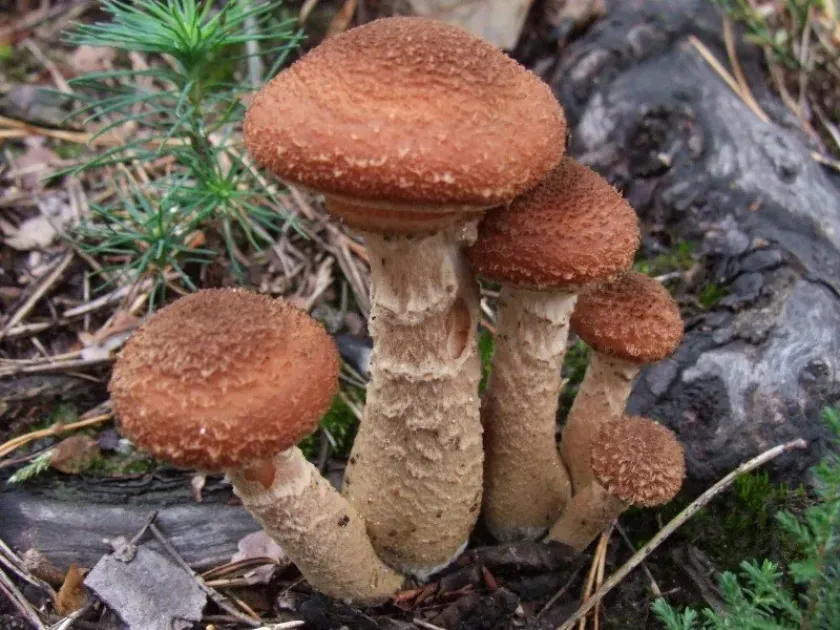
Description
How to identify
Armillaria ostoyae is a pathogenic basidiomycete fungus in the Armillaria genus, commonly known as the dark honey fungus or pathogenic honey fungus.
The fungus is distinguished by its ability to produce extensive rhizomorphs—black, cord-like structures that function like roots and allow the fungus to spread underground between trees.
It occupies an important place in forest pathology due to its aggressive parasitic nature, capable of killing both healthy and stressed forest tree species.
Identification often relies on observing the fungal mycelium under the bark and the presence of characteristic clusters of mushrooms on decaying wood during the autumn season.
Unlike many other fungi, Armillaria ostoyae is highly persistent, capable of surviving for decades within woody debris and root systems in the soil.
What it damages
This pathogen primarily targets conifers, such as spruce, pine, and fir, but it is also a significant threat to deciduous trees and various fruit-bearing orchard crops.
The fungus causes white root rot, leading to the decay of the cambium layer, which effectively girdles the tree and prevents the transport of water and nutrients.
In orchards and plantations, it causes significant economic losses by killing trees in patches, often referred to as disease centers or infection pockets.
Beyond wood decay, the infection weakens the root structure, making trees highly susceptible to toppling over during wind events, known as windthrow.
The fungus spreads primarily through root-to-root contact, meaning that infection can easily move through an entire stand if not managed appropriately.
When it appears
The mycelium grows throughout the year, but the most aggressive spread of rhizomorphs occurs during the warm, moist periods of the growing season.
Spore production peaks in late summer and autumn, when mushrooms appear on the base of infected trees or stumps, facilitating the potential for new, localized infections.
Winter conditions slow down the growth rate, yet the fungus remains active in the deeper root tissues, continuing to break down wood cellulose and lignin.
Moisture is a critical factor for the pathogen; heavy rains promote the rapid elongation of rhizomorphs, increasing the risk of spread to neighboring root systems.
The cycle of infection is continuous; once a tree is colonized, the fungus remains a threat to all nearby susceptible hosts until the wood is completely decayed.
Signs of infestation
Visible symptoms often include a gradual thinning of the crown, yellowing of foliage, and reduced annual growth, which are signs of compromised water uptake.
Peeling back the bark at the root collar usually reveals thick, white, fan-shaped sheets of mycelium that emit a distinct mushroom scent.
The presence of dark, branched rhizomorphs clinging to the root bark is a definitive field identifier for Armillaria infection.
In advanced stages, dense clusters of golden-brown to dark brown mushrooms appear at the base of the tree, confirming the diagnosis of a severe infestation.
- Crown yellowing and dieback
- White mycelial fans beneath bark
- Black shoe-string rhizomorphs
- Mushroom clusters at base
Control measures
Management focuses on sanitation, including the removal of infected trees and their root systems to reduce the fungal inoculum in the soil.
Stump removal is essential, as remaining wood fragments serve as primary food sources and reservoirs for the fungus to persist in the environment.
Biological control using beneficial fungi, such as Trichoderma species, has shown promise in suppressing Armillaria activity in nursery and garden settings.
Maintaining optimal tree vigor through proper fertilization, irrigation, and pest management helps trees resist initial colonization by the pathogen.
Creating physical barriers or trenches around infected zones can prevent the further spread of rhizomorphs to healthy, adjacent trees in the landscape.
Discussion
No discussions yet — be the first.