
Zucchini yellow mosaic virus
Squash leaf
Description
How to identify
Zucchini yellow mosaic virus (ZYMV) is a significant plant pathogen belonging to the genus Potyvirus within the Potyviridae family. The virus consists of flexuous, filamentous particles containing a single-stranded RNA genome.
It is globally distributed and ranks among the most damaging viruses affecting cucurbitaceous plants. The virus is highly adaptable, exhibiting numerous strains that vary in virulence and host range.
The virus is primarily transmitted in a non-persistent manner by various species of aphids. Acquisition and transmission occur within seconds during the insect's probing behavior on the leaf surface.
Mechanical transmission is also a critical factor, allowing the virus to spread through contaminated tools, equipment, and direct plant-to-plant contact in dense greenhouse or field environments.
Diagnostic confirmation is typically achieved through biological assays, enzyme-linked immunosorbent assay (ELISA) to detect viral proteins, or reverse transcription-polymerase chain reaction (RT-PCR) for RNA detection.
What it damages
ZYMV infects a wide variety of crops in the Cucurbitaceae family, with zucchini, summer squash, pumpkins, melons, and cucumbers being particularly susceptible to severe damage.
The most devastating effects occur when young plants are infected early in the season, leading to significant yield loss, often exceeding 80-90% in heavy infestation areas.
Plants affected by the virus exhibit stunted growth, reduced vegetative mass, and poor root development, ultimately leading to a collapse of the plant's overall health and productivity.
Marketable quality is severely compromised; infected fruits are typically misshapen, bumpy, discolored, and reduced in size, rendering them completely unsuitable for sale.
The cumulative effect of ZYMV includes both direct loss of produce and the increased cost of implementing strict phytosanitary protocols to prevent further spread of the pathogen.
Signs of infestation
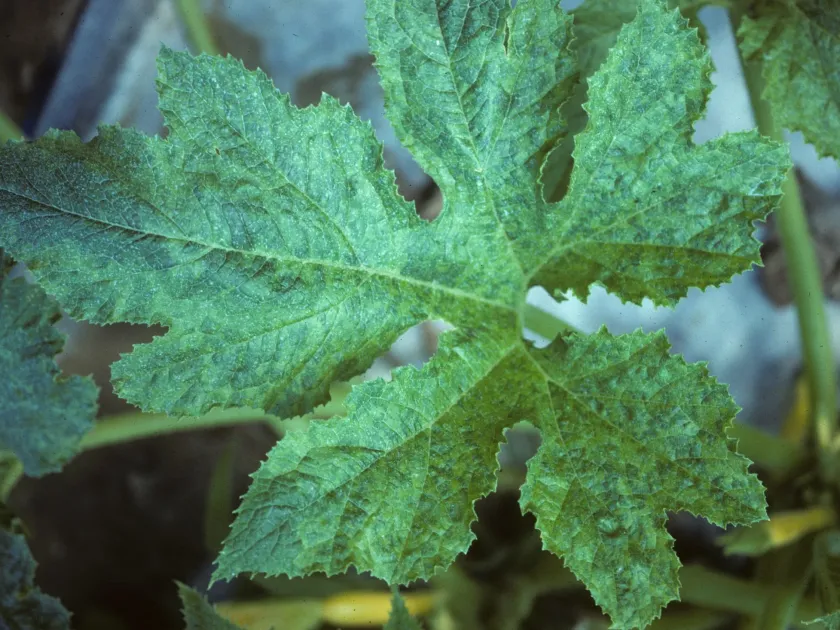
Symptoms initially appear on the youngest leaves as a distinct mosaic pattern, characterized by patches of light green and dark green mottled tissue across the leaf blade.
As the infection progresses, leaves undergo severe distortion, including bubbling, rolling of margins, and, in advanced stages, a thread-like or shoestring appearance.
Systemic symptoms include shortened internodes, resulting in a bushy or stunted, rosetted growth habit that distinguishes infected plants from healthy, vigorously growing ones.
Flowering is often negatively impacted; flowers may be deformed or fail to set fruit, and fruit development is frequently aborted or results in extremely low-quality produce.
Fruit symptoms are highly characteristic, showing deep, wart-like protrusions, uneven color variations (yellowing), and significant physical deformation that makes them look knobby and small.
Control measures
Since there are no curative chemical treatments for viral diseases, management focuses exclusively on prevention, hygiene, and integrated pest management (IPM) practices.
Maintaining spatial isolation from existing cucurbit crops is essential to minimize the risk of virus introduction from older, already infected plants or nearby weed reservoirs.
Effective management of aphid populations through the use of systemic or contact insecticides and reflective mulches can significantly reduce the rate of virus transmission.
Good sanitation practices, such as disinfecting tools between plants and prompt removal and destruction of symptomatic plants, help curb the mechanical spread of the virus within a field.
- Planting resistant or tolerant hybrid varieties.
- Managing aphid vectors with insecticides or reflective covers.
- Removing and destroying infected plants early.
- Controlling weeds that act as virus reservoirs.
- Implementing strict hygiene for field equipment.
Causes diseases · 1
Discussion
No discussions yet — be the first.