
Seimatosporium blight
Seimatosporium vaccinii
Description
How to identify
The pathogen responsible for this disease is the mitosporic fungus Seimatosporium vaccinii (syn. Pestalotia vaccinii). It is a specialized fungal parasite that primarily affects plants within the Ericaceae family, specifically cranberries and lingonberries.
The fungus develops by invading plant tissues, where its mycelium spreads intercellularly. As the infection progresses, it disrupts the host's normal physiology, leading to cellular degradation and tissue necrosis.
Reproduction occurs through the formation of acervuli, which are small, cushion-like structures that break through the plant epidermis. These structures release numerous conidia, which are the primary units for the dissemination of the disease.
The biological cycle is heavily dependent on moisture. Rain splash and irrigation systems are the primary vectors for transporting spores from infected plant debris to healthy, susceptible tissues during the growing season.
The pathogen is highly adapted to surviving the winter in dead leaves, stems, or dormant buds. When the environment warms up, the fungus resumes activity, making it a persistent threat in established cultivation fields.
What it damages
Commercial cranberry and lingonberry farms are the most susceptible to Seimatosporium vaccinii. If left unmanaged, the pathogen can quickly colonize large areas of a plantation, leading to significant economic losses.
The fungus causes dieback of shoots and leaves. The loss of vegetative tissue weakens the plant, reducing its ability to accumulate energy reserves for the following season, which directly impacts fruit yield.
Young plantations are especially vulnerable. The destruction of apical buds caused by the fungus inhibits vertical and horizontal growth, leading to stunted plants and an uneven crop stand that is difficult to manage.
Furthermore, the cumulative effect of the disease over several years causes a decline in plant vigor. This makes the bushes more susceptible to secondary stressors, such as frost damage, drought, and other opportunistic pathogens.
The quality of the berries can also be affected indirectly. Plants weakened by blight produce smaller, less viable fruit, which negatively impacts the marketability of the entire harvest for the affected fields.
Signs of infestation
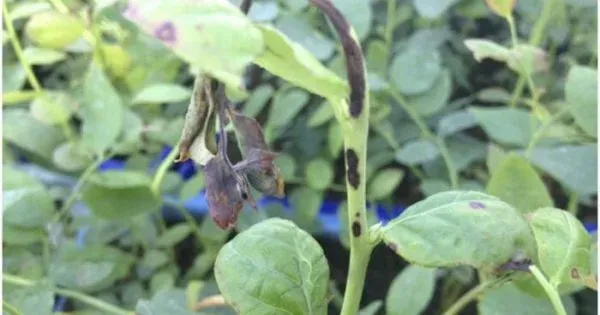
The initial symptoms are characterized by chlorotic spots that transition into necrotic, brown lesions. These spots are often bordered by a dark ring, indicating the zone of fungal activity within the tissue.
Infected stems often show darkening and shriveling, particularly near the tips. As the fungus consumes the stem tissue, the terminal shoots may wilt and bend over, resembling an fire-blight injury.
A hallmark sign of the infection is the presence of tiny, black, pimple-like structures on the surface of necrotic leaves and stems. Under high humidity, these produce a visible, often gray, spore-bearing mass.
Infected leaves undergo significant distortion, curling as the infection progresses. Eventually, these leaves drop prematurely, causing partial or total defoliation of the plant, which hampers the photosynthesis process.
- Brown necrotic spots on foliage.
- Dieback and shriveling of terminal shoots.
- Black fruiting bodies visible on dead tissues.
- Premature defoliation and leaf curling.
Control measures
Cultural practices form the first line of defense. Ensuring proper drainage in the field is vital, as excessive moisture around the base of the plants creates favorable conditions for spore germination and infection.
Sanitation is critical; all infected plant debris must be removed and destroyed at the end of the season. Preventing the accumulation of dead leaves in the field significantly reduces the primary inoculum for the next year.
Chemical control is effective when timed correctly. Preventative fungicide sprays should be applied during the early spring growth flush, focusing on protecting the new, tender shoots from initial colonization.
Maintaining optimal spacing between plants is recommended. Proper ventilation reduces the relative humidity in the canopy, making the environment less favorable for the survival and spread of Seimatosporium vaccinii spores.
Regular field scouting is essential for early detection. If the disease is identified, immediate removal of infected clusters and the application of appropriate fungicides can stop the disease from becoming a widespread epidemic.
Causes diseases · 1
Discussion
No discussions yet — be the first.