
Common rust
Puccinia sorghi
Description
How to identify
The causal agent of this disease is Puccinia sorghi, an obligate biotrophic fungus within the Basidiomycota phylum. It is a highly specialized pathogen that affects maize plants worldwide.
The fungus has a complex life cycle, requiring two hosts to complete its sexual reproduction. While Oxalis species serve as alternate hosts, the asexual cycle on maize is the primary driver of epidemic spread.
The pathogen develops within the host tissues and forms pustules, which eventually rupture the epidermis to release urediniospores into the environment.
Dissemination occurs through wind currents, allowing the rust to spread rapidly across large agricultural areas during the growing season.
Diagnostic identification typically involves visual assessment of characteristic rust-colored pustules, often confirmed by microscopic examination of the spherical, echinulate urediniospores.
What it damages
Maize (Zea mays) is the primary crop host. Infection significantly impairs the plant's ability to produce grain by disrupting metabolic processes.
The pathogen primarily colonizes leaf surfaces, but in severe cases, it can infect leaf sheaths and even the husks of the corn ears.
By damaging the photosynthetic machinery, the fungus limits the transport of carbohydrates to the developing kernels, leading to shriveled or lightweight grain.
Yield losses are variable but can be substantial in sensitive hybrids, particularly when infections occur early in the plant's development stages.
Beyond direct yield reduction, the stress caused by the infection makes plants more susceptible to secondary pathogens and stalk rot diseases.
When it appears
Symptoms typically appear during the mid-to-late vegetative stages, often coinciding with the transition to the reproductive phases of the crop.
Development is favored by cool-to-moderate temperatures, ideally between 16°C and 23°C, combined with high humidity or frequent precipitation.
The presence of free moisture on the foliage is essential for spore germination and successful infection of the maize leaves.
Conversely, hot and dry weather conditions significantly inhibit the spread and development of the disease, effectively slowing down the epidemic process.
At the end of the season, the fungus produces teliospores, which are hardy, dark structures designed to survive winter on crop residue.
Signs of infestation
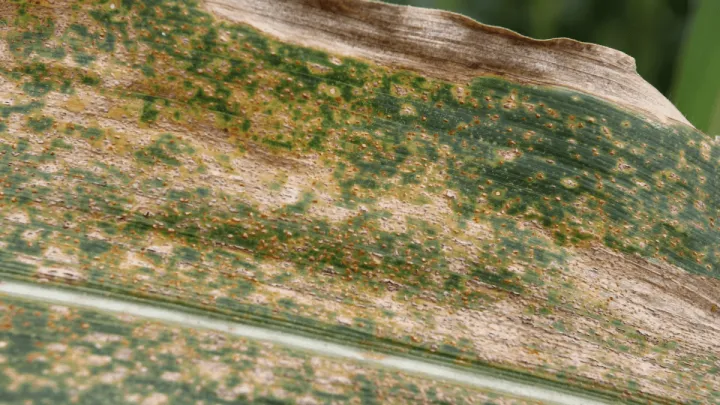
Initial infection appears as tiny, chlorotic spots that soon develop into raised pustules, known as uredinia, on both sides of the leaves.
These pustules are distinctively rust-brown to reddish-brown in color, arranged in a pattern often following the veins of the maize leaf.
When the pustules rupture, they release a dusty mass of spores, which are easily transferred by wind or physical contact with the plants.
As the infection advances, the leaf tissue surrounding the pustules becomes yellow, necrotic, and eventually dies prematurely.
As the season progresses, the rust-colored pustules darken and eventually turn black, indicating the formation of teliospores rather than repeating spores.
Control measures
The most effective management strategy is the use of genetically resistant or tolerant maize hybrids to minimize infection risks.
Cultural practices, such as the burial of infected crop residue via deep plowing, can reduce the initial inoculum load in the field for the following season.
Fungicide applications are recommended when disease thresholds are met, particularly with triazole or strobilurin-based products.
Proper nutrient management, especially avoiding excessive nitrogen application, helps maintain plant vigor and limits excessive succulent growth susceptible to rust.
- Monitor fields closely starting from the V5 growth stage.
- Implement proper crop rotation to break the disease cycle.
- Use labeled fungicides at the first sign of pustule formation.
Causes diseases · 1
Discussion
No discussions yet — be the first.