
White rot of grapevine
Pilidiella diplodiella
Description
How to identify
The causal agent of the disease is the imperfect fungus Pilidiella diplodiella (formerly known as Coniothyrium diplodiella), belonging to the order Sphaeropsidales. It is a specialized phytopathogen affecting grapevine tissues.
The fungus survives in the soil and on plant debris in the form of pycnidia, which are reproductive structures containing spores. Infection is primarily spread through splashing raindrops or by human activity during vineyard operations.
Primary infection typically occurs through mechanical wounds on vine tissues caused by hail, insect activity, or improper pruning. Healthy, intact berries are significantly more resistant to direct fungal penetration.
The lifecycle of the pathogen is highly dependent on environmental moisture. Under optimal conditions, the fungus rapidly colonizes host tissues, forming new pycnidia that serve as secondary inoculum throughout the season.
The fungal mycelium penetrates deep into the plant tissues, destroying cellular structure and inducing necrotic processes, which eventually leads to the death of the infected shoots or grape clusters.
What it damages
The main host for Pilidiella diplodiella is the grapevine (Vitis vinifera). The disease causes substantial damage to the quality and marketability of the harvest, leading to economic losses.
The most immediate impact is on the berries, which lose moisture, become discolored, and eventually shrivel. Severe infections can destroy entire clusters, making them unsuitable for any processing.
Infection of the shoots impairs the vigor of the plant, negatively affecting wood maturation and reducing the vine's cold hardiness during winter months.
Damage caused by hail significantly exacerbates the situation, as the widespread wounding of berries and canes provides perfect entry points for the pathogen to spread across the vineyard.
Economic losses also stem from the deterioration of must quality, as diseased grapes may harbor secondary infections that spoil the flavor and chemical profile of the wine.
When it appears
Disease development can occur throughout the growing season, particularly when periods of high humidity and rainfall follow warm temperatures.
The most critical window for infection is during the second half of the summer, as berries approach maturity and become more vulnerable to mechanical stress and moisture-related decay.
Outbreaks often follow severe storms involving hail, as the mechanical damage provides the necessary pathway for the fungus to establish infection in berry skins and shoots.
Secondary cycles of infection can occur continuously as long as environmental conditions remain favorable, with pycnospores being dispersed by water and wind across the vineyard.
In autumn, as temperatures begin to decline, the fungus slows its activity and settles into the soil or plant debris, where it remains dormant until the next growing season.
Signs of infestation
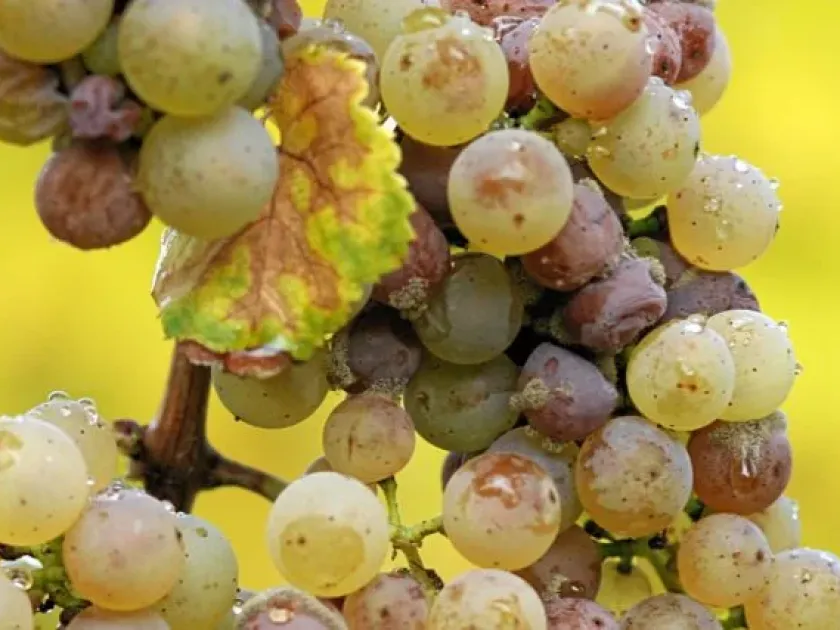
The first symptoms on berries appear as a sudden loss of natural color, turning white or yellowish-grey, followed by rapid shriveling and drying of the fruit.
Numerous tiny black dots, representing the fungal pycnidia, become visible on the surface of the infected berries and rachises, either scattered or in concentric circles.
On green shoots, symptoms appear as yellowish-brown or reddish lesions that eventually darken and may girdle the stem, causing the death of the distal parts.
- Rapid shriveling and dehydration of berries.
- Formation of black pycnidia on the berry skin.
- Development of necrotic lesions on young shoots.
- Desiccation of entire grape clusters due to rachis infection.
Under conditions of high humidity, the pycnidia may extrude spore masses in the form of slimy curls, which serves as a definitive diagnostic feature of the disease.
Control measures
Integrated management begins with strict sanitation, including the removal and destruction of all infected plant residues to reduce the overall inoculum load in the soil.
Cultural practices such as proper pruning, shoot thinning, and canopy management are essential to improve aeration and light penetration, which helps keep the vines dry.
Protecting the vineyard from hail using anti-hail nets is a highly effective preventive measure, as it prevents the mechanical wounds that typically initiate white rot outbreaks.
Chemical control involves the application of copper-based or systemic fungicides, especially after hail events or prolonged wet weather, to prevent the spread of fungal spores.
Maintaining balanced vine nutrition, particularly avoiding excessive nitrogen, helps develop tougher tissues that are more naturally resistant to fungal penetration and colonization.
Discussion
No discussions yet — be the first.