
Phyllactinia corylea
Phyllactinia corylea
Description
How to identify
Phyllactinia corylea belongs to the Kingdom Fungi, Phylum Ascomycota, and Order Erysiphales. It is a specialized, obligate biotrophic pathogen that lives on the surface of plant tissues.
The fungus is distinguished by its cleistothecia, which feature unique appendages with bulbous bases. These microscopic structures are diagnostic features used by mycologists to identify this specific pathogen.
Unlike many other powdery mildews, P. corylea has a very broad host range, infecting various trees and shrubs, including hazel, birch, alder, and ash species across temperate regions.
The pathogen disperses primarily through conidia, which are wind-borne, and sexual ascospores, allowing it to spread rapidly across orchards and forests during the growing season.
Its biological cycle is highly dependent on climate; high humidity promotes spore germination, while the pathogen survives unfavorable periods as cleistothecia in fallen leaf litter.
What it damages
This fungus causes significant damage in forestry and horticulture. It is particularly notorious for infecting hazelnut (Corylus avellana), where it compromises both foliage health and nut yields.
Infection leads to premature leaf senescence and defoliation, which reduces the plant's photosynthetic capacity and weakens its ability to accumulate energy for the subsequent season.
The physiological stress induced by the fungus makes infected trees more susceptible to winter frost damage and secondary pathogen attacks, leading to overall decline.
In nurseries, an outbreak can cause stunted growth in seedlings, rendering them unsuitable for sale and increasing the costs associated with repeated fungicide applications.
Decorative trees and shrubs suffer from poor aesthetic quality, as leaves become distorted, spotted, and potentially necrotic due to the fungal mycelium feeding on the host cells.
Signs of infestation
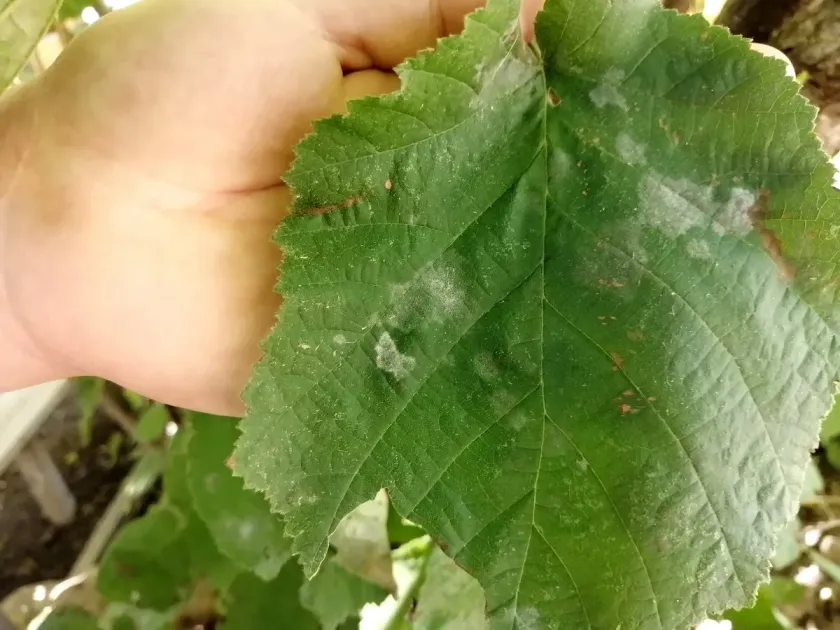
The most characteristic sign is the presence of white to grayish fungal growth, which is often more prominent on the abaxial (underside) of the leaves, making it harder to spot initially.
As the infection progresses, small, dark dots appear on the leaves. These are mature cleistothecia, which represent the sexual stage of the fungus and are visible to the naked eye.
Leaves may exhibit yellowing (chlorosis) or brownish patches, followed by curling and premature shedding, giving the plant a scorched appearance long before autumn.
Young shoots and buds can also be covered in mycelium, which often causes the growth to twist or stop developing entirely, severely impacting the structural integrity of the plant.
In high humidity, the mycelium can spread to petioles and fruits, potentially causing direct damage to the crop and reducing the shelf life of the harvested products.
Control measures
Integrated pest management is essential for controlling P. corylea. Sanitation is the primary defense, as removing and burning fallen leaf litter reduces the overwintering inoculum significantly.
Cultivation practices that improve air circulation within the canopy, such as proper spacing and thinning, are crucial to creating an environment less favorable for fungal development.
Fungicide applications are recommended during the early stages of disease development, with sulfur-based products or systemic triazole-class fungicides being highly effective.
- Strict sanitation by removing infected plant debris.
- Thinning of tree canopies to reduce local humidity levels.
- Use of resistant cultivars or hybrids where available.
- Timely application of fungicides before widespread colonization.
- Monitoring the lower leaf surfaces for early signs of mycelium.
Proactive management is the key to success; once the fungus has matured and produced cleistothecia, the potential for an epidemic in the following year is greatly increased.
Causes diseases · 1
Discussion
No discussions yet — be the first.