
Phomopsis leaf spot
Phomopsis phaseoli
Description
How to identify
The causative agent of the disease is the imperfect fungus Phomopsis phaseoli (synonym Diaporthe phaseolorum), which belongs to the Ascomycota phylum. It is a specialized phytopathogen affecting mainly legumes, causing stem and pod rots.
The fungus produces pycnidia, which are asexual fruiting bodies containing two types of conidia: alpha-conidia (oval, single-celled) and beta-conidia (thread-like, curved). These are responsible for the spread of infection during the growing season.
The sexual stage, consisting of perithecia, develops on crop residues. This allows the pathogen to survive harsh conditions in the soil or on plant debris, ensuring the persistence of the disease from one season to the next.
The mycelium penetrates deep into the plant tissues, disrupting nutrient transport and metabolic processes, which leads to tissue necrosis and the eventual death of the affected parts.
Laboratory identification involves isolating the culture on agar media, where the fungus develops white or grey aerial mycelium with abundant black pycnidia, which are key for microscopic diagnosis.
What it damages
The primary host is common bean, but the pathogen also affects other Phaseolus species, soybeans, and several weed legumes that serve as alternative hosts, maintaining the infection cycle in the environment.
The disease affects stems, leaf petioles, pods, and seeds. Stem infection at the base is particularly dangerous, as it often leads to lodging and the death of young plants.
Infection of the pods results in malformed, shriveled, or discolored seeds. Such seeds often carry the pathogen internally, making them a major source of infection for the next generation of crops.
Stem blight interferes with the plant's vascular system, causing systemic chlorosis, wilting, and premature senescence of the foliage, which significantly reduces the photosynthetic efficiency of the plant.
Economic losses are driven by reduced yields, poor seed quality, and rejection of harvests due to discoloration and high levels of contamination, limiting marketability and future planting potential.
When it appears
Primary infection starts in spring when soil temperatures and moisture levels become favorable. Infected seeds and old plant debris are the main initial sources of inoculum.
The disease progresses most rapidly during periods of high humidity and moderate temperatures (20–25°C). Frequent rainfall promotes the dispersal of conidia by splashing, facilitating secondary spread through the field.
Flowering and pod-filling stages are the most critical periods, as the plant becomes more susceptible to attack, and the pathogen can directly impact reproductive output.
In autumn, as the host plant dies, the fungus shifts to its resting state within crop residues, producing structures that protect it during winter until the next favorable season arrives.
Environmental conditions such as high plant density, which reduces airflow and increases leaf wetness, create the perfect microclimate for rapid disease development and spreading.
Signs of infestation
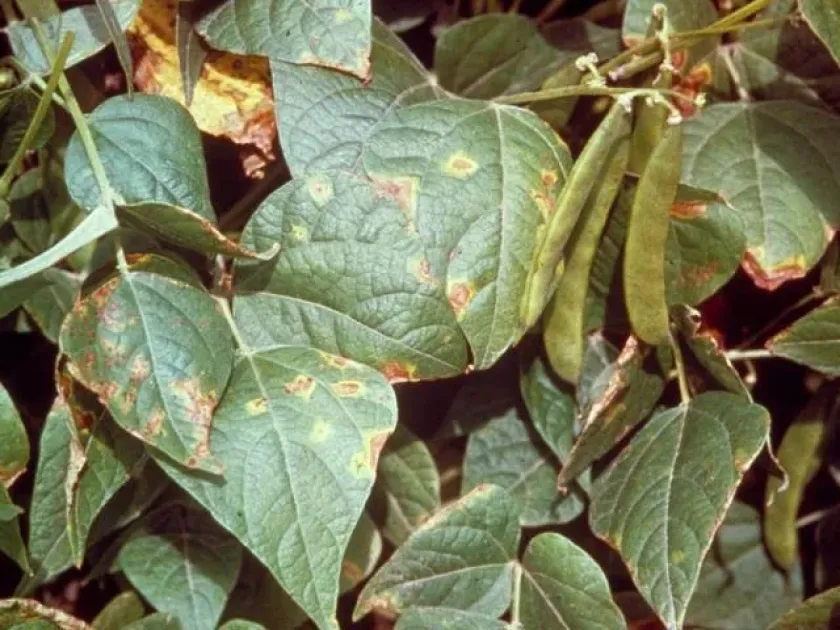
The first symptoms appear as small, dark spots on stems. These lesions expand over time, often encircling the stem and turning brown with a distinct dark border, eventually leading to tissue cracking.
Small, black, pimple-like structures called pycnidia appear scattered across the necrotic lesions. Their presence is a tell-tale sign of the fungus and can be seen with the naked eye or a hand lens.
Foliage on affected plants shows progressive yellowing (chlorosis) and wilting, usually starting from the bottom of the plant and moving upward as the vascular system becomes compromised.
Pods exhibit sunken, discolored lesions that may be covered with a fine grayish mycelial mat under high humidity. Seeds within these pods may also be covered with fungal growth and show poor viability.
- Stem cracking and discoloration.
- Premature leaf drop and wilting.
- Presence of black pycnidia on stems and pods.
- Seed shriveling and poor germination rates.
Control measures
Crop rotation is the most essential management practice. Excluding legumes from the field for at least 3–4 years helps reduce the soil-borne inoculum concentration to non-threatening levels.
Using high-quality, pathogen-free certified seeds is crucial for prevention. Since the fungus can be internally seed-borne, seed treatment is often necessary but not always 100% effective.
Good agricultural practices, such as deep plowing or removing crop residues after harvest, are effective in speeding up the decomposition of infected material and reducing the survival rate of the fungus.
Fungicide applications during the growing season can help suppress the spread of the disease, particularly in wet seasons or on fields with a history of the pathogen, following recommended label rates.
Breeding and utilizing resistant or tolerant bean varieties remain the most sustainable strategy to minimize losses and avoid the heavy reliance on chemical control methods in the long term.
Causes diseases · 2
Discussion
No discussions yet — be the first.