
Potato leaf spot
Mycovellosiella concors
Description
How to identify
Mycovellosiella concors is a fungal pathogen belonging to the Capnodiales order, recognized as the causal agent of specific leaf spotting in potato crops.
It is classified within the group of anamorphic fungi, where the asexual stage is primarily responsible for the rapid dissemination and infection of healthy tissues.
The fungus acts as a specialized parasite, targeting the leaf tissues of Solanaceous plants and utilizing the host's nutrients for its vegetative growth and sporulation.
Its biological cycle is highly dependent on environmental factors, specifically high humidity and moderate temperatures, which are required for the germination of its conidia.
The pathogen is often overlooked in early stages, as the mycelium develops internally before visible necrotic symptoms manifest on the leaf surface.
What it damages
The primary host for Mycovellosiella concors is the potato plant, where the fungus negatively impacts the photosynthetic efficiency of the leaves.
By causing premature senescence of the foliage, the disease reduces the total energy production of the plant, which directly correlates to decreased tuber weight.
Heavy infections can lead to significant defoliation, leaving the plant vulnerable to secondary infections and reducing its overall resilience to environmental stressors.
The reduction in green leaf area during the tuber bulking phase is particularly detrimental, leading to measurable losses in marketable yield.
Farmers often notice significant thinning of the canopy, which not only affects yield but also makes the soil underneath more susceptible to weed growth due to lack of shade.
Signs of infestation
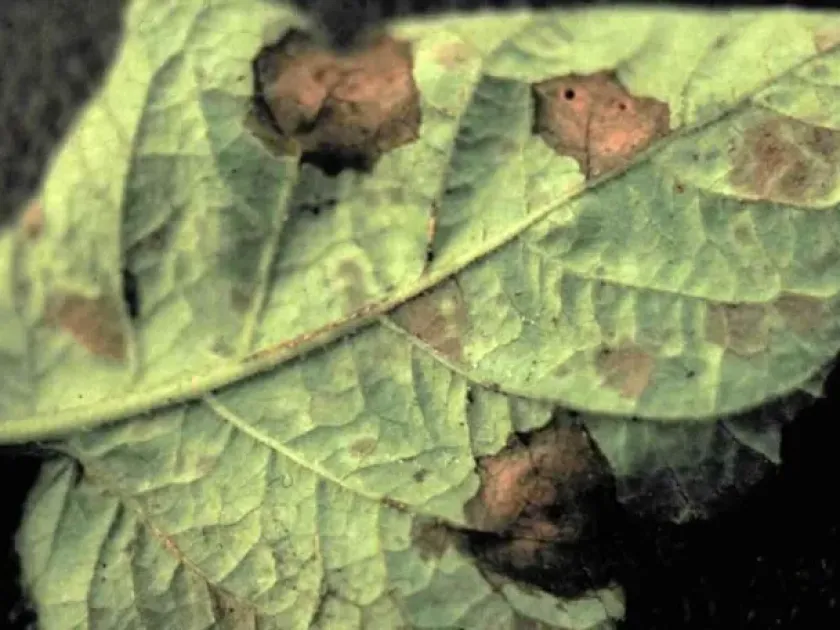
Early symptoms appear as small, chlorotic spots on the leaf surface, which gradually expand into irregular necrotic lesions with brown to gray coloration.
A hallmark of this disease is the presence of a delicate, dusty fungal mat on the underside of the leaves, corresponding to the areas of visible necrosis on the upper side.
As the infection progresses, lesions often coalesce, covering large parts of the foliage and causing the leaves to dry out and die prematurely.
The appearance of the disease usually starts from the lower canopy, where moisture levels are typically higher and air circulation is more restricted.
Visual identification is confirmed by the presence of the characteristic conidiophores protruding through the stomata of the host leaf.
Control measures
Effective management begins with strict crop rotation, ensuring that potatoes are not grown in the same field for multiple consecutive years to break the infection cycle.
Sanitation is critical; all potato debris must be removed or plowed deeply into the soil after harvest to prevent the fungus from surviving the winter.
Fungicide applications, particularly those containing copper or systemic active ingredients, can protect the foliage during high-risk, humid weather periods.
- Utilizing certified disease-free seed tubers for planting.
- Maintaining proper row spacing to ensure good air movement throughout the canopy.
- Implementing balanced fertilization to keep plants vigorous and resistant.
Regular field scouting is essential during the growing season to detect early symptoms and initiate timely protective measures before the disease spreads.
Causes diseases · 1
Discussion
No discussions yet — be the first.