
Mummy berry
Monilinia vaccinii-corymbosi
Description
How to identify
The disease is caused by the fungus Monilinia vaccinii-corymbosi, a member of the Sclerotiniaceae family. It is a highly specialized pathogen affecting Vaccinium species.
The fungus overwinters as sclerotia within mummified berries that have dropped to the ground the previous season.
In early spring, these sclerotia produce small, cup-shaped fruiting bodies called apothecia, which release ascospores that are carried by the wind.
Primary infection targets developing vegetative shoots and buds. This stage is critical because it leads to the systemic spread of the pathogen within the plant.
The pathogen utilizes a two-phase infection cycle, first colonizing shoots and then moving to the flowers and fruit as the season progresses.
What it damages
Mummy berry is one of the most destructive diseases in blueberry production, often resulting in significant yield losses.
Infection leads to the destruction of flowers, meaning that the fruit fails to develop at all, directly impacting harvest volume.
The vegetative form of the disease weakens the blueberry bush by causing dieback of shoots and leaves, reducing the plant's overall vigor.
Infected fruit becomes inedible and worthless for market. The mummified berries serve as a reservoir for the disease in subsequent years.
Severe outbreaks can drastically reduce the commercial viability of a blueberry plantation, often necessitating extensive chemical and cultural intervention.
When it appears
The primary infection window typically begins in early spring when the blueberry bushes start to break dormancy and develop leaf shoots.
Cool, wet weather conditions with frequent rainfall are ideal for the development of apothecia and the subsequent discharge of spores.
The bloom period is the most critical time for fruit infection, as spores land on the stigma of the flowers to initiate the development of mummies.
During the summer, as temperatures rise and conditions become drier, the symptoms of the secondary fruit infection become visible as the berries begin to change color.
As harvest approaches, the berries turn tan and hard, becoming distinct mummies that will eventually fall to the soil, marking the end of the seasonal cycle.
Signs of infestation
Initial symptoms on vegetative parts include a sudden wilting and browning of new shoots, often looking like frost damage.
Leaves on infected stems may show elongated brown lesions along the midribs, which can cause the leaves to curl or distort.
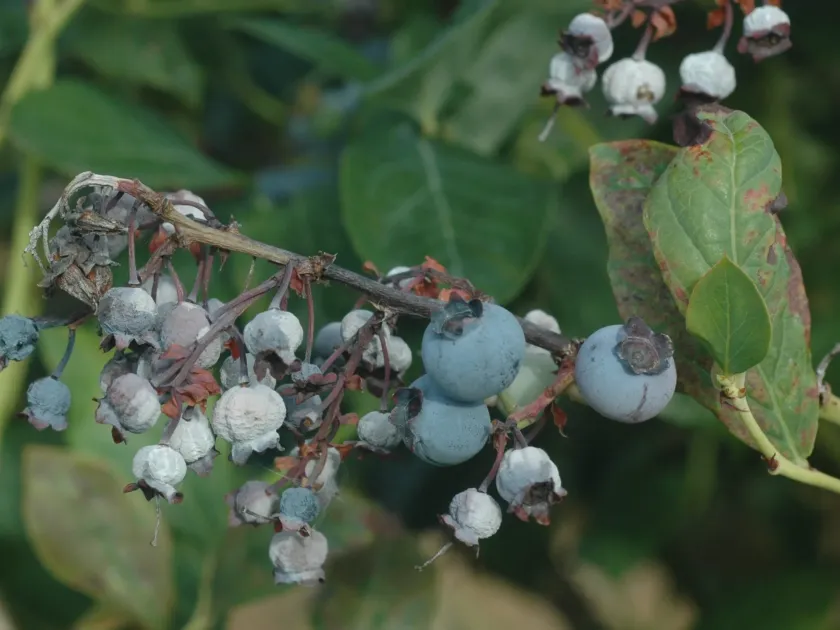
Infected flowers turn brown and wither prematurely. Under humid conditions, a greyish, powdery layer of conidia may be visible on the infected tissue.
Infected berries turn a salmon-pink or tan color, become hard and shriveled, and lose their blue pigment as they reach maturity.
When an infected berry is sliced open, a firm, dark internal mass—the sclerotium—is clearly visible, confirming the presence of the pathogen.
Control measures
Sanitation is a cornerstone of management: raking and destroying mummified berries can significantly reduce the potential inoculum for the following year.
Applying a layer of mulch, such as wood chips or sawdust, around the base of the bushes helps bury the sclerotia, preventing the apothecia from reaching the surface.
Chemical control programs are essential and typically involve applying fungicides during the bud break and bloom stages to protect vulnerable tissues.
- Monitor weather patterns to time fungicide applications before expected rain events.
- Rotate fungicide classes to mitigate the risk of the fungus developing resistance.
- Maintain proper spacing and pruning to improve air circulation and reduce humidity levels.
Cultural practices, including the removal of infected shoots before they produce conidia, play a vital role in preventing the secondary infection phase.
Continuous scouting of the field is recommended to ensure that fungicides are applied at the precise moments when the plant is most susceptible.
Causes diseases · 1
Discussion
No discussions yet — be the first.