
Blueberry mummy berry
Monilia vaccinii-corymbosi
Description
How to identify
The causative agent of this disease is the fungus Monilia vaccinii-corymbosi, which belongs to the kingdom Fungi. This is a highly specialized plant pathogen that exclusively infects the genus Vaccinium, with a major impact on cultivated blueberries.
The lifecycle begins in early spring when apothecia — small cup-shaped structures — emerge from mummified berries left on the soil surface from the previous year. These structures release ascospores that are wind-dispersed to new growth.
Following primary infection, the fungus produces secondary spores known as conidia on the surface of infected shoots and flowers. These conidia are spread via rain splashes and pollinating insects, driving the secondary phase of the disease.
The development of the fungus is strictly dependent on moisture and temperature. Cool, wet spring weather provides the ideal environment for both ascospore discharge and successful infection of susceptible blueberry tissues.
The fungus overwinters as a sclerotium within the mummified fruit on the ground, waiting for the physiological cues of the next spring to re-initiate the infection cycle.
What it damages
Blueberry mummy berry is a significant economic threat to both commercial blueberry farms and small-scale gardens. It affects various cultivars of highbush and lowbush blueberries.
The pathogen attacks both vegetative and reproductive parts of the plant. Damage to shoots restricts structural growth, while damage to flowers and berries directly reduces the final fruit yield.
By infecting flowers, the fungus prevents fruit set. Even if the fruit begins to develop, the fungus colonizes the berry interior, eventually converting the healthy berry into a hardened, inedible, and black mummified structure.
Shoot blight occurs when the fungus infects the succulent new growth of the blueberry bush, causing tips to wilt and die back. This weakens the plant's vigor over several seasons.
In severe cases without control measures, this disease can cause substantial loss of marketable berries, making it one of the most critical diseases to manage in blueberry production.
Signs of infestation
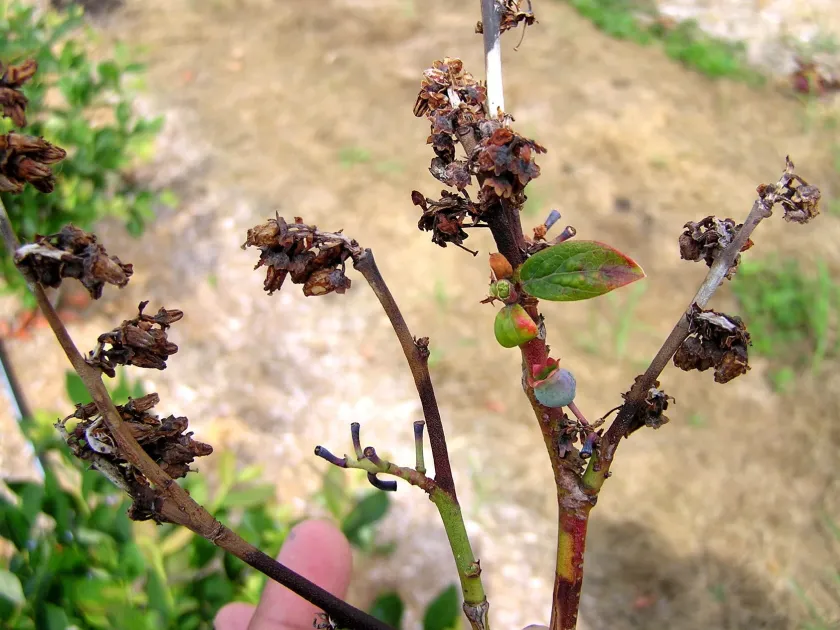
The first signs of infection are observed in early spring when young shoots suddenly wilt, blacken, and curve, resembling the shape of a shepherd's crook.
Under humid conditions, the infected shoots and blossoms become covered with a grayish-tan powder. This layer consists of masses of conidia, which facilitate the rapid spread of the pathogen to neighboring tissues.
Flowers infected by the fungus turn brown and wither, but they do not fall off the plant. These withered, infected blossoms often serve as bridges for the fungus to travel to the developing fruit.
Fruit symptoms are characteristic: berries stop expanding, become hard and tan-to-pink in color, and eventually shrivel into hard, black, wrinkled "mummies" that drop to the ground.
- Sudden wilting and curling of shoot tips (shepherd's crook).
- Grayish fungal spores visible on infected tissues.
- Brown, withered blossoms that remain on the bush.
- Development of hard, shriveled, black mummified berries.
Control measures
Sanitation is the most effective management strategy. Removing and destroying all mummified berries from the orchard floor after harvest prevents the pathogen from over-wintering.
Applying a layer of mulch, such as wood chips or sawdust, at a depth of at least 2 inches over the soil surface can physically trap the apothecia, preventing them from releasing ascospores into the air.
Chemical control involves the application of fungicides during the crucial infection window, starting from bud break and continuing through the flowering stage to protect vulnerable tissues.
Regular pruning of diseased shoots helps reduce the inoculum level within the planting. It is essential to remove these before the secondary conidial stage develops and spreads further.
Integrated pest management, including monitoring weather patterns and scouting for early symptoms, is vital for timely intervention and minimizing the use of synthetic chemical sprays.
Causes diseases · 1
Discussion
No discussions yet — be the first.