
Root-knot nematode
Meloidoglyne
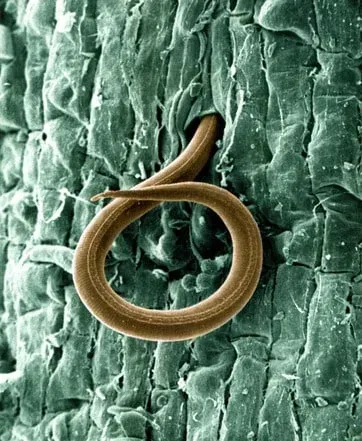
Description
How to identify
The root-knot nematode (Meloidogyne) is a microscopic soil-borne pathogen belonging to the phylum Nematoda, known as one of the most destructive plant pests globally.
Its life cycle consists of an egg stage, four larval stages, and an adult stage; the infective stage is the second-stage larva (L2), which migrates through the soil to find plant roots.
Once the female penetrates the root, she becomes sedentary and induces the formation of giant cells, which provide the nematode with necessary nutrients.
Males are vermiform and motile, while females undergo dramatic physical changes, becoming pear-shaped or spherical to house their eggs within a gelatinous matrix.
The environmental adaptation of these nematodes allows them to remain dormant as eggs in the soil until favorable conditions trigger hatching.
What it damages
These nematodes cause severe damage to a wide range of crops, including tomatoes, cucumbers, peppers, melons, and many ornamental species.
The primary damage is caused by the disruption of the root system's ability to uptake water and nutrients, leading to physiological distress in the host plant.
Plants severely infected with root-knot nematodes show stunted growth, leaf chlorosis, and wilting during periods of high temperature or water demand.
Secondary infections are common, as root galls create openings that allow soil bacteria and fungi to enter, leading to root rot and total plant collapse.
Yield loss can be significant, ranging from moderate reduction to total crop failure, particularly in greenhouse operations with continuous cultivation.
When it appears
The activity of root-knot nematodes is highly temperature-dependent, with optimal reproduction occurring in warm soils between 20°C and 30°C.
In temperate climates, the nematode is most active during the summer months, while in greenhouses, it can reproduce and infect plants year-round.
Infestation typically spreads through the movement of contaminated soil, tools, or infected nursery stock, facilitating the spread across agricultural sites.
The time from infection to the completion of a full life cycle can be as short as 25 days, allowing for multiple generations within a single growing season.
Population density in the soil tends to peak when host plants are actively growing, as root exudates attract larvae to the root zones.
Signs of infestation
The diagnostic symptom of an infestation is the presence of distinctive knots or galls on the root system, ranging from small nodules to large swellings.
Plants may exhibit localized patches of poor growth, pale or yellowed foliage, and a lack of vigor despite adequate fertilization and irrigation.
Root systems often appear distorted, stunted, and less fibrous compared to the healthy root architecture of uninfected counterparts.
Visible wilting during the daytime followed by apparent recovery at night is a classic sign of impaired vascular function caused by heavy nematode infestation.
Confirmation of the presence of Meloidogyne often requires laboratory analysis, such as root staining or extraction from soil samples.
Control measures
Crop rotation using non-host plants or cover crops like marigolds or mustard can effectively suppress nematode populations in the soil.
Soil sterilization, specifically steam pasteurization or solarization, is highly effective in greenhouse environments for eradicating nematode eggs.
Selecting and planting nematode-resistant cultivars is a fundamental strategy for sustainable management and preventing the establishment of the pest.
Biological control agents, such as beneficial fungi or bacteria like Pasteuria penetrans, can be utilized to naturally reduce nematode numbers.
Rigorous sanitation practices, including the removal of all infected root material after harvest, are essential to prevent the spread of the pathogen.
Causes diseases · 1
Discussion
No discussions yet — be the first.