
Mamianiella coryli
Mamianiella coryli
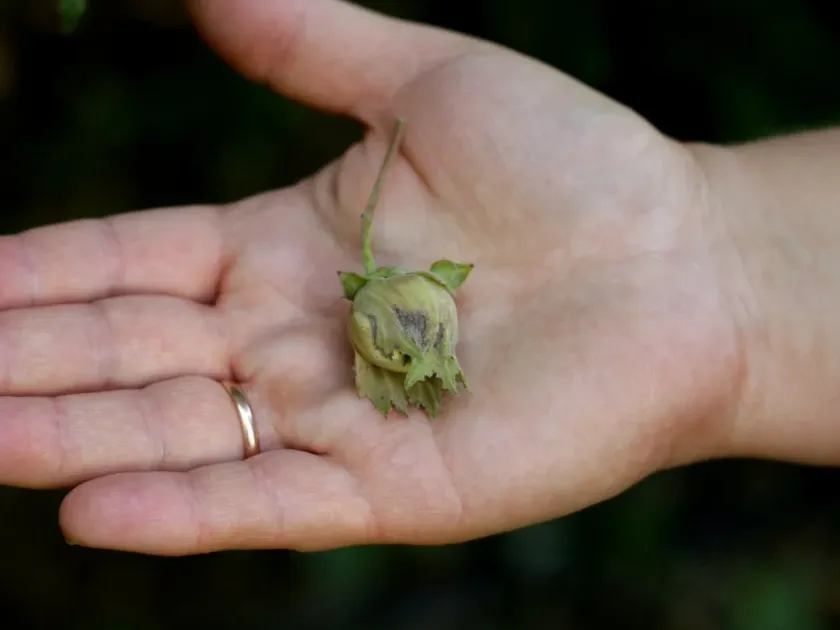
Description
How to identify
Mamianiella coryli is an ascomycete fungus that acts as a specialized plant pathogen, primarily affecting trees and shrubs within the Corylus (hazel) genus. It is a member of the order Diaporthales.
The fungus is characterized by the production of perithecia, which develop within the host tissue. These structures serve as the sexual reproductive stage and are essential for the survival of the pathogen through winter.
The life cycle involves the dispersal of ascospores in the spring, which settle on healthy leaves and initiate new infections under favorable moisture and temperature conditions.
The mycelium colonizes the interveinal tissues of the leaves, absorbing nutrients and causing structural damage to the host’s photosynthetic apparatus. This leads to the characteristic symptoms of the disease.
Laboratory identification of Mamianiella coryli requires specialized mycological examination, as the symptoms can often be confused with other leaf-spotting fungi found in hazelnut orchards.
What it damages
The primary impact of the pathogen is the development of leaf spots, which cause chlorosis and premature senescence of the foliage. This reduces the overall vigor of the hazelnut bush.
Reduced photosynthetic capacity directly impacts the tree's ability to store energy for the next growing season, leading to decreased yields and poorer nut quality.
In nurseries, young hazelnut plants are particularly vulnerable. Severe infestations can stunt growth and weaken the plant, making it more susceptible to environmental stressors and secondary pests.
Economic damage occurs not only through direct yield losses but also through the increased costs associated with orchard sanitation and the application of protective fungicide treatments.
The accumulation of inoculum in the environment can cause long-term problems for orchards if not managed effectively, as the fungus persists in the leaf litter year after year.
Signs of infestation
Early symptoms appear as small, circular, or irregular brown spots on the leaves. Over time, these spots enlarge and may turn dark brown or black in color.
A light-colored halo often surrounds the necrotic tissue of the spots. During humid periods, tiny black pycnidia or perithecia may become visible on the surface of the lesions.
Premature leaf drop is a common consequence of heavy infestation. This exposes the hazelnut branches, making them more vulnerable to sunscald and other climatic damage.
Infections can also occur on petioles and young shoots, appearing as elongated dark lesions that interfere with nutrient transport within the plant.
The progression of the disease is typically observed from late spring through late summer, with the most severe damage occurring during years with frequent rainfall.
Control measures
Sanitation is the most effective management strategy. Removing and destroying fallen leaves during autumn is critical to eliminate the primary source of wintering inoculum.
Fungicide applications may be necessary in orchards with a history of disease. Preventive spraying starting at the bud break stage is recommended to inhibit spore germination.
Good orchard management, including thinning and pruning, improves airflow within the canopy. This reduces the humidity levels that the fungus requires for rapid development.
Selecting resistant cultivars remains the best long-term strategy for managing hazelnut diseases. Breeding programs continue to prioritize resistance to foliar pathogens.
- Regular removal and burning of infected leaf litter.
- Preventive application of copper-based or systemic fungicides.
- Pruning to ensure adequate light and air penetration.
- Monitoring orchards for early signs of disease infection.
Causes diseases · 1
Discussion
No discussions yet — be the first.