
Rice blast
Magnaporthe oryzae
Description
How to identify
Rice blast is caused by the ascomycete fungus Magnaporthe oryzae. This pathogen is considered one of the most destructive diseases affecting rice crops globally, causing significant yield losses every year.
The fungus survives as mycelium in infected plant debris, seeds, and host weeds. During the growing season, it produces large amounts of conidia, which are disseminated by wind, rain splashes, and irrigation water.
Development is favored by warm temperatures (22–28°C) and prolonged periods of high humidity. The presence of leaf wetness, often caused by dew or frequent light rain, is essential for the germination of fungal spores.
The infection process starts with the adhesion of conidia to the plant surface, followed by the formation of specialized structures called appressoria, which apply physical pressure to penetrate the plant cuticle.
Once inside, the fungus spreads rapidly through the host tissue. The rapid life cycle allows for multiple infection cycles within a single growing season, leading to potential epidemics in susceptible cultivars.
What it damages
The pathogen can attack all aerial parts of the rice plant, including leaves, nodes, panicles, and grain. Severely infected plants show stunted growth and poor grain filling, which reduces both yield quantity and quality.
Infection at the panicle base, known as neck blast, is particularly damaging. It prevents the translocation of nutrients to the grain, causing the panicle to turn white and become empty or poorly filled.
Signs of infestation
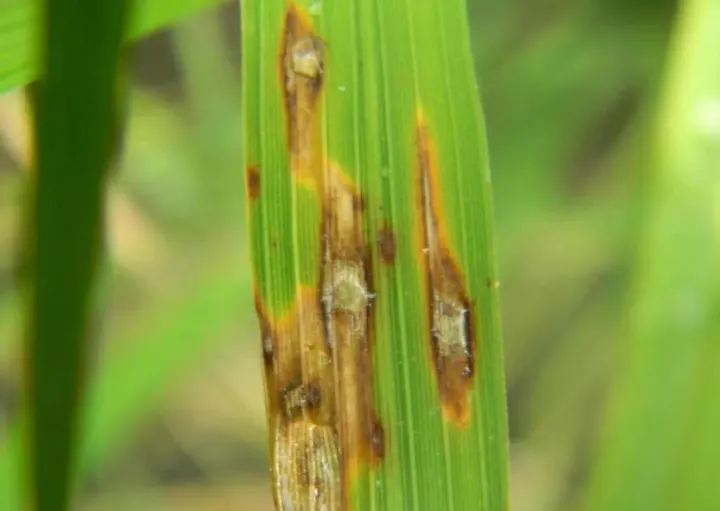
Initial symptoms are small, diamond or spindle-shaped spots on leaves. As the disease progresses, these spots enlarge, showing gray centers with reddish-brown margins. An olive-gray fungal mold develops on the spots during high humidity.
Panicle symptoms involve the darkening and necrosis of the neck region. This leads to the collapse of the panicle stem, often resulting in significant grain loss and premature ripening of the remaining kernels.
Control measures
Management strategies include the use of resistant rice cultivars, which is the most sustainable approach. Proper nitrogen management is crucial, as excessive nitrogen levels can increase plant susceptibility to the pathogen.
Chemical control involves the timely application of systemic fungicides at specific growth stages, such as the booting and heading stages. Farmers should follow strict monitoring programs to initiate treatment before the disease reaches severe levels.
Discussion
No discussions yet — be the first.