
Potato Rhizoctonia
Hypochnus solani
Description
How to identify
Rhizoctonia disease in potatoes is caused by the soil-borne fungus Rhizoctonia solani, which is classified as a Basidiomycete. It is a highly adaptable pathogen that persists in the environment for years.
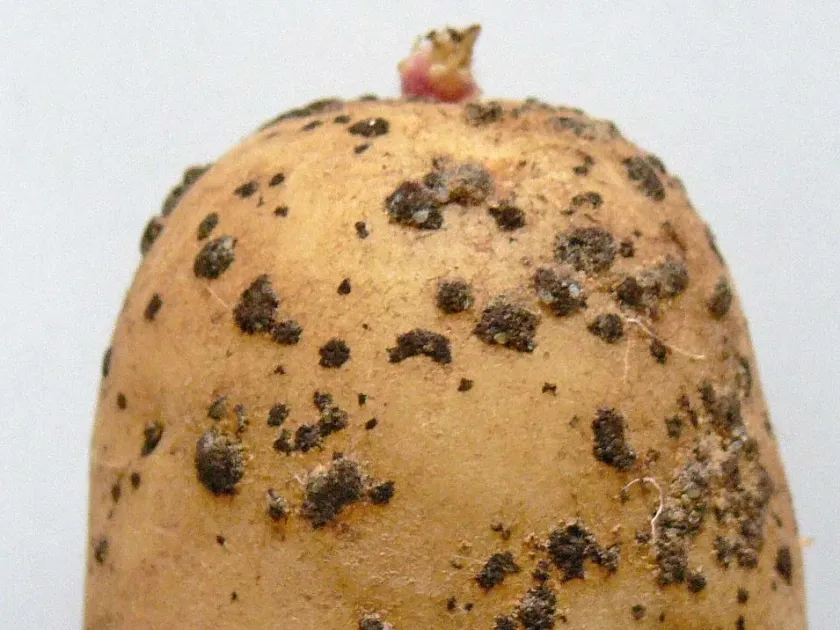
The fungus survives primarily as sclerotia—dark, hard masses of fungal tissue that attach to potato tubers and remain dormant in the soil during unfavorable conditions.
Its mycelium is characterized by distinct right-angled branching, which is a key diagnostic feature for mycological examination under laboratory conditions.
In addition to potatoes, this pathogen has a broad host range, attacking numerous vegetable and field crops, which makes it a persistent issue in diverse farming systems.
The teleomorph stage of the fungus, Thanatephorus cucumeris, can produce basidiospores that contribute to the spread of the disease during periods of high humidity.
What it damages
The primary damage occurs during the sprouting stage, as the fungus attacks the shoots, often killing them before they reach the soil surface.
Infections on the stolons and roots disrupt the plant's nutrient uptake, leading to weak growth, reduced tuber initiation, and poor final yields.
The disease causes the formation of malformed, knobby, or cracked tubers, which severely degrades the aesthetic and market value of the harvested crop.
Severe infestations can lead to significant gaps in the field, reducing plant density and making the crop less efficient at utilizing field resources.
Beyond yield loss, contaminated tubers lose their value as seed material, as they carry the inoculum into new fields, spreading the disease further.
When it appears
The infection process is most active during cool and wet spring conditions, with soil temperatures between 10°C and 15°C being optimal for the fungus.
Prolonged emergence periods, often caused by cool weather, leave the potato sprouts vulnerable for longer, increasing the probability of successful infection.
During the summer, the fungus can proliferate if moisture remains high, potentially affecting the stem base and causing the characteristic white collar rot.
As the season nears its end, the fungus shifts its focus to the developing tubers, where it forms new sclerotia in preparation for the winter period.
These overwintering structures ensure the survival of the pathogen in the soil or on dormant tubers, ready to start the cycle again the following spring.
Signs of infestation
The most recognizable sign is the presence of "black scurf," which consists of dark, irregularly shaped sclerotia on the surface of the potato tuber.
Brown, sunken lesions or deep cankers on the sprouts and stems are clinical signs of Rhizoctonia infection that often cause the plant to wilt or stunt.
A white, powdery mold may appear on the base of the stems near the soil line, which is the vegetative growth of the fungus during humid weather.
Plant tops may show characteristic curling of leaves and an unusual purplish tint, indicating that the root or stolon system is heavily compromised.
- Dark sclerotia on tuber skin.
- Poor or missing emergence in the field.
- Stem cankers and necrosis.
- Stunted plant growth and leaf curling.
Control measures
The use of certified, disease-free seed potatoes is the primary defense strategy to prevent the introduction of the pathogen into clean fields.
Treating seed tubers with targeted fungicides containing active ingredients like pencycuron or fludioxonil provides vital protection during the early growth phase.
Implementing a crop rotation schedule that avoids host crops for at least 3 years significantly reduces the fungal inoculum density in the soil.
Planting in well-drained, properly prepared soil with optimal temperatures promotes rapid emergence, helping plants bypass the most susceptible growth stages.
Proper harvest practices, including minimizing soil moisture and immediate storage cooling, help prevent the further proliferation of black scurf on tubers post-harvest.
Discussion
No discussions yet — be the first.