
Iris leaf spot
Heterosporium tortuosoinflatum
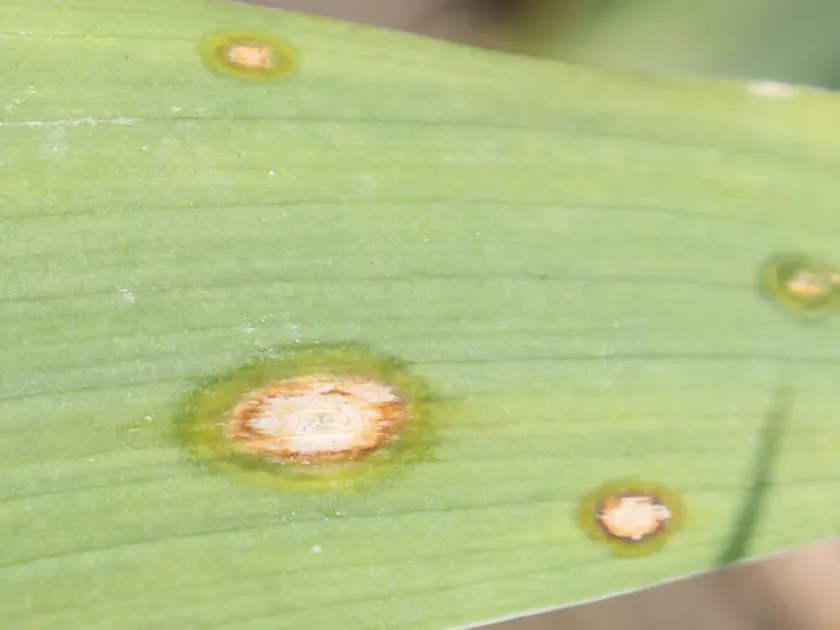
Description
How to identify
Iris leaf spot is caused by the fungus Heterosporium iridis (synonym Mycosphaerella macrospora). This pathogen belongs to the kingdom Fungi, class Ascomycetes, and primarily affects the foliage of Iris species, causing distinct spotting patterns.
The pathogen survives the winter in infected plant debris left in the soil, either as mycelium or conidia. When spring conditions become favorable, primary infection of young iris leaves occurs through stomata or mechanical wounds.
During the growing season, the fungus spreads via conidia dispersed by wind, splashing rain, and irrigation water. High humidity, moderate temperatures, and dense planting, which restricts airflow, significantly promote the development of the infection.
The life cycle includes multiple generations of conidial sporulation within a single season. This allows the pathogen to spread rapidly across plantings if timely agrotechnical and chemical control measures are not implemented.
Visually, the fungus is identified by the presence of an olive-black velvety layer on the spots, representing the pathogen's sporulation. In laboratory settings, diagnosis is confirmed through microscopy and culturing on specific media.
What it damages
The primary host for this pathogen is the Iris genus (Iris), with bearded irises being particularly susceptible. The fungus attacks exclusively the aerial parts of the plant, mainly the leaves, which disrupts photosynthesis.
Damage manifests as premature drying and necrosis of the leaf tissue. Due to the loss of photosynthetic surface area, the iris rhizomes become exhausted, leading to plant weakening, reduced winter hardiness, and a lack of flowering in subsequent seasons.
Severe infections occurring over several years can lead to the total collapse and death of the plant cluster. In commercial nurseries, the disease significantly reduces the marketability of planting material and limits production capacity.
The infection is particularly dangerous for young plantings, as immature plants lose vigor more quickly when foliage is affected. Under high humidity, the disease may also affect flower stalks, severely damaging the ornamental value of the plants.
The spread of the pathogen necessitates strict phytosanitary compliance in ornamental plant production. Infested areas act as a reservoir for secondary infection, putting neighboring healthy plants at high risk.
Signs of infestation
The first symptoms appear on the tips of the leaves as small, faint pale-green or brown spots surrounded by a water-soaked margin. Over time, these spots expand, turning gray-brown with a distinct dark border.
As the disease progresses, spots may coalesce, covering large areas of the leaf blade. In the center of the necrotic tissue, a characteristic velvety olive-black layer forms, consisting of the pathogen’s conidiophores and spores.
Infected leaves begin to wither from the tips downward, eventually dying back to the base. This gives the iris clump a ragged, burnt appearance, which ruins the aesthetic appeal of the flower garden.
Unlike some other fungal diseases, leaf spot rarely attacks the flower buds directly, but heavy foliage loss starves the plant, making it unable to produce high-quality blooms.
A definitive diagnosis is often based on the presence of the sporulation layer in the centers of the spots, which washes off easily with rain but quickly regenerates in moist weather, a key indicator of the disease.
Control measures
The main strategy for control is strict adherence to cultural practices. It is crucial to remove and destroy all infected plant debris in the autumn, as this is where the fungus overwinters.
Avoid dense planting to ensure good air circulation around the plants. Irises should be situated in well-lit, ventilated areas, avoiding low-lying spots where moisture tends to accumulate.
Chemical control involves spraying with copper-based fungicides, such as Bordeaux mixture or copper oxychloride. Applications should begin at the first signs of disease and be repeated every 10–14 days.
Systemic fungicides from the triazole class are effective against leaf spot. These chemicals penetrate plant tissues, inhibiting mycelial growth and preventing further spore production.
- Regular monitoring of plantings for early detection of infected foliage.
- Timely pruning and disposal of heavily infected leaves throughout the season.
- Maintaining crop rotation and avoiding the use of pathogen-infested soil.
- Applying balanced fertilizers to improve overall plant vigor and resistance.
Causes diseases · 1
Discussion
No discussions yet — be the first.