
Helminthosporium cookei
Helminthosporium cookei
Description
How to identify
The pathogen Helminthosporium cookei belongs to the kingdom Fungi, genus Helminthosporium. It is classified as an imperfect fungus and acts as a specialized plant pathogen.
This fungus develops a mycelium that invades the host plant's tissues, damaging the cellular structure. Reproduction occurs via conidia, which are disseminated by wind, water, or farm machinery.
Under a microscope, the spores exhibit a characteristic elongated shape with multiple septa, which is a key diagnostic feature for laboratory identification.
Systematically, this organism is considered a parasite capable of surviving on crop residues in the soil for extended periods.
Understanding the biology of this species is essential for differential diagnosis, as symptoms often overlap with other helminthosporium leaf spots.
What it damages
The primary hosts are various cereals and some dicotyledonous crops, depending on the crop rotation and local environmental conditions.
The fungus primarily affects vegetative organs: leaves, leaf sheaths, and during high humidity, the stems and grains.
Damage manifests as impaired photosynthesis due to tissue destruction, leading to premature leaf senescence and death.
When reproductive organs are affected, a condition known as "black ear" or seed discoloration occurs, directly reducing grain weight and quality.
Severe outbreaks can result in yield losses ranging from 15% to 30%, depending on the variety's susceptibility and the season's weather conditions.
When it appears
The infectious process accelerates during the growing season, starting from the germination of conidia or mycelium that overwintered in plant debris.
Optimal conditions for fungal spread include high air humidity (over 85%) and moderate temperatures ranging from +18°C to +25°C.
Initial symptoms often appear during the tillering and stem elongation stages, when the first lesions form on the lower leaves.
In prolonged rainy conditions, the infection spreads rapidly to the upper leaves, covering significant areas in a short time.
Disease development slows during dry and hot weather, though the pathogen remains viable in the soil substrate until the following season.
Signs of infestation
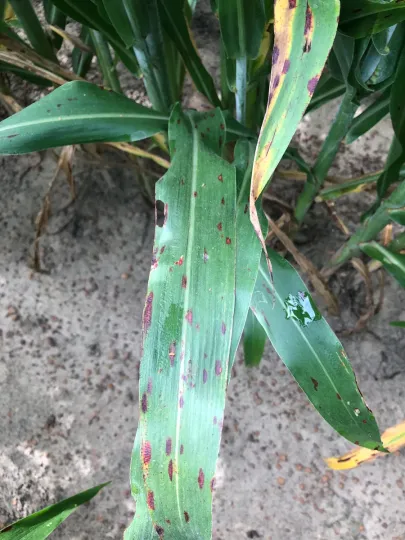
The main sign of infection is the development of spots of varying shapes, typically oval or elongated, with a dark or light-brown center and a halo.
As the disease progresses, these spots coalesce, causing tissue necrosis and resulting in the yellowing and drying of the entire leaf.
In humid weather, a subtle grayish or olive-colored fungal growth, consisting of conidiophores and conidia, appears on the affected areas.
Infection of the stems often leads to brittleness and lodging, which complicates harvesting operations significantly.
Secondary signs include general plant stunting, delayed growth, and poor head development as a consequence of impaired photosynthetic capacity.
Control measures
The primary management strategy is to practice crop rotation, ensuring susceptible crops do not return to the same field for at least 3-4 years.
Good agricultural practices include deep incorporation of crop residues and the removal of weeds that may serve as alternative hosts.
High-quality fungicidal seed treatments should be used during pre-sowing preparation to suppress primary infection effectively.
During the growing season, if the economic threshold is reached, systemic foliar fungicides should be applied to protect the crop.
- Selection and use of varieties resistant to helminthosporium leaf spots.
- Balanced application of fertilizers, particularly potassium and phosphorus, to enhance plant immunity.
- Regular monitoring of the phytosanitary status of fields from early spring.
Causes diseases · 1
Discussion
No discussions yet — be the first.