
Helminthosporium leaf spot of corn
Helminthosporium carbonum
Description
How to identify
The causative agent of this disease is the fungus Bipolaris zeicola (synonym Helminthosporium carbonum), which belongs to the kingdom Fungi. This pathogen is highly specific to maize and can cause significant economic damage.
The fungus overwinters as mycelium and conidia in infected crop debris, soil, and on seeds, serving as the primary source of inoculum for the next growing season.
Spread is facilitated by wind, splashing rain, and insects that transport spores to healthy plant tissues. High humidity is a critical factor for spore germination and infection.
The development of the fungus thrives under warm, humid conditions with temperatures ranging from 20°C to 28°C, which are optimal for the rapid colonization of host tissues.
The disease cycle involves repeated rounds of infection throughout the season, leading to rapid disease development under favorable weather conditions.
What it damages
The disease affects all aerial parts of the corn plant, including leaves, leaf sheaths, stems, husks, and kernels, leading to a significant loss of photosynthetic leaf area.
Economic damage is caused by a reduction in grain yield, lower test weight of the grain, and overall deterioration in the quality of the harvest due to fungal rot.
Weakened plants are prone to lodging, which creates challenges during mechanical harvesting and significantly increases the risk of pre-harvest yield loss.
In severe cases, if the infection occurs early in the season, it can lead to plant death or stunted growth, drastically reducing the total field output.
Kernel rot reduces marketability and poses health risks for livestock if the grain is contaminated with mycotoxins produced by the fungal pathogen.
Signs of infestation
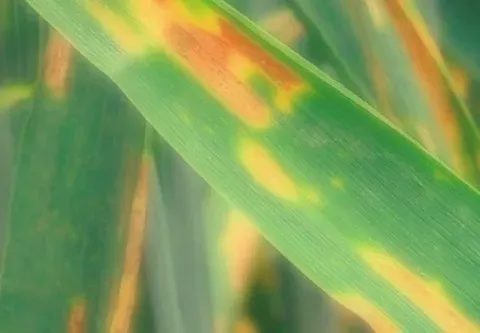
Initial symptoms appear as small, chlorotic spots that expand into elongated, spindle-shaped or elliptical lesions, often surrounded by a dark brown border.
The lesions frequently exhibit a characteristic concentric zonation, giving them a target-like appearance, which is a key identification feature for this disease.
In humid weather, a velvety, olive-to-black fungal growth is visible on the surface of the lesions, representing the conidiophores and conidia of the fungus.
When the ears are infected, the husks may show dark, fuzzy growth, and the kernels can become discolored, brittle, or completely consumed by the fungal mycelium.
- Premature yellowing and drying of lower leaves.
- Leaf rolling and necrosis under heavy infection.
- Dark fungal mat formation at the base of the ear.
Control measures
The most effective strategy is the use of resistant or tolerant corn hybrids, which can significantly mitigate the impact of the disease even in conducive environments.
Cultural practices, such as crop rotation and the thorough incorporation of crop debris into the soil, are essential to reduce the primary inoculum load in the field.
Seed treatments with systemic fungicides are recommended to protect germinating seedlings and reduce early-season infection pressure from seed-borne inoculum.
Foliar fungicide application is advised in fields with a high history of the disease and when weather conditions favor rapid fungal spread during the growing season.
Optimizing plant nutrition, particularly ensuring adequate potassium and phosphorus, strengthens plant cell walls and improves overall plant health against fungal pathogens.
Causes diseases · 1
Discussion
No discussions yet — be the first.