
Glomerella fioriniae
Glomerella fioriniae
Description
How to identify
Glomerella fioriniae is a member of the kingdom Fungi, belonging to the Ascomycota division. It serves as the teleomorph stage for several fungi within the Colletotrichum genus.
Under a microscope, this pathogen is identified by its hyaline conidia and specific ascospores that develop within fruit bodies known as perithecia.
The primary method of spread is through conidia, which are disseminated by wind, rain splashes, or insect vectors. The pathogen exhibits high genetic variability, aiding its adaptation to host environments.
Field diagnosis is often difficult due to symptom similarities with other types of anthracnose, necessitating laboratory analysis for accurate species identification.
This fungus survives long periods in plant debris, soil, or as latent infections within the tissues of perennial plants until favorable environmental conditions occur.
What it damages
This pathogen causes severe damage to a wide range of crops. Fruit trees, including apples, pears, and citrus, are particularly susceptible, frequently suffering from fruit rot.
Beyond fruit trees, the infection affects vegetable crops such as peppers and tomatoes, causing necrotic lesions on leaves and stems. In berry crops, it triggers shoot dieback.
In nurseries, Glomerella fioriniae poses a significant risk to young seedlings by causing systemic infection, which results in a complete loss of market value.
Damage is observed not only on fruits but also on branches, leading to premature leaf drop and a significant decline in the host plant's overall immune system.
Within greenhouse environments, the pathogen can spread rapidly, infecting almost all plant parts and leading to substantial economic losses for growers.
When it appears
Active fungal development begins during periods of high humidity and moderate temperatures. The presence of free moisture on leaf surfaces is critical for spore germination.
The spring and summer seasons are periods of peak aggressiveness for the pathogen, marked by cycles of mass sporulation that cause secondary infections in healthy plants.
During the autumn, the fungus enters a resting phase. It overwinters in fallen foliage, mummified fruits, or cracks in tree bark as mycelium or dormant fruiting bodies.
High ambient temperatures combined with high humidity during summer months significantly accelerate the disease's incubation period, making outbreaks difficult to manage.
Critical infection windows occur during flowering and fruit ripening, as plant tissues are at their most vulnerable to penetration through micro-wounds.
Signs of infestation
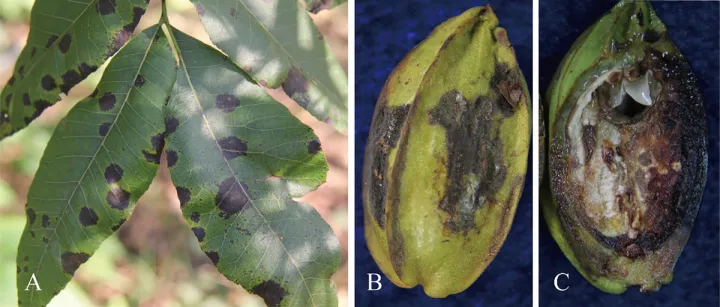
Early signs include small, sunken brown or black spots on the fruits, which gradually expand in size and cover large portions of the surface.
Concentric circles containing fungal fruiting structures often form in the center of lesions, typically displaying a pinkish or orange tint due to the mass of spores.
Leaves of infected plants develop small necrotic spots with distinct margins. Over time, these spots merge, causing widespread drying of the leaf blade.
Shoot infections result in dieback, characterized by a change in bark color to dark brown and the development of cracks where mycelium colonizes the plant tissue.
Infected fruits lose flavor rapidly, become soft and watery, and frequently become mummified, remaining attached to the branches for extended periods.
Control measures
The primary control strategy is agro-technical: regular pruning and destruction of infected shoots and mummified fruit to reduce the inoculum level in the orchard.
Maintaining optimal planting density and thinning tree canopies are vital practices to improve air circulation and reduce humidity levels in the root zone.
Chemical fungicides, specifically those from the triazole and strobilurin groups, are effective at suppressing the spread of infection if applied based on disease development forecasts.
Breeding and selecting resistant varieties is the most promising long-term control strategy, although the fungus's high variability makes this a complex challenge.
- Preventive spraying with copper-based products at the start of the growing season.
- Crop rotation and physical isolation of heavily infected areas.
- Thorough collection and disposal of plant debris in the autumn.
- Continuous monitoring of humidity levels in greenhouses.
Causes diseases · 1
Discussion
No discussions yet — be the first.