
Chocolate spot
Faba bean
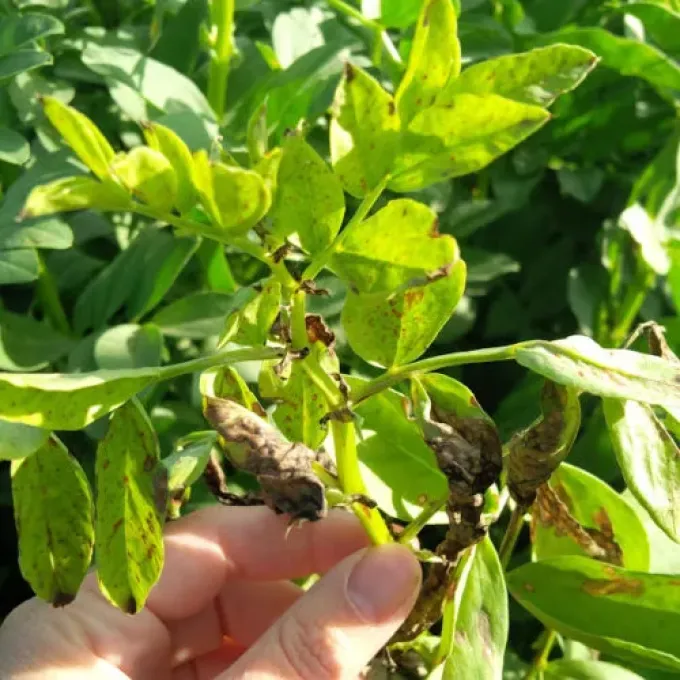
Description
How to identify
The pathogen responsible for Chocolate spot is Botrytis fabae, an ascomycete fungus that thrives in temperate climates. It is the primary cause of yield reduction in faba beans worldwide.
The fungus survives in soil debris as sclerotia or mycelium. Under cool and wet conditions, it produces conidia which are disseminated by rain splash and wind to infect the host plants.
High humidity and moderate temperatures between 15°C and 22°C are optimal for spore germination and infection. The pathogen exploits moisture films on leaf surfaces to initiate colonisation.
The disease life cycle is polycyclic, meaning that in favourable weather conditions, the pathogen can produce multiple generations of spores within a single growing season, leading to epidemics.
Morphologically, the fungus is characterized by the production of grey-brown conidiophores on the surface of necrotic lesions, providing a diagnostic sign for identification in the field.
What it damages
The disease primarily affects faba beans (Vicia faba), although it can impact other legume species. It affects leaves, stems, flowers, and developing pods, causing substantial foliage loss.
Initial symptoms consist of small, reddish-brown spots on leaves. These spots can expand rapidly and merge, covering large areas of the foliage and leading to total leaf necrosis.
Stem infection leads to deep lesions that weaken the plant structure, often causing lodging and preventing the transport of carbohydrates to the seed pods.
Flower blight is a major component of yield loss. The fungus attacks the delicate floral tissues, causing them to wither and fall off before pod setting can occur.
Severely infected pods develop dark, depressed lesions. The seed quality is often compromised, with beans showing discoloration and reduced germination viability.
Control measures
Integrated Pest Management (IPM) is essential. Cultural practices, such as choosing an appropriate crop rotation and avoiding planting beans in fields adjacent to the previous year's crop, are crucial.
Deep ploughing to bury crop residues helps in decomposing the fungal inoculum source. This reduces the primary infection pressure at the beginning of the growing season.
Selecting resistant cultivars is the most effective long-term strategy. Breeders focus on varieties that show slower disease progression and enhanced physiological defenses.
Fungicide applications are recommended when disease levels reach economic thresholds. Utilizing multisite and systemic fungicides helps manage the pathogen and prevents resistance development.
- Ensuring adequate plant spacing to promote air circulation.
- Early sowing to avoid peak humidity periods.
- Removal of volunteer plants in surrounding areas.
Causes diseases · 1
Discussion
No discussions yet — be the first.