
Eutypa dieback
Eutypa
Description
How to identify
Eutypa dieback is a serious wood-decaying disease caused by the ascomycete fungus Eutypa lata. It primarily affects the vascular tissue and xylem of perennial woody plants, including grapevines.
The fungus propagates through the production of ascospores in perithecia, which form on the surface of dead or infected wood. These spores are released during rainfall and dispersed by wind over long distances.
Infection occurs exclusively through pruning wounds or other mechanical injuries where the inner wood is exposed. The spores germinate on the wet wood surface and colonize the tissue of the vine.
Once inside, the fungus grows slowly within the wood, producing toxic metabolites known as eutypines. These toxins are translocated throughout the plant and disrupt its physiological functions.
The slow colonization process means that the plant may appear healthy for several years before the internal decay reaches a point where external symptoms become visible to the vineyard manager.
What it damages
Grapevines are the most economically significant host for Eutypa lata. The disease is particularly devastating in mature vineyards where larger cuts are often made during canopy management.
Beyond viticulture, Eutypa dieback affects a wide range of woody species, including stone fruits like apricots and cherries, as well as various almond and apple varieties in nearby orchards.
The primary damage is the necrosis of the permanent wood, such as cordons and trunks. The infected wood loses structural integrity and eventually dies, leading to the loss of entire sections of the vine.
Productivity drops significantly as the infected parts cease to produce viable shoots and grapes. This forces growers to implement costly remedial pruning or replace the entire vine.
The long-term impact involves a decrease in the overall longevity of the vineyard. Vines weakened by Eutypa are also more susceptible to secondary wood-boring pests and other pathogens.
Signs of infestation
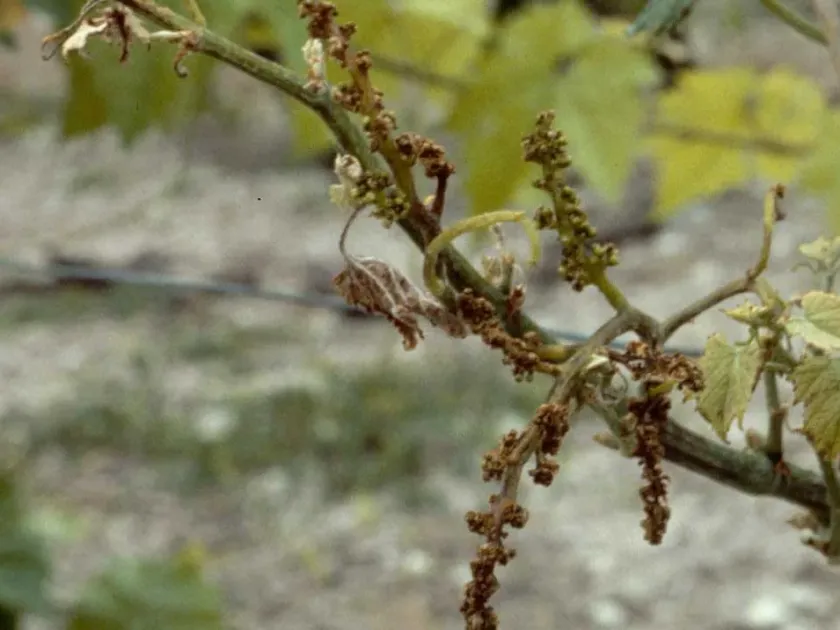
The most visible sign of Eutypa dieback is stunted spring growth. Shoots on infected arms are significantly shorter than healthy ones, with shortened internodes and generally poor vigor.
Leaves on affected shoots are often chlorotic, deformed, or exhibit necrotic margins. They frequently appear curled and burnt, giving the vine a ragged, unthrifty appearance during the growing season.
Cross-sectioning the infected wood reveals characteristic wedge-shaped areas of dark, necrotic tissue. This discolored wood is sharply demarcated from the healthy, lighter-colored tissue.
In advanced cases, the bark on the affected trunks may crack or peel. Occasionally, the black, bumpy fruiting bodies of the fungus may be visible on old, dead wood surfaces.
Infected vines produce significantly fewer and smaller clusters, and fruit quality often declines dramatically, rendering the grapes unsuitable for high-quality production.
Control measures
Effective management begins with strict pruning hygiene. Avoid pruning during wet, rainy periods when spore release is most intense to minimize the risk of infection through fresh wounds.
Sanitation is critical. All diseased wood should be removed and destroyed far from the vineyard, as dead wood remains a viable reservoir for the fungus to continue producing spores.
Apply fungicidal wound dressings or paint-on protectants immediately after making cuts, especially on older wood. This provides a physical and chemical barrier against potential spore deposition.
Sterilizing pruning equipment with alcohol or bleach solutions between vines is a standard practice to prevent the mechanical transmission of the pathogen from infected to healthy wood.
For sustainable control, consider training systems that minimize the number of large cuts on the main trunk. Preventive monitoring is essential to catch the disease before it reaches the crown.
Causes diseases · 1
Discussion
No discussions yet — be the first.