
White rot of grape
Coniothyrium diplodiella
Description
How to identify
The causal agent of the disease is the fungus Coniothyrium diplodiella, belonging to the order Sphaeropsidales. It is an obligate parasite that overwinters in the soil and on infected plant debris as pycnidia.
Taxonomically, the fungus is classified within the kingdom Fungi, phylum Ascomycota, class Dothideomycetes. It is a highly specialized pathogen that exclusively affects grapevines under specific environmental conditions.
The infection spreads through conidia, which are released from pycnidia as slimy ribbons during periods of high humidity. Raindrops and wind serve as primary dispersal vectors for these spores.
The fungus thrives at temperatures between 20°C and 25°C. Prolonged moisture is essential for the germination of conidia and the subsequent colonization of the host plant tissues.
Mechanical damage to the plant is a prerequisite for successful infection. Wounds caused by hail, insect feeding, or viticultural practices provide the entry point for the fungal hyphae.
What it damages
The primary host for this pathogen is the cultivated grapevine. The fungus causes significant damage to berries, cluster stems (rachis), and shoots, leading to tissue necrosis and eventual dieback.
White rot can be highly devastating, with potential yield losses ranging from 30% to 80%. Infected berries lose their market value, and their fermentation quality is severely compromised by fungal toxins.
When the rachis is infected, the nutrient flow to the berries is disrupted. This leads to the shriveling of the fruit and often causes the entire cluster to detach from the vine, resulting in harvest loss.
Infection on the shoots manifests as necrotic lesions that may girdle the vine. This weakens the plant structure, reduces its overall vigor, and decreases its winter hardiness.
The affected berries become a nutrient source for secondary pathogens, such as Botrytis cinerea, which complicates the health of the vineyard and increases the difficulty of control.
Signs of infestation
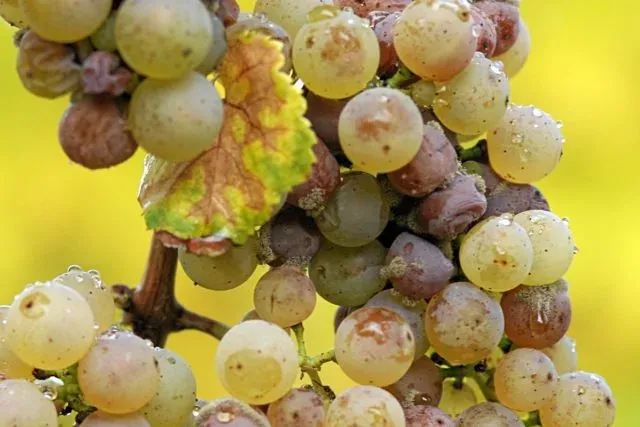
Initial symptoms on berries appear as light yellow or bluish spots. As the infection progresses, the berries turn a greyish-white color, which is the characteristic feature of this disease.
Tiny black dots, representing the pycnidia of the fungus, soon appear on the surface of the affected berries. These structures are often arranged in irregular or concentric patterns.
Under high humidity, whitish tendrils of spores emerge from the pycnidia. These spore masses can be easily transported by splashing rain or wind to adjacent healthy clusters in the vineyard.
Shoots exhibit brown, sunken lesions that may eventually crack. The bark in the necrotic areas might peel away, revealing the damaged wood where the fungus continues its lifecycle.
Infected rachises turn brown and brittle. The stems dry out quickly after the initial colonization, causing the attached grapes to wilt and shrivel before reaching full maturity.
Control measures
Sanitation is the cornerstone of control. All infected berries and fallen plant debris must be removed and destroyed to reduce the primary inoculum load for the following season.
Protecting vines from mechanical injuries is crucial. If a hailstorm occurs, immediate application of fungicides is required to protect the wounds from fungal penetration.
Copper-based fungicides are effective in creating a protective barrier on the surface of berries and shoots, inhibiting the germination and establishment of the fungal pathogen.
Proper canopy management, including leaf removal and thinning, improves airflow. This reduces micro-humidity around the clusters, making the environment less favorable for the fungus.
- Regular monitoring for early signs of infection.
- Sanitizing pruning tools with alcohol-based disinfectants.
- Implementing integrated pest management to reduce secondary damage.
- Selecting vineyard sites with good drainage to manage humidity.
Discussion
No discussions yet — be the first.