
Cherry leaf spot
Cherry leaf
Description
How to identify
Cherry leaf spot is caused by the ascomycete fungus Blumeria hiemalis (formerly Coccomyces hiemalis). It is a major pathogen of stone fruits.
The fungus is highly specialized to infect species of the Prunus genus, particularly sour and sweet cherries. It is prevalent in most temperate climate regions worldwide.
The pathogen overwinters primarily in infected fallen leaves on the orchard floor as mycelium and apothecia. In early spring, the fungus releases ascospores.
Primary infection occurs during spring rains when spores are splashed onto the lower leaves of the trees. This initiates the seasonal disease cycle.
Secondary cycles are driven by conidia, which are produced in large numbers on the undersides of lesions. These conidia are spread by wind and rain, causing rapid spread during the growing season.
What it damages
The most significant impact of the disease is premature defoliation. Trees may lose their leaves by mid-summer, severely reducing the photosynthetic capacity of the tree.
This early leaf drop disrupts the formation of flower buds for the next season, leading to decreased yields and poor fruit quality. Fruits may remain small and underdeveloped.
The loss of energy reserves makes the trees highly susceptible to winter injury and low-temperature damage. Repeated infections can cause branch dieback or total tree death.
Infected trees fail to accumulate enough carbohydrates in their roots and woody tissues. This long-term weakening effect makes the orchard economically unsustainable.
Without intervention, the pathogen can cause complete crop failure, making the fruit unmarketable and the tree structure fragile.
When it appears
Symptoms typically begin to appear in late spring, usually shortly after petal fall. Warm and wet weather conditions are optimal for fungal development.
The disease reaches its peak during the mid-summer months when frequent rains provide the necessary humidity for spore production and secondary infection cycles.
If not managed, the disease can spread rapidly within an orchard during warm, rainy periods in July and August. The rate of spread is proportional to the amount of rainfall.
As autumn approaches, the fungus transitions back to its overwintering stage. The infected leaves that fall serve as the primary inoculum for the next spring.
The severity of the disease in any given year is highly dependent on weather patterns during the spring and early summer growing season.
Signs of infestation
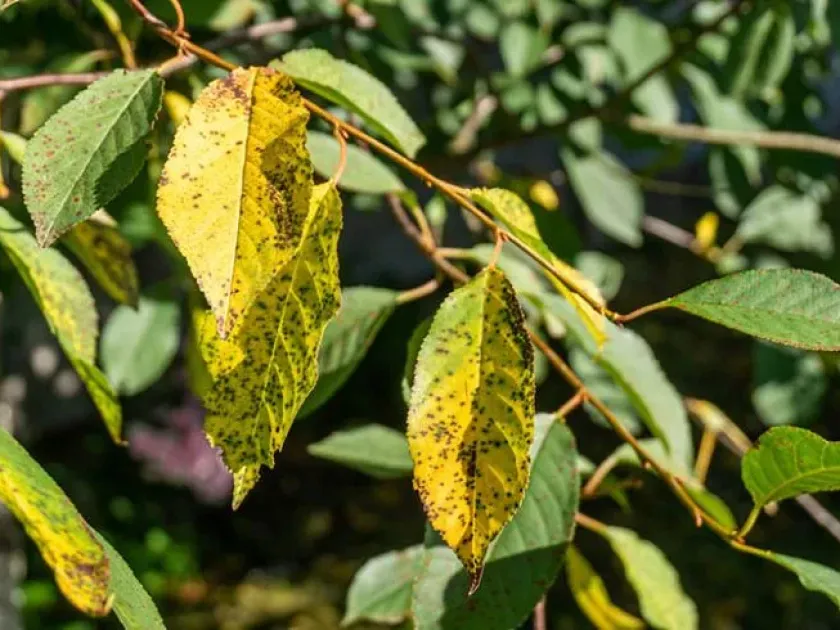
Small, reddish-purple spots appear on the upper surface of the leaves. As the disease progresses, these spots expand and may coalesce into larger irregular lesions.
On the undersides of the leaves, corresponding to the spots, white or pinkish masses of fungal spores develop. This is the most diagnostic sign of the infection.
Infected leaves often turn yellow and fall prematurely. Severe cases show trees that are mostly bare long before the harvest or autumn season.
Fruits may occasionally show small, sunken spots or fail to ripen properly. In some cases, the fruit might become shriveled and develop an off-flavor.
- Reddish-purple leaf spotting.
- White-pink spore masses on the underside of leaves.
- Rapid yellowing and early defoliation.
- Sunken lesions on fruit surface.
Control measures
The primary control measure is the removal and destruction of fallen leaves in autumn. This significantly reduces the overwintering inoculum in the orchard.
A preventative fungicide spray program is essential. Treatments should be applied from the early stages of bloom through the post-harvest period.
Pruning to open the canopy improves air circulation and sunlight penetration. This helps leaves dry out faster after rain, limiting spore germination.
Maintaining tree vigor through proper fertilization and watering helps the tree resist infection and recover from minor stress.
Selection of resistant or tolerant cultivars is a long-term strategy that reduces the need for frequent chemical interventions and improves orchard sustainability.
Causes diseases · 1
Discussion
No discussions yet — be the first.