
Fat hen
Chen
Description
How to identify
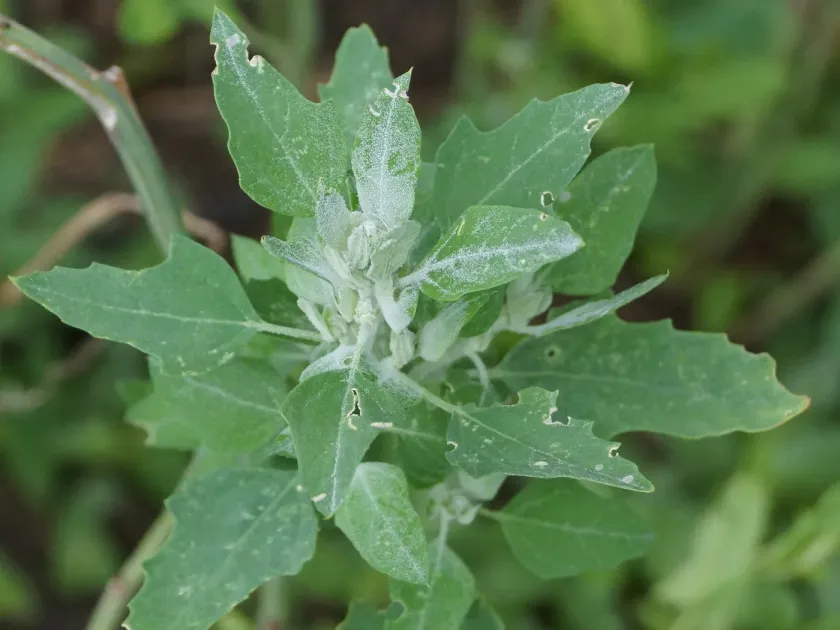
Chenopodium album, commonly known as fat hen or common lambsquarters, is an annual flowering plant in the Amaranthaceae family, widely recognized as a problematic weed.
The plant features a taproot system and grows up to 1.5 meters tall. Its leaves are coated with a distinctive mealy, white substance, providing a strong identification feature.
Chenopodium album is highly resilient, thriving in various soil conditions, and is notorious for producing up to 700,000 seeds per plant, which remain viable in the soil for years.
Beyond its competitive nature for nutrients and water, it serves as a critical botanical reservoir for numerous phytopathogenic viruses, fungi, and bacteria.
As an agronomically significant plant, it often complicates disease management programs by bridging the survival of pathogens between growing seasons.
What it damages
This weed acts as an alternate host for several devastating plant diseases, affecting crops like sugar beets, potatoes, and various cereals.
It facilitates the spread of the cucumber mosaic virus, beet yellows virus, and various powdery mildew species that plague intensive agricultural production.
By providing a shelter for vectors like aphids, fat hen ensures the efficient transmission of viral pathogens from the weed to nearby susceptible crop plants.
The dense canopy of the weed creates a humid microenvironment that favors the growth of soil-borne pathogens, such as fungal root rots, in the surrounding crops.
The presence of fat hen significantly suppresses the growth of neighboring crops through resource competition and the sustained pressure of vectored disease infections.
When it appears
Germination of Chenopodium album begins in early spring, often coinciding with the planting time of many spring-sown crops as soil temperatures rise above 3°C.
Pathogen development on the weed's foliage occurs throughout the summer months, facilitated by its active growth and the high density of plant populations.
Seeds of this weed can germinate in successive waves throughout the season, ensuring a persistent supply of fresh host tissue for pathogens to colonize.
The peak period for disease transmission from the weed to crops occurs during mid-summer when insect vector populations are at their most active levels.
The infection cycle continues through the autumn as pathogens move from aging weed tissues to late-season crops or crop debris, preparing for the next year.
Signs of infestation
Visible symptoms of disease transmission from fat hen include chlorosis, leaf mottling, and mosaic patterns on crop foliage adjacent to weed patches.
Presence of a white powdery fungal growth on the leaves of Chenopodium album is a precursor to potential powdery mildew epidemics within the cultivated field.
Stunted development, curled leaves, and abnormal coloration in crops are classic signs of viral infections successfully transmitted from the weed reservoir.
The presence of aphids or other sucking insects on the fat hen plants serves as a primary warning that viral pathogens are likely being transported to the crop.
Root system health can be compromised in fields infested with fat hen, often manifesting as premature wilting or rotting due to heightened humidity and pathogen load.
Control measures
Effective management requires an integrated approach combining mechanical weeding, herbicides, and crop rotation to reduce weed and pathogen pressure.
Crucial to success is the destruction of fat hen on field margins and uncultivated areas to prevent it from acting as a perennial source of inoculum.
Timely application of herbicides during the early stages of plant growth is essential to stop the weed from reaching a stage where it can support large insect populations.
Integrating non-host crops into the rotation cycle helps starve specialized pathogens that rely on Chenopodium album for survival during the off-season.
- Regular inter-row cultivation to disturb weeds before they set seeds.
- Use of certified weed-free seeds to prevent introduction into new areas.
- Monitoring and controlling insect vectors using targeted insecticides.
- Promoting rapid crop canopy closure to suppress weed germination.
Causes diseases · 1
Discussion
No discussions yet — be the first.