
Common bunt of wheat
Brazilian wheat
Description
How to identify
The causative agent of common bunt is the basidiomycete fungus Tilletia caries. It belongs to the order Ustilaginales and is a serious threat to cereal production worldwide.
This pathogen is an obligate parasite, meaning it requires a living host to complete its lifecycle. The fungus primarily exists in the form of teliospores, which remain dormant on seeds or in the soil until the next cropping season.
What it damages
Common bunt affects various wheat species, causing significant reduction in grain yield and quality. The infected plants fail to produce normal grains, replacing them with bunt balls filled with fungal spores.
Beyond quantity, the quality of the harvest is severely compromised. The presence of spores produces a strong, unpleasant odor similar to decaying fish, rendering the wheat unsuitable for milling and human consumption.
When it appears
Infection is strictly limited to the seedling stage of the wheat plant. Spores germinate at the same time as the seed, producing infectious hyphae that invade the coleoptile and reach the growing point of the young plant.
Environmental conditions are critical for successful infection, with cool, moist soil temperatures between 5°C and 15°C being most favorable. Warm and dry conditions during planting can significantly limit the incidence of the disease.
Signs of infestation
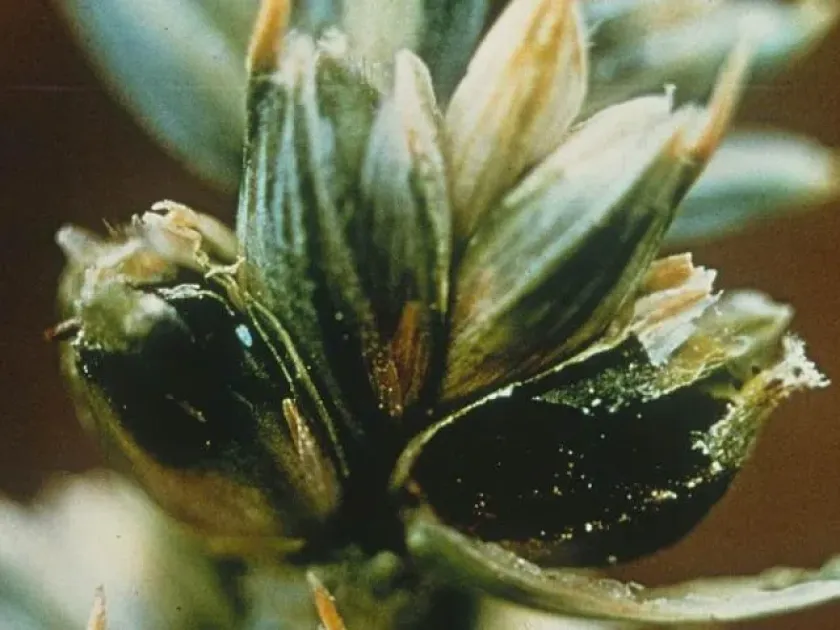
Symptoms remain invisible until the heading stage of the wheat. Infected plants may appear stunted, and the ears often remain green for longer periods than those of healthy plants, with glumes spread apart.
Internally, the ovaries of the wheat are replaced by dark, powdery spore masses known as bunt balls. These balls are covered by a thin membrane that ruptures during harvesting, releasing millions of spores into the environment.
Control measures
The most effective management strategy is seed treatment with systemic fungicides. This procedure kills the spores on the seed surface and provides a protective barrier against soil-borne inoculum.
Integrated pest management also includes the use of certified, disease-free seed, crop rotation, and the selection of resistant wheat cultivars. Ensuring thorough cleaning of harvesting equipment helps prevent the further spread of contaminated grain.
Causes diseases · 1
Discussion
No discussions yet — be the first.