
Beet chlorosis virus
Beet chlorosis
Description
How to identify
Beet chlorosis virus (BChV) is a plant pathogenic virus belonging to the genus Polerovirus within the family Solemoviridae. It specifically targets plants in the Amaranthaceae family, with sugar beet being the primary economic host.
This virus is non-persistent and circulative in its vector, the aphid Myzus persicae. It cannot be transmitted mechanically through sap or via infected seeds, making the aphid population the sole driver of its spread across agricultural fields.
Once injected into the plant by an aphid, the virus moves through the phloem. It replicates within the sieve tube elements, causing systemic infection that alters the plant's metabolic and physiological processes.
The virus persists in reservoir hosts, including various perennial weeds and volunteer sugar beets. During the spring migration, aphids acquire the virus from these sources and transmit it to young, developing sugar beet seedlings.
Environmental conditions play a major role in the disease spread. Warm and dry weather patterns promote rapid aphid multiplication, which significantly increases the incidence of BChV in a given season.
What it damages
BChV causes a significant reduction in photosynthetic efficiency. Infected plants exhibit stunted growth, which directly leads to lower root biomass production and reduced total yield for farmers.
In addition to physical yield loss, the virus negatively impacts the quality of the sugar beet harvest. There is a marked decrease in sucrose content, which reduces the extractable sugar yield during industrial processing.
Infected plants display a weakened immune system, making them more susceptible to secondary pathogenic attacks, such as fungal root rots or other soil-borne diseases that thrive in stressed tissues.
Economic impact is amplified by the cost of intensive insecticidal programs required to keep aphid populations below the economic threshold. In severe years, the combined effect of virus damage and management costs can be substantial.
The timing of infection is critical; crops infected early in the season suffer much greater yield losses than those infected later, emphasizing the need for early-season protection and monitoring.
Signs of infestation
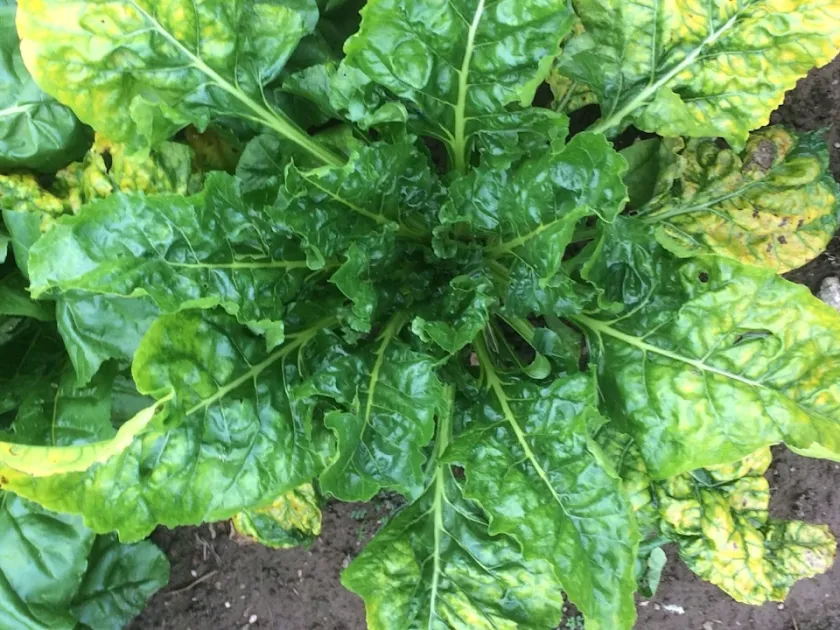
The hallmark symptom of BChV is a distinct yellowing (chlorosis) of the older and intermediate leaves. A key diagnostic feature is that the leaf veins often remain green, contrasting with the yellowed leaf blade.
Infected leaves undergo structural changes, becoming thick, brittle, and leathery in texture. Unlike nutrient deficiencies, the yellowing typically starts at the leaf margins and progresses inward toward the center.
Symptoms often manifest in patches within the field, reflecting the initial colonization sites of viruliferous aphids. These patches gradually expand as the aphids move from plant to plant throughout the field.
BChV can easily be confused with Beet mild yellowing virus (BMYV). Co-infection with other viruses is common, often leading to more severe leaf rolling, stunted growth, and more intense discoloration of the foliage.
Confirming the presence of the virus requires laboratory diagnosis, as field symptoms can be misleading. Enzyme-Linked Immunosorbent Assay (ELISA) or molecular methods like RT-PCR are standard for accurate identification.
Control measures
The primary control strategy focuses on suppressing aphid vectors. The application of systemic insecticides at the seedling stage is crucial for limiting the initial establishment of the virus in the field.
Cultural practices are essential for long-term management. This includes the destruction of volunteer sugar beets and the removal of weed hosts that act as overwintering reservoirs for the virus.
Strategic crop rotation and spatial isolation of new beet fields from previous years' plots help reduce the risk of early-season aphid colonization and subsequent virus transmission.
The use of resistant or tolerant cultivars remains the most effective and sustainable management tool. Breeding programs continue to focus on developing beets that can tolerate BChV infection without significant yield loss.
- Monitor aphid pressure using yellow sticky traps.
- Use insecticidal seed treatments for early-stage protection.
- Maintain proper crop nutrition to support plant vigor.
- Clean equipment to avoid cross-contamination of field areas.
Causes diseases · 1
Discussion
No discussions yet — be the first.