
Bean yellow mosaic virus
Bean yellow
Description
How to identify
Bean yellow mosaic virus (BYMV) is a significant plant pathogen belonging to the Potyviridae family and the Potyvirus genus. It is characterized by a positive-sense single-stranded RNA genome and is known for infecting a wide range of economically important plant species.
The virus is primarily transmitted by various species of aphids (such as Acyrthosiphon pisum and Aphis fabae) in a non-persistent, stylet-borne manner. This allows the virus to be acquired and inoculated within minutes of feeding.
Mechanical transmission is another pathway for the virus, occurring through contaminated equipment, handling of plants, or even simple leaf-to-leaf contact in dense plantings, facilitating local spread.
Microscopically, BYMV particles consist of flexuous filamentous rods approximately 750 nm in length. These particles aggregate in the cytoplasm of host cells, often forming inclusion bodies typical of potyviruses.
The virus has a broad host range, including many legumes and some ornamental monocots, which contributes to its high incidence and persistence in various agro-ecosystems globally.
What it damages
Major hosts include various beans, peas, soybeans, lupins, and faba beans. Ornamental crops like gladiolus, freesia, and tulips are also frequent victims, showing distinct signs of infection.
Infected plants suffer from stunted growth, reduced leaf area, and impaired metabolic processes, which directly correlate with decreased overall productivity and yield output.
The quality of legumes is adversely affected; seed size and weight often decrease, and the viability of seeds for future planting can be compromised in severely infected crops.
In commercial agriculture, the economic impact is high due to potential crop loss, the need for increased pest control, and the rejection of infected nursery or seed material.
By compromising the plant's structural and chemical defenses, BYMV increases the susceptibility of the crop to opportunistic infections by fungal pathogens or environmental stressors.
Signs of infestation
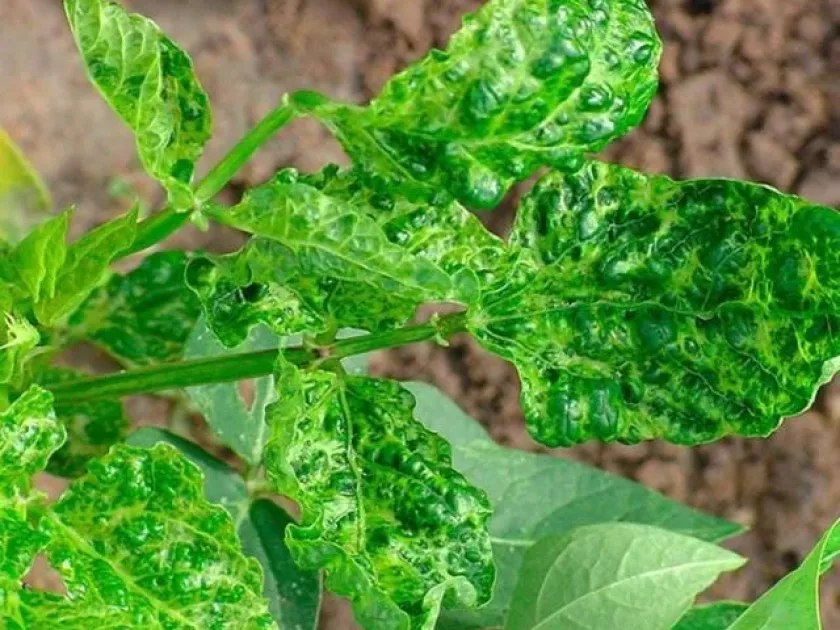
The most diagnostic sign is a mosaic pattern on the leaves, which appears as a patchy, mottled, or intermingled distribution of dark green, light green, and yellow-colored tissues.
Leaf morphology is often severely altered, resulting in curling, crinkling, or general distortion. The leaves may appear puckered, which significantly reduces the effective photosynthetic area of the plant.
Stunting is a constant feature of BYMV infection, with infected plants often remaining significantly smaller than their healthy counterparts. Internodes are frequently shortened during vegetative growth.
In pod-bearing legumes, pods may exhibit necrotic lesions, stripes, or distorted shapes, significantly lowering the commercial value and marketability of the harvested produce.
In ornamental plants like tulips and gladiolus, the virus manifests as color-breaking in petals (variegation) and chlorotic streaks on leaves, which ruins the aesthetic value required for cut flowers.
Control measures
The first line of defense is the use of certified, virus-free seeds and planting material. Testing of seeds for BYMV presence is a critical preventative measure in legume production.
Vector management involves timely applications of systemic insecticides to reduce aphid populations, thereby decreasing the frequency of virus inoculation within the crop canopy.
Sanitation practices, such as removing and destroying infected plants early in the season, help to break the infection cycle and prevent secondary spread from localized hotspots.
Controlling weed hosts around the fields is essential, as these plants serve as perennial reservoirs for the virus, allowing it to survive through the winter months and spread in spring.
Implementing strict hygiene protocols, such as cleaning tools with appropriate disinfectants after handling potentially infected plants, helps mitigate the risk of mechanical transmission.
Discussion
No discussions yet — be the first.