
Bean yellow mosaic virus
Bean yellow
Description
How to identify
Bean yellow mosaic virus (BYMV) is a significant plant pathogen belonging to the genus Potyvirus and the family Potyviridae. This single-stranded RNA virus has a global distribution and affects a wide range of economically important crops.
The virus is primarily transmitted in a non-persistent manner by various aphid species, including the bean aphid (Aphis fabae) and the pea aphid (Acyrthosiphon pisum). The virus persists in the aphid's stylets for only a short period.
BYMV overwinters in perennial leguminous weeds and ornamental plants, serving as a reservoir for annual crops. This persistence in the environment makes the management of the virus particularly challenging.
Mechanical transmission can occur through contaminated farm equipment or during field operations, although it is less significant than vector-borne transmission in large-scale agriculture.
Laboratory diagnosis is typically achieved through ELISA (Enzyme-Linked Immunosorbent Assay) or RT-PCR, which are essential for confirming the presence of the virus in infected plant tissues.
What it damages
BYMV infects a broad host range spanning over 20 plant families, with legumes like common bean, pea, fava bean, and lupine being the most severely affected by yield loss.
Symptoms often lead to significant economic damage, with yield reductions sometimes exceeding 50%. The quality of the harvested produce is severely diminished due to malformation and reduced size.
Besides agricultural crops, the virus impacts ornamental plants such as gladioli and lilies, which act as asymptomatic or symptomatic carriers that harbor the virus in close proximity to farming areas.
Infected plants exhibit reduced photosynthesis and metabolic disruption, leading to stunted growth, delayed maturation, and increased susceptibility to other environmental stressors.
Seed quality is drastically reduced in infected plants, showing lower germination rates and a higher likelihood of carrying the virus into the following season if seeds are saved for planting.
Signs of infestation
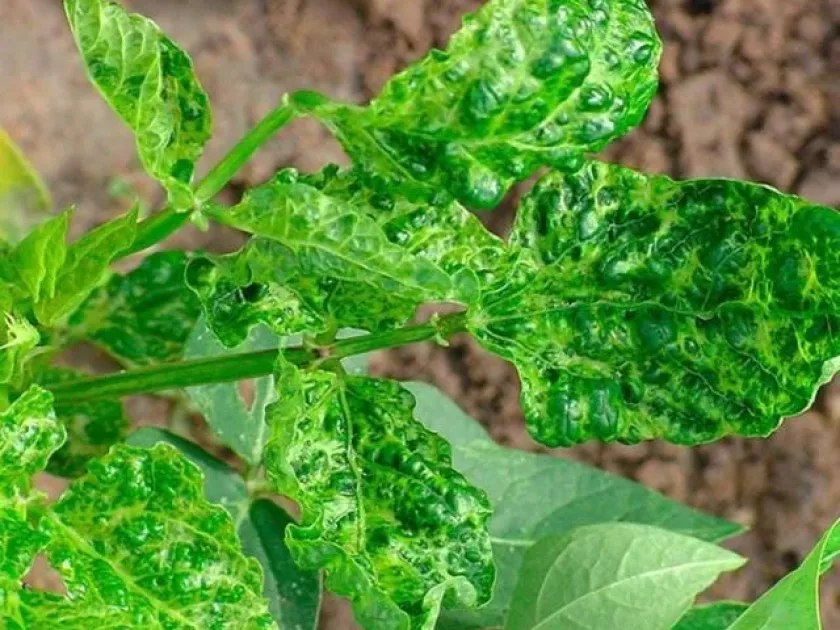
Initial infection manifests as a mosaic pattern on young foliage, characterized by alternating patches of light yellow and dark green discoloration on the leaves.
Leaf deformation is a hallmark sign of BYMV, with symptoms including puckering, leaf curling, and the narrowing of leaf blades into a shoestring-like appearance.
Systemic symptoms include the overall stunting of the plant, shortening of internodes, and a bushy appearance, which significantly weakens the plant's overall development.
Reproductive parts are frequently affected, resulting in flower drop, poor pod set, and the formation of distorted, mottled, or stunted pods that are often unmarketable.
In susceptible cultivars, severe infections may cause necrotic spots or streaks on leaves and stems, eventually leading to the premature yellowing and death of the plant tissue.
Control measures
Effective management requires a combination of cultural practices, focusing primarily on eliminating virus sources and controlling aphid vectors throughout the growing season.
Isolation is key: planting annual leguminous crops away from perennial sources like alfalfa or clover fields can significantly reduce the pressure of primary infections.
Chemical control of aphid populations using systemic insecticides can provide some protection, especially during the early stages of plant growth when the crop is most vulnerable.
- Planting certified virus-free seeds to ensure a clean start for the crop.
- Removing and destroying weeds around the field that act as virus reservoirs.
- Utilizing resistant or tolerant cultivars developed through plant breeding programs.
- Implementing strict sanitation protocols to prevent mechanical transmission via equipment.
Integrated pest management (IPM) strategies, which prioritize monitoring aphid populations and timely intervention, offer the most sustainable approach to mitigating the damage caused by BYMV.
Discussion
No discussions yet — be the first.