
Bean rugose mosaic virus
Bean rugose
Description
How to identify
Bean rugose mosaic virus (BRMV) is a significant plant pathogen belonging to the genus Comovirus within the family Secoviridae. It primarily affects legume crops, particularly in tropical and subtropical regions of the world.
The virus particle is isometric and contains a bipartite single-stranded RNA genome. BRMV is characterized by its transmission through beetle vectors, specifically species within the Chrysomelidae family, which is a major factor in its field spread.
Diagnosing BRMV can be challenging due to overlapping symptoms with other legume-infecting viruses. Precise identification usually requires laboratory diagnostic techniques such as ELISA (Enzyme-Linked Immunosorbent Assay) or RT-PCR to confirm the presence of the pathogen.
The virus is known for its ability to persist in alternative hosts, including common weeds found in agricultural environments, which acts as a bridge for the infection between cropping seasons.
Understanding the epidemiology of BRMV is essential, as the virus can also spread mechanically through infected sap or contaminated agricultural tools, though vector transmission remains the primary path for large-scale field outbreaks.
What it damages
The primary host for this virus is common bean (Phaseolus vulgaris). Infestation can lead to substantial reductions in crop yield, as the virus systemic spread hinders the plant's ability to develop healthy reproductive organs.
In addition to yield loss, BRMV infection significantly compromises the quality of the harvest. The beans produced by infected plants are often malformed, smaller in size, and have poor marketability.
The disease interferes with essential metabolic processes, including photosynthesis and nutrient translocation, resulting in weakened plant vigor and increased susceptibility to other biotic and abiotic stresses.
Economic consequences of BRMV outbreaks involve not only the direct loss of biomass and seed quality but also the increased operational costs associated with chemical control of the beetle vectors.
Fields with high infection rates often show uneven maturity, which disrupts harvest scheduling and increases processing costs at the post-harvest stage due to the need for grading out damaged or stunted beans.
Signs of infestation
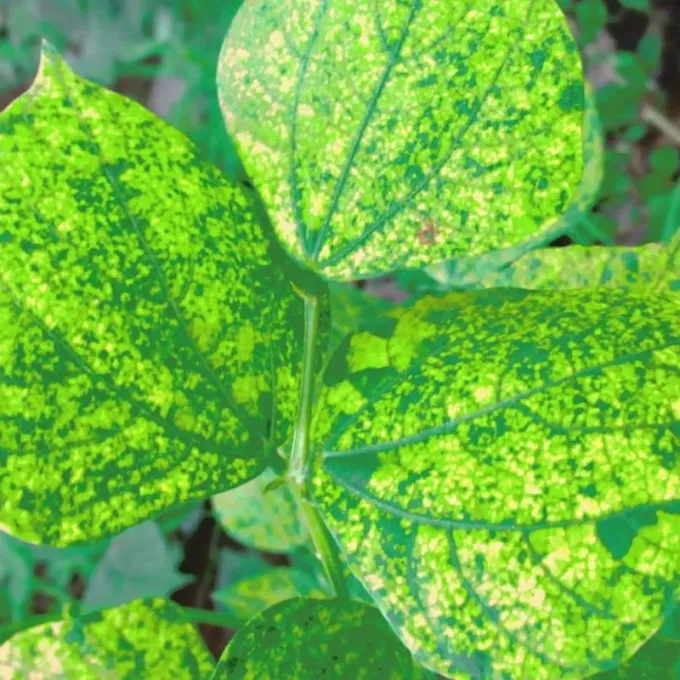
The hallmark symptom of this disease is the rugose appearance of the leaves. As the name suggests, leaves become crinkled, puckered, and severely deformed, significantly reducing their surface area.
Chlorotic mosaic patterns are typically observed on young leaves, characterized by a patchy distribution of light green and dark green tissue. This mosaic can lead to generalized yellowing as the disease advances.
Plants affected by BRMV often display symptoms of stunting and shortened internodes. This results in a bushy or stunted growth habit, which is easily visible when comparing infected plants to healthy ones in the field.
The reproductive structures, particularly the pods, are also affected. Infected plants often produce fewer pods, which are frequently twisted or stunted, leading to reduced seed weight and total yield per hectare.
In cases of severe infection, necrotic lesions may develop on leaves and stems, further damaging the structural integrity of the plant and limiting its capacity to recover after the initial infection phase.
Control measures
The most effective long-term strategy for managing BRMV is the utilization of genetically resistant or tolerant bean varieties. Breeders focus on these traits to provide farmers with a natural defense against the virus.
Integrated Pest Management (IPM) is crucial, focusing on the control of the beetle vectors. Timely application of insecticides can significantly reduce the vector population and thus slow down the virus dissemination across the field.
Cultural practices play a major role in disease mitigation. Keeping field borders free of weeds and volunteer legumes is essential to remove the virus reservoir sources.
- Use of virus-free, certified seed lots for planting.
- Implementation of crop rotation cycles to minimize pathogen accumulation in the soil.
- Strict spatial separation between new and older bean fields.
Early detection and rogueing—the removal and destruction of symptomatic plants—can help prevent the establishment of major infection foci within the field, especially if done shortly after the first symptoms appear.
Discussion
No discussions yet — be the first.