
Bean golden mosaic
Bean golden
Description
How to identify
Bean golden mosaic is caused by the Bean golden mosaic virus (BGMV), a member of the Begomovirus genus within the Geminiviridae family. It is a plant virus characterized by a single-stranded DNA genome.
The primary vector for BGMV is the silverleaf whitefly (Bemisia tabaci). The insect acquires the virus after feeding on infected tissues and remains a carrier for the duration of its life.
The virus colonizes the plant's phloem, which facilitates its rapid systemic spread throughout the entire host organism, interfering with essential nutrient transport.
BGMV is highly adaptable, allowing it to overcome various genetic resistance traits in different bean cultivars, posing a continuous challenge for plant breeders.
Diagnostic confirmation is typically achieved through laboratory assays such as PCR or ELISA, which identify the presence of specific viral DNA sequences within symptomatic plant leaves.
What it damages
The main agricultural host is common bean (Phaseolus vulgaris). The virus causes significant economic damage to bean production, particularly in tropical and subtropical regions.
Many wild legume species can act as alternative hosts, creating a reservoir for the virus and ensuring its survival in the environment between planting seasons.
Infection severely hinders plant development, resulting in stunted growth and a significant reduction in biomass production compared to healthy plants.
Reproductive failure is a major symptom, where infected plants produce fewer pods, and the seeds within are often malformed, undersized, or completely absent.
Severe outbreaks of golden mosaic can lead to near-total crop failure, rendering affected fields economically unproductive for the duration of the season.
Signs of infestation
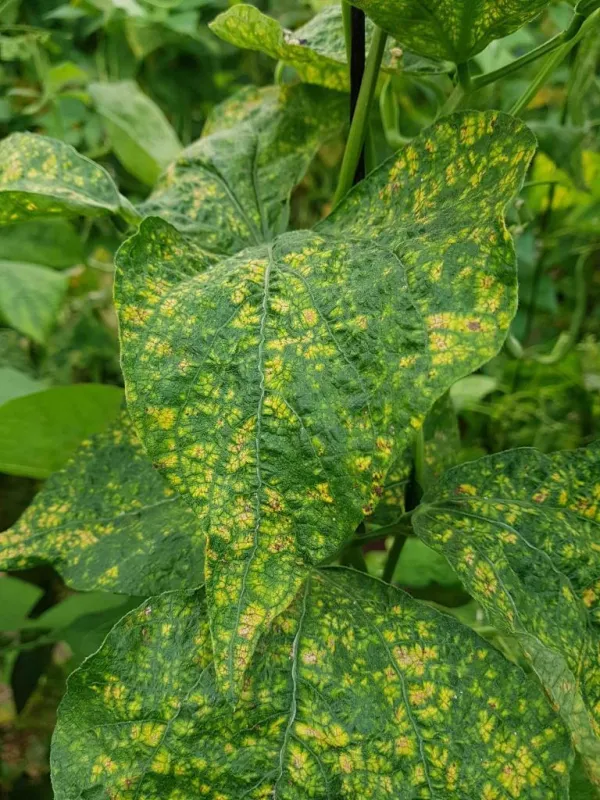
The hallmark symptoms include bright yellow or golden mosaic patterns that appear on the leaves. These patches often contrast sharply with the normal green tissue.
Leaves exhibit significant deformation, including crinkling, curling, and a reduction in surface area, which drastically reduces the plant's photosynthetic capacity.
Plants infected early in their growth cycle often display severe stunting, characterized by shortened internodes and a bushy, rosette-like appearance.
The disease expression is typically more pronounced under high light intensity and warm temperatures, which are optimal for the development and activity of the whitefly vector.
- Bright golden chlorotic mottle on foliage.
- Leaf distortion, crinkling, and curling.
- Significant plant stunting.
- Flower and pod drop.
- Poor quality and low yield of seeds.
Control measures
Integrated pest management (IPM) is essential, focusing primarily on controlling the whitefly population through the timely application of systemic insecticides.
Good agricultural practices, such as removing weeds that serve as reservoirs for the virus and avoiding planting new crops adjacent to infected areas, are crucial for prevention.
The development and deployment of resistant bean varieties remain the most sustainable and effective long-term strategy for managing the golden mosaic virus.
Adjusting planting dates to avoid periods of peak whitefly migration can reduce the probability of early-stage infection, protecting the plant during its most vulnerable phase.
Small-scale growers can utilize physical barriers, such as fine-mesh row covers, to protect vulnerable seedlings from whitefly colonization during the critical early growth stages.
Discussion
No discussions yet — be the first.