
Bean golden mosaic
Bean golden
Description
How to identify
Bean golden mosaic virus (BGMV) is a plant-pathogenic virus belonging to the genus Begomovirus within the family Geminiviridae.
The virus possesses a bipartite genome consisting of single-stranded DNA and is encapsulated within geminate (twinned) icosahedral particles.
As an obligate parasite, it relies entirely on the host plant for replication and on its vector for horizontal transmission between plants.
The primary vector responsible for the spread of this virus is the sweetpotato whitefly, Bemisia tabaci, which transmits the virus in a persistent circulative manner.
Genetic diversity among BGMV strains poses a significant challenge for plant breeders, as the virus can rapidly evolve to overcome plant resistance mechanisms.
What it damages
The primary host for this pathogen is the common bean (Phaseolus vulgaris), a staple crop of significant economic importance in tropical and subtropical zones.
The virus impacts the entire metabolic process of the host, leading to reduced photosynthetic activity and impaired accumulation of biomass in seeds.
Yield loss is directly proportional to the stage of infection; crops infected at the seedling stage often fail to produce any marketable harvest.
Beyond common beans, the virus can survive in a variety of weed hosts and alternative leguminous plants, ensuring its persistence in the environment.
The cumulative damage includes stunted plant growth, reduced pod count, and lower overall seed quality, which significantly affects agricultural exports.
When it appears
The incidence of the disease follows the population dynamics of the whitefly vector, which thrives in warm, humid climates.
Disease peaks typically occur during the main growing seasons when temperatures are consistently above 25°C, favoring both the virus and the insect vector.
Early-season infection is particularly devastating, as young plants are highly susceptible to damage and cannot recover their growth momentum.
The spread of the virus across a field occurs in patches, starting from entry points where infested whiteflies have landed on the crop.
During the off-season, the virus is maintained within reservoir weed populations or volunteer bean plants that survive in protected or warmer niches.
Signs of infestation
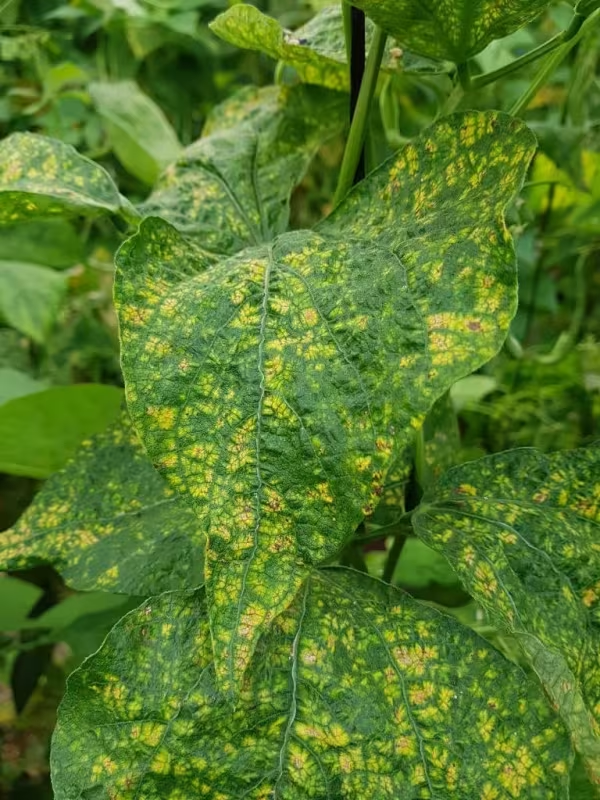
The disease is characterized by a bright yellow or golden mosaic pattern on the leaflets, which gives the virus its name.
Leaves often exhibit severe crinkling, cupping, or inward rolling, which interferes with their ability to capture sunlight efficiently.
Systemic stunting is a hallmark symptom, with infected plants appearing significantly smaller and more chlorotic compared to neighboring healthy plants.
Reproductive success is severely hampered, often resulting in flower abortion, poor pod set, and seeds that are shriveled or underdeveloped.
- Bright yellow/golden mottling and mosaic patterns
- Severe leaf deformation and crinkling
- General plant dwarfing and growth retardation
- Abortion of floral buds and failure to set pods
Control measures
Effective management requires an integrated approach focusing on vector control and the use of resistant germplasm.
Chemical applications of systemic insecticides are used early in the season to reduce whitefly populations and prevent the onset of viral spread.
Developing and planting resistant or tolerant bean varieties is the most sustainable and successful strategy for long-term disease management.
Rigorous sanitation measures, including the destruction of weeds and volunteer host plants, help to break the cycle of infection between growing seasons.
Adjusting planting dates to avoid the peak whitefly activity periods can significantly reduce the infection rate and safeguard crop development.
Discussion
No discussions yet — be the first.