
Basisporium gallarum
Basisporium gallarum
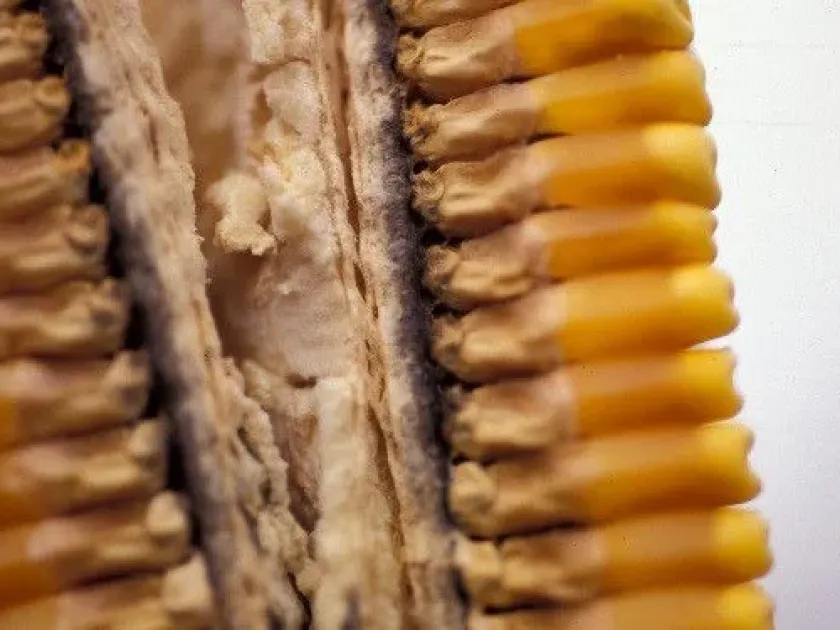
Description
How to identify
Basisporium gallarum belongs to the kingdom Fungi, phylum Ascomycota. It is a saprophytic and weakly parasitic fungus that most often manifests as a causative agent of seed molding and root rots.
The fungal mycelium develops within plant tissues, forming characteristic sporulation structures. For accurate identification in laboratory conditions, analysts examine the spores, which possess a specific shape and pigmentation that distinguishes this species from other members of the genus.
The fungus is capable of surviving in soil and on crop residues as mycelium or chlamydospores. This makes it highly resistant to adverse environmental conditions, including low temperatures and moisture scarcity.
In field conditions, identification is often complicated by the similarity of symptoms to other fungal diseases, such as Fusarium rot or Nigrospora ear rot. Phytosanitary expertise is required for species confirmation.
The development of the pathogen occurs in several stages, including spore germination, colonization of host tissues, and secondary sporulation, which ensures rapid infection spread to neighboring plants.
What it damages
The fungus causes the greatest damage to maize crops, infecting both ears and stems. Cases of infection in other cereal crops have also been recorded when plants have weakened immune systems.
The pathogen triggers stem base rot, which leads to plant lodging before harvest. This significantly complicates mechanical harvesting and increases grain losses in the fields.
Ear infection appears as a white or dark coating that destroys the kernels from the inside. The quality of seed material drops sharply, reducing germination rates and seedling vigor.
In cases of seedling infection, the plant often dies at the emergence stage, leading to sparse crop stands and the need for field reseeding.
Mycotoxins that may be produced by the fungus during development on ears make the produce unsuitable for use in livestock feed and the food industry.
When it appears
Primary infection occurs during the ear maturation period, especially when wet and warm weather prevails at the end of the growing season.
The temperature optimum for mycelial growth is between +20°C and +28°C. High relative humidity is a key factor for the mass spread of spores.
During the spring, the fungus activates in the soil, affecting sown seeds. Early plantings in cold and waterlogged soil are at the highest risk of primary infection.
Spore dissemination is carried out by wind, rain splashes, and insect pests. Injuries caused by pests (e.g., the European corn borer) serve as gateways for infection.
The pathogen spends its dormant period on crop residues; therefore, deep incorporation of post-harvest residues is important in the fall to limit the spread of the fungus in the next season.
Signs of infestation
Signs of infection include the appearance of a dark, almost black coating on the ear cob and at the base of the stem, which is a result of abundant fungal sporulation.
The leaves of infected plants may turn yellow and wither prematurely due to the blockage of vascular bundles by the fungal mycelium.
- Darkening of tissues in the root zone.
- Whitish or dark colored coating on grains.
- Softening of stem tissues and loss of elasticity.
- Premature stem lodging.
- Reduction in thousand-kernel weight in infected ears.
Control measures
The main method of control is the use of resistant maize hybrids capable of withstanding fungal penetration into plant tissues.
Agrotechnical practices, such as crop rotation, help reduce the soil infectious background. It is not recommended to return maize to the same field sooner than every 3-4 years.
High-quality seed treatment with broad-spectrum fungicides protects young seedlings from soil-borne infection during the critical growth period.
Control of insect pests that damage ears and stems significantly reduces the likelihood of Basisporium gallarum infection.
Post-harvest measures should include thorough shredding and incorporation of crop residues, as they serve as the primary source of infection persistence in the field.
Discussion
No discussions yet — be the first.