
Barley yellow dwarf
Barley yellow
Description
How to identify
Barley yellow dwarf (BYDV) is caused by a complex group of viruses belonging to the family Soleoviridae. It is recognized globally as one of the most destructive viral diseases affecting cereal crops.
The virus cannot be transmitted mechanically, through soil, or via seeds. Its primary vector is the aphid; over 20 species, including the bird cherry-oat aphid and the English grain aphid, are capable of transmitting the pathogen.
Once injected into the plant by an aphid, the virus moves through the phloem. It remains restricted to the phloem tissue, where it interferes with the translocation of photoassimilates, leading to metabolic disruption.
The virus complex includes several strains that exhibit different levels of specificity to aphid vectors, making it difficult to achieve universal resistance through breeding.
Diagnosis in the field is challenging because symptoms are often confused with nutritional deficiencies or drought stress. Laboratory techniques like ELISA are required for definitive identification.
What it damages
The virus attacks a wide range of monocots, including barley, wheat, oats, rye, and triticale. Wild grasses often act as a critical reservoir for both the virus and its aphid vectors.
Damage is most severe when plants are infected at the seedling or early tillering stages. Stunting of the entire plant is a hallmark feature, significantly reducing overall biomass.
Infected crops show a drastic reduction in tillering, ear size, and grain fill. Yield losses can be severe, with reports often exceeding 50% in heavily infested areas.
The quality of the harvested grain is significantly compromised; seeds become shriveled, and their germination rate and overall vigor are greatly reduced, affecting future planting potential.
In years with high aphid pressure, the virus can lead to widespread patchiness in fields, resulting in localized total crop failure if management measures are ignored.
When it appears
Autumn infection is the most critical phase for winter cereals. Migrating aphids landing on young seedlings spread the virus, which then persists in the plant during the winter months.
Spring activity of overwintering or newly arriving aphids accelerates the spread. Warm and moist conditions during the fall are particularly conducive to early virus establishment.
Mild winters allow aphid populations to survive and reproduce more effectively, ensuring a higher reservoir of the virus at the beginning of the spring growing season.
High summer temperatures may limit aphid activity, but the damage to plant physiology has already occurred, leading to stunted, low-yielding plants by harvest time.
The presence of a "green bridge"—weeds and volunteer crops left in the field—is essential for the virus to survive between harvest and the next planting season.
Signs of infestation
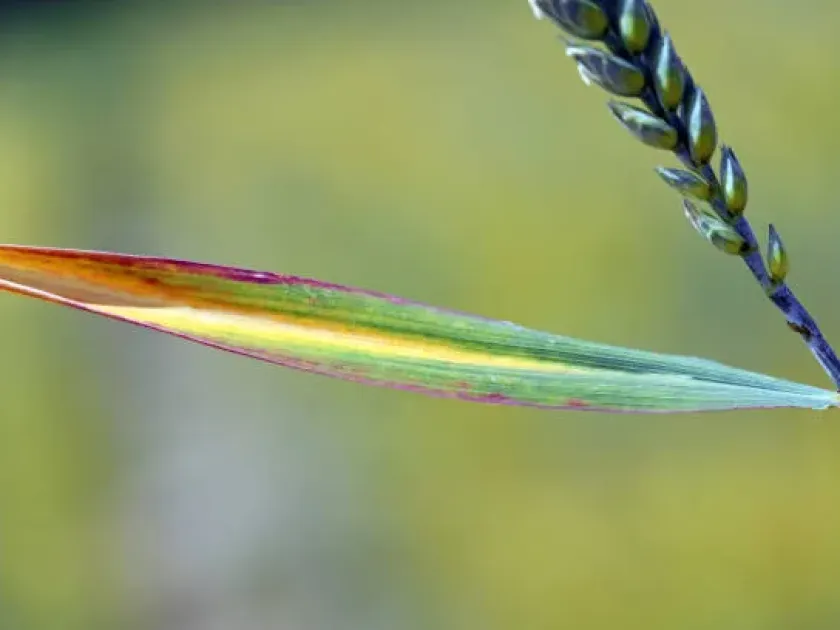
Early symptoms include yellowing or reddening of the leaves, typically starting from the tips and progressing towards the base. This chlorosis is often a sign of systemic viral interference.
Plants appear severely stunted and often exhibit excessive, unproductive tillering, giving them a bushy or rosetted appearance compared to healthy plants.
- Yellow or reddish discoloration of leaf tips and margins.
- Stunting and reduced height of the plant.
- Reduced root system development.
- Delayed or incomplete heading of the ear.
- Reduced grain set and development of shriveled seeds.
Symptoms are most visible during cool weather. Under high heat or stress, the coloration might be masked, but the stunting effect remains a reliable indicator of the disease.
Control measures
Integrated pest management (IPM) focuses primarily on controlling aphid populations. Timely application of insecticides in autumn can prevent primary infections in young crops.
Adjusting planting dates is a key strategy; delaying planting for winter crops can avoid the peak migratory flights of aphids, reducing the risk of early-season transmission.
Effective sanitation, including the destruction of volunteer cereals and weeds, is vital to eliminate the host plants that bridge the virus between seasons.
Breeding and planting tolerant or resistant cultivars is the most sustainable long-term strategy for managing BYDV and mitigating potential yield losses.
Monitoring aphid populations using yellow water traps allows farmers to make informed decisions about whether an insecticide application is necessary, optimizing resource use.
Discussion
No discussions yet — be the first.