
Barley stripe
Barley stripe
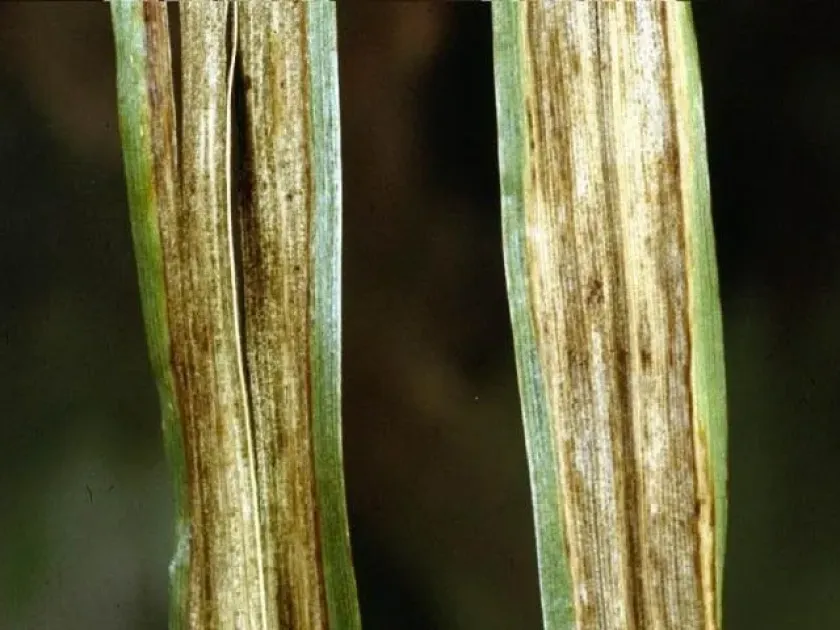
Description
How to identify
Barley stripe is caused by the fungus Drechslera graminea (teleomorph: Pyrenophora graminea). It is a major fungal pathogen that exclusively attacks barley crops, leading to significant physiological disruption.
The pathogen is primarily seed-borne, with the mycelium surviving in the seed coat or embryo. Upon germination, the fungus infects the seedling systemically, growing through the plant tissues alongside the developing stem.
Conidia produced on the infected leaves are dispersed by wind, rain splash, and insects to healthy barley spikes. This leads to the infection of the developing grain, which completes the disease cycle.
Environmental factors heavily influence the infection process. Cool and humid conditions, particularly temperatures between 10°C and 15°C during germination, provide the optimal environment for the fungus to establish itself.
The fungus is characterized by its systemic growth habit. Once the plant is colonized, the mycelium reaches the head, ensuring that the pathogen remains persistent in the subsequent generation of seeds.
What it damages
Symptoms of barley stripe include the appearance of long, narrow chlorotic stripes on the leaves. Over time, these stripes turn brown, and the leaf tissue begins to shred or fray, giving it a tattered appearance.
Infected plants are typically stunted and exhibit chlorosis. Severely diseased plants often fail to head, or if they do, the heads remain twisted and produce little or no viable grain.
The damage causes a severe reduction in photosynthesis, which directly impacts biomass production and grain filling. This results in significant yield losses and poor grain quality.
In commercial barley production, the disease can cause major financial losses. Grain from infected fields may also show reduced germination rates, impacting the next planting season's potential.
- Shredding of leaf blades.
- Stunting of plant growth.
- Development of sterile spikes.
- Reduced thousand-kernel weight.
Control measures
The primary control measure is the use of disease-free, certified seeds. Treating seeds with effective systemic fungicides is essential to eliminate the mycelium present on or within the seed.
Crop rotation is a vital agronomic practice. Avoid planting barley in the same field for at least three seasons to allow the inoculum in the soil to decrease significantly.
Optimizing planting dates is crucial. Sowing into warmer soil helps seedlings emerge quickly, allowing them to bypass the specific temperature window where the fungus is most aggressive.
Foliar fungicides may be applied during the early vegetative stages if disease pressure is high. Triazole and benzimidazole-based compounds are commonly used to suppress the spread of the pathogen.
Proper sanitation, including deep plowing to bury infected crop residues, reduces the primary inoculum source for the following season. This helps in managing the disease spread on a regional level.
Discussion
No discussions yet — be the first.