
Barley stripe mosaic virus
Barley mosaic
Description
How to identify
Barley stripe mosaic virus (BSMV) is a significant plant pathogen belonging to the genus Hordeivirus. It is widely recognized in agronomy as one of the few viruses that are efficiently transmitted through seeds.
The virus consists of rod-shaped particles of varying lengths. Unlike many other plant viruses, it does not rely on insect vectors for field-to-field transmission, which makes its spread more dependent on mechanical contact.
BSMV has a broad host range, infecting not only barley but also wheat, oats, and various wild grass species. Its ability to persist in seeds for multiple seasons is a major challenge for plant pathology.
Laboratory diagnosis is essential for confirming the presence of BSMV, typically utilizing techniques such as ELISA (Enzyme-Linked Immunosorbent Assay) or RT-PCR to identify the viral RNA.
Because the virus is seed-borne, it can systematically infect the entire plant, including the pollen and embryos, ensuring the virus is carried over to the next generation of crops.
What it damages
Barley is the primary host for BSMV, but the virus frequently causes economic damage in wheat and oat fields, leading to stunted plant growth and reduced vigor.
Infected plants show reduced tillering and are significantly less productive. The damage is cumulative, affecting both vegetative growth and the development of the reproductive organs.
Grain yield losses caused by the virus can range from 10% to over 50%, depending on the timing of the infection and the susceptibility of the specific cultivar planted.
Grain produced from infected plants is often shriveled and lightweight, making it unsuitable for commercial use or subsequent planting, which propagates the virus further.
Plants infected with the virus are also more susceptible to environmental stresses such as drought or secondary infections by fungal pathogens due to their weakened physiological state.
Signs of infestation
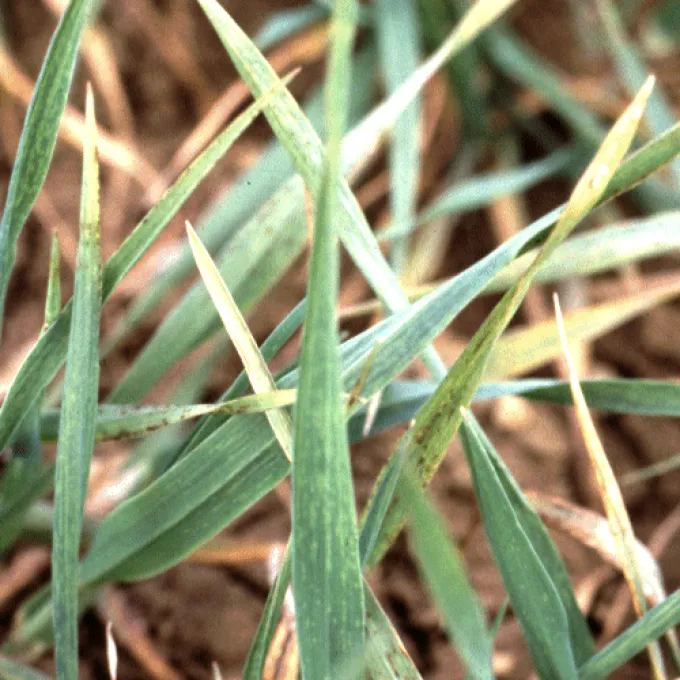
Symptoms of BSMV include pale green to yellow streaks or stripes that run parallel to the veins of the leaves, which is the most distinguishing characteristic of the disease.
In certain environmental conditions, these stripes can turn necrotic or brown, leading to premature yellowing and senescence of the foliage, especially on lower leaves.
Mosaic patterns might be clearly visible during the tillering and jointing stages. As the infection progresses, the leaves often display a mottled or striped appearance.
Reproductive symptoms are common, including the deformation of spikes or heads, delayed heading, and the production of sterile flowers, which directly results in poor seed set.
The disease often appears in patches in the field, which correlates with plants that grew from infected seeds, emphasizing the role of the seed lot in the initial spread of the virus.
Control measures
The primary control measure is the use of certified, virus-free seed lots. Testing seed stocks before planting is a fundamental practice in professional agricultural management.
Implementing strict crop rotation and weed control measures helps reduce the presence of alternative hosts, limiting the potential reservoir for the virus within the farm environment.
Developing and planting resistant cultivars is the most effective and sustainable strategy for mitigating BSMV impact, as no chemical treatments are available for viral infections.
Sanitation of agricultural equipment is crucial, as the virus can be spread mechanically through contact with sap from infected plants during harvesting or cultivation operations.
Regular field scouting and phytosanitary inspections are necessary to identify infected areas early, allowing for timely removal or isolation to prevent further contamination of the fields.
Causes diseases · 1
Discussion
No discussions yet — be the first.