
Barley mild mosaic virus
Barley mild
Description
How to identify
Barley mild mosaic virus (BaMMV) is a plant pathogenic virus belonging to the genus Bymovirus within the Potyviridae family. It consists of flexuous, filamentous particles containing a single-stranded RNA genome.
The virus is transmitted by an obligate, soil-borne, plasmodiophorid fungus called Polymyxa graminis. This vector stores the virus within its resting spores in the soil, where they can survive for many years.
Infection occurs when the fungus releases zoospores that invade the root hairs of germinating barley seedlings. Once the virus enters the root cells, it moves systemically throughout the entire plant via the vascular tissue.
The primary method of field-scale dissemination is the mechanical movement of virus-carrying soil. Farm machinery, contaminated footwear, and surface water runoff are common contributors to spreading the pathogen.
Unlike many other viral diseases, BaMMV is not seed-transmitted. The presence of the fungus vector in the soil is a prerequisite for the virus to initiate an infection cycle in a new crop.
What it damages
The virus primarily affects winter barley crops, causing significant physiological stress to the plants. It inhibits normal development and leads to stunted, weak plant growth.
Early infection during the autumn months is particularly damaging, as the virus has more time to systemicize throughout the developing plant before the onset of winter dormancy.
The disease causes a reduction in tiller number and overall plant biomass. These impacts manifest as thinning stands in the field, which leads to lower plant density and reduced competitive ability of the crop.
Yield loss is a primary concern, with severe infestations causing losses of up to 50% in grain production. The impact is felt through reduced kernel weight and quality.
Quality degradation often includes poor grain filling, which compromises the grain's industrial suitability, especially for the malting and brewing industry that requires high-quality barley.
When it appears
Infection happens primarily during the autumn season. Soil moisture and moderate temperatures provide the ideal environment for Polymyxa graminis zoospores to mobilize and locate roots.
Initial visual symptoms typically appear in early spring as soon as the barley plants resume active growth after the winter. The virus accelerates its systemic spread at this time.
Cool and wet spring conditions facilitate the progression of the disease. These weather patterns are conducive to the metabolic activity of the fungus vector in the soil.
The life cycle of the virus is closely synchronized with the cultivation schedule of winter cereals. Autumn planting creates a susceptible host at the precise moment the vector is active.
While symptom severity may plateau as the temperature increases in late spring, the damage caused by the virus is already established, irreversibly hindering the plant's maturation process.
Signs of infestation
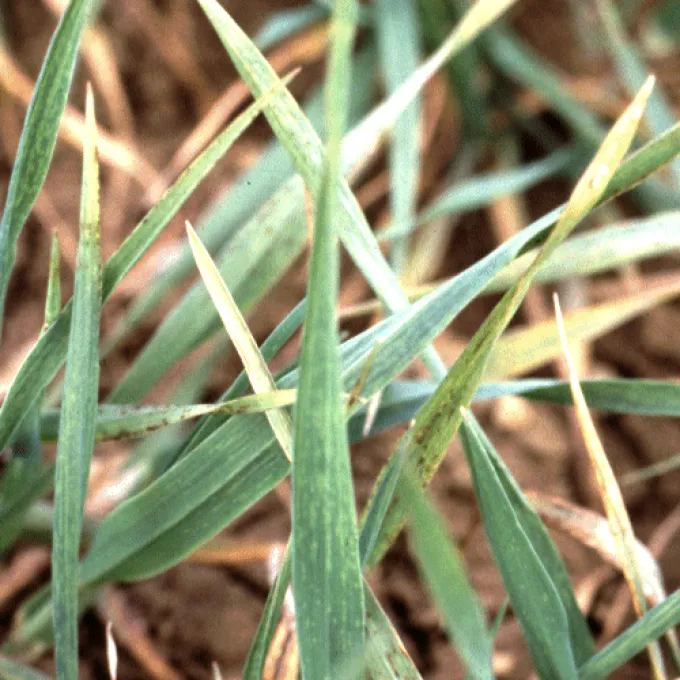
The most characteristic symptoms appear on the leaves in early spring as chlorotic spots, streaks, or mosaic patterns. The severity depends on the specific strain of the virus and the barley cultivar.
- Yellow or chlorotic stripes on leaf blades.
- Stunting of the entire plant, leading to a dwarf appearance.
- Reduced tiller development and overall plant height.
- Leaf curling or abnormal structural deformation.
- Patchy distribution within fields, reflecting areas with higher soil moisture.
Resistant cultivars may remain symptomless even if the virus is present in the tissue. This makes relying solely on visual inspection difficult for determining the true presence of the virus.
Patches of infected plants often coincide with low-lying areas or parts of the field where water drainage is poor, as these conditions favor the fungal vector.
Definitive diagnosis requires laboratory testing methods, such as Enzyme-Linked Immunosorbent Assay (ELISA) or Reverse Transcription Polymerase Chain Reaction (RT-PCR).
Control measures
The use of resistant barley varieties is the most effective and sustainable management strategy. Genetic resistance effectively prevents the virus from causing significant economic damage.
A strategic adjustment in planting dates can sometimes mitigate the risk. Delaying the sowing of winter barley may help avoid the peak activity period of the fungal vector.
Field sanitation is essential to limit the spread of the pathogen. Cleaning farm machinery thoroughly after working in infested fields prevents the movement of infected soil to healthy areas.
Crop rotation can be beneficial, although its effectiveness is limited by the long persistence of Polymyxa graminis resting spores in the soil, which can survive for decades.
Chemical control against the virus is not feasible. Furthermore, applying fungicides to control the fungal vector in the soil is generally ineffective and economically unviable due to the resilience of the resting spores.
Causes diseases · 1
Discussion
No discussions yet — be the first.