
Balansia oryzae
Balansia oryzae
Description
How to identify
Balansia oryzae is a pathogenic fungus belonging to the Kingdom Fungi, division Ascomycota, order Hypocreales. It is a highly specialized, obligate parasite that specifically infects rice plants.
The mycelium of the fungus penetrates deep into the host tissues, where it develops stromata that interfere with the development of the reproductive organs. This infection process is often cryptic in the early stages, making early detection difficult.
Morphologically, the fungus is identified by the presence of external sporulating structures that emerge from the infected plant parts. These structures are well-adapted to surviving and propagating in the warm, humid environments where rice is grown.
Taxonomically, it is closely related to other endophytic and parasitic fungi that target grass species. Understanding its phylogenetic position is essential for developing targeted fungicidal control methods.
Laboratory diagnosis typically involves microscopic examination of the infected tissues, where the characteristic fungal hyphae and conidial spores can be clearly distinguished from normal plant cells.
What it damages
The primary host of Balansia oryzae is rice (Oryza sativa). The fungus predominantly attacks the upper nodes and the panicles, causing severe disruption to the grain-filling process.
Infected panicles often fail to emerge properly from the leaf sheath, a condition known as panicle "choking." This prevents the flowers from opening and makes normal pollination and grain development impossible.
The pathogen can also affect wild grasses surrounding rice fields, which serve as alternate hosts. These reservoirs facilitate the persistence of the disease from one season to the next, threatening subsequent plantings.
Beyond the direct loss of grain, the fungus significantly weakens the metabolism of the rice plant. Infested fields often exhibit stunted growth and an overall reduction in biomass, which contributes to poor harvest quality.
Economic damage can be substantial, especially in regions with high humidity and frequent rainfall, which promote the rapid spread of the fungus throughout the paddy fields.
Signs of infestation
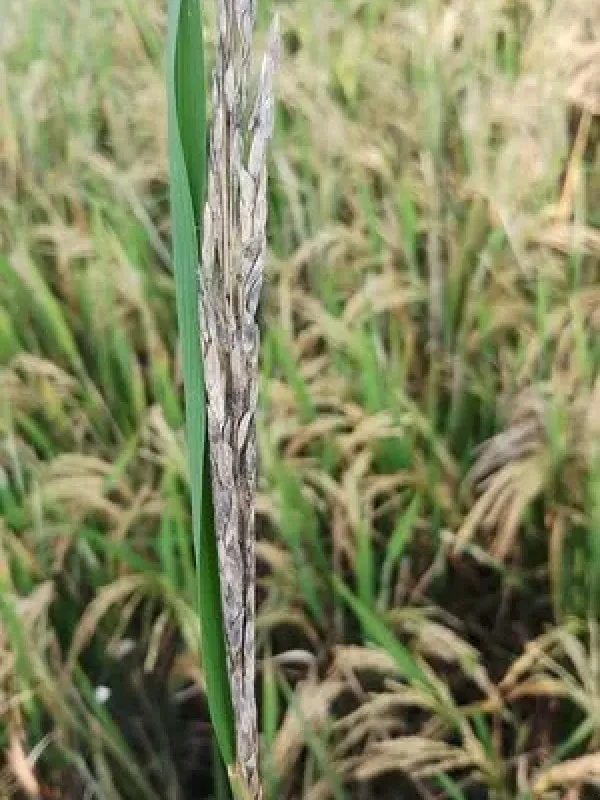
The most visible symptom of the infection is the formation of dense, hard stromata on the panicles and upper stem nodes. These structures typically appear as whitish or grayish crusts that replace the normal floral tissues.
Infected stems and panicles are often deformed, twisted, and show signs of hypertrophic tissue growth. The panicle remains hard and compact, failing to develop the typical branching appearance of healthy rice.
Upon cutting open the affected panicle, it is evident that no grain has developed, as the fungal mass has consumed the nutrients meant for kernel formation. This absence of grain is a key indicator of the disease.
Under humid conditions, the surface of the stromata produces an abundance of conidia. These spores are easily disseminated by wind and water splashes, leading to rapid secondary infections across the crop.
As the infection progresses, the affected areas become brittle and dry. The structural integrity of the plant is compromised, often leading to lodging or premature death of the infected tillers.
Control measures
The first line of defense is the use of disease-free, certified seeds. Seed treatment with systemic fungicides is crucial to eliminate the pathogen and prevent early-stage infection in the field.
Cultural control practices include crop rotation and the thorough removal of crop residues after harvest to reduce the fungal inoculum in the soil. Clearing ditches and field borders of wild grasses is also vital.
Chemical control is most effective when applied at the booting and pre-flowering stages. Timely application of broad-spectrum systemic fungicides can protect the developing panicles from fungal colonization.
- Regular monitoring of fields to identify early signs of infection.
- Management of irrigation to maintain optimal soil moisture levels.
- Balanced fertilization to avoid excessive nitrogen, which can increase plant susceptibility.
An integrated approach combining phytosanitary measures and fungicide applications is necessary to control the disease. Ongoing monitoring helps to contain local outbreaks before they become widespread epidemics.
Causes diseases · 1
Discussion
No discussions yet — be the first.