
Asteroma coryli
Asteroma coryli
Description
How to identify
The causative agent of the disease is the fungus Asteroma coryli (formerly known as Gloeosporium coryli), belonging to the class Dothideomycetes. It is a specialized phytopathogen that primarily affects plants of the Corylus genus.
The fungus leads a parasitic lifestyle, colonizing the leaf tissue of hazelnut trees. Its life cycle involves the formation of conidia, which act as the primary means of dispersal during the growing season.
Mycelial growth occurs within the epidermis and parenchyma, eventually leading to localized tissue necrosis. The pathogen produces small, dark fruiting bodies called pycnidia on the surface of the lesions.
The fungus overwinters primarily in infected fallen leaves as mycelium or pseudothecia. When environmental conditions improve in the spring, the pathogen releases spores to initiate primary infections on emerging leaves.
Development is highly dependent on humidity and temperature. Extended periods of rainfall combined with moderate temperatures create an ideal environment for spore germination and rapid disease spread.
What it damages
The main host for this pathogen is the hazelnut (Corylus avellana). Both wild groves and commercial hazelnut orchards can be impacted by the infection, leading to a decline in tree vitality.
The pathogen attacks the foliage, causing significant lesions. Heavy infection results in premature leaf drop, which disrupts the tree’s photosynthetic capacity during the most critical growth periods.
Reduced photosynthetic activity leads to poor accumulation of carbohydrates, which are essential for fruit development and storage. Consequently, infected trees often show reduced yields and smaller nut sizes.
The premature loss of leaves weakens the tree’s overall health and physiological readiness for winter. This increased susceptibility can result in winter damage to branches and buds in colder climates.
Economic losses are cumulative, arising from reduced nut quality, decreased harvest volumes, and the necessary expenditure for increased orchard maintenance and chemical intervention.
Signs of infestation
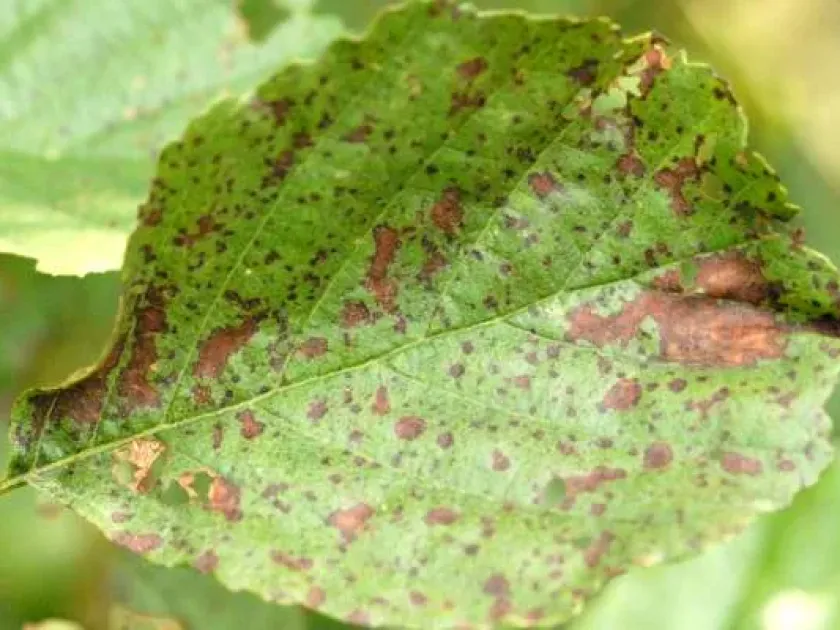
Early symptoms appear on the upper leaf surface as small yellowish spots. Over time, these spots enlarge and develop a darker brown or black coloration, often surrounded by a lighter halo.
The center of the lesions eventually hosts minute black dots, which are the pycnidia. The presence of these pycnidia is a definitive diagnostic feature of Asteroma coryli infection.
Under severe infection pressure, multiple lesions may coalesce, covering large portions of the leaf blade. This lead to leaf deformation, yellowing, and eventual curling of the foliage.
In advanced stages, veins may also become necrotic. The leaves may turn brittle and wither, mimicking the appearance of early autumn defoliation while still in mid-summer.
Diagnostic accuracy is improved by observing these symptoms alongside the specific pattern of necrosis, which differentiates this pathogen from other leaf spot diseases affecting hazel.
Control measures
Sanitation is the cornerstone of managing Asteroma coryli. Since the fungus overwinters in debris, raking up and destroying or deeply burying fallen leaves is essential to reduce the primary inoculum.
Pruning practices should focus on thinning the canopy to promote airflow and light penetration. A dry and airy environment is hostile to fungal spore germination and slows the development of the disease.
When the disease reaches thresholds that threaten crop quality, fungicidal sprays may be required. Applications should coincide with bud break and the periods of high humidity during the vegetative stage.
Nutritional management helps maintain tree vigor and resistance. Avoiding excessive nitrogen fertilizer prevents the development of overly succulent foliage, which is more susceptible to fungal attack.
- Removal and destruction of fallen leaves
- Orchard canopy thinning via pruning
- Fungicide applications during high-risk periods
- Maintenance of balanced nutrient programs
Causes diseases · 1
Discussion
No discussions yet — be the first.