
Asperisporium leaf spot
Asperisporium minutulum
Description
How to identify
The causal agent is the fungus Asperisporium minutulum, belonging to the kingdom Fungi and the class Dothideomycetes. It is a specialized pathogen that primarily targets specific plant tissues.
Taxonomically, the fungus is associated with the order Capnodiales. It functions as a parasitic organism, developing specialized structures for colonization and reproduction within host plants.
The fungal life cycle involves the production of conidial spores that serve as the primary means of dispersal. These spores can survive in unfavorable conditions on host remnants.
Microscopic analysis of the conidiophores is essential for accurate identification, as the pathogen can often be misdiagnosed as other common leaf-spotting fungi.
Dissemination typically occurs through wind currents and rain splashes, which facilitate the transport of conidia from infected leaves to healthy parts of the plant canopy.
What it damages
The primary hosts of Asperisporium minutulum are species within the Annonaceae family, most notably cherimoya (Annona cherimola). It causes significant damage to commercial plantations of these tropical fruits.
The pathogen infects leaves and young shoots, severely limiting the plant's photosynthetic capacity. This loss of foliage leads to a reduction in plant vigor and overall yield potential.
Severe infections result in premature defoliation, which weakens the tree and can lead to dieback of twigs. This physiological stress makes the plant more susceptible to other secondary pests.
Fruit damage manifests as necrotic spots that depreciate the aesthetic and market value of the crop. These spots can serve as entry points for rot-causing microorganisms, drastically reducing shelf life.
Economic losses are driven by both reduced fruit production and the costs associated with repeated fungicide applications required to maintain orchard health.
When it appears
Disease development is highly dependent on environmental conditions, specifically high humidity and moderate temperatures. It is most prevalent during rainy seasons.
Infection cycles are triggered when leaf surfaces remain wet for extended periods, allowing spores to germinate and penetrate the host tissue effectively.
The pathogen overwinters in infected leaf litter. As temperatures rise and moisture becomes available in the spring, the fungus resumes its cycle, producing fresh inoculum for new infections.
During dry periods, the fungus remains dormant, though it can still be found within latent infections on the plant. A shift back to humid weather conditions quickly accelerates the spread.
The rate of seasonal spread is heavily influenced by canopy density. Proper spacing and light penetration are critical to preventing a rapid buildup of the pathogen in the orchard environment.
Signs of infestation
The first symptoms appear as small, light-colored spots on the abaxial (underside) surface of the leaves. As the disease matures, these spots darken and become more necrotic.
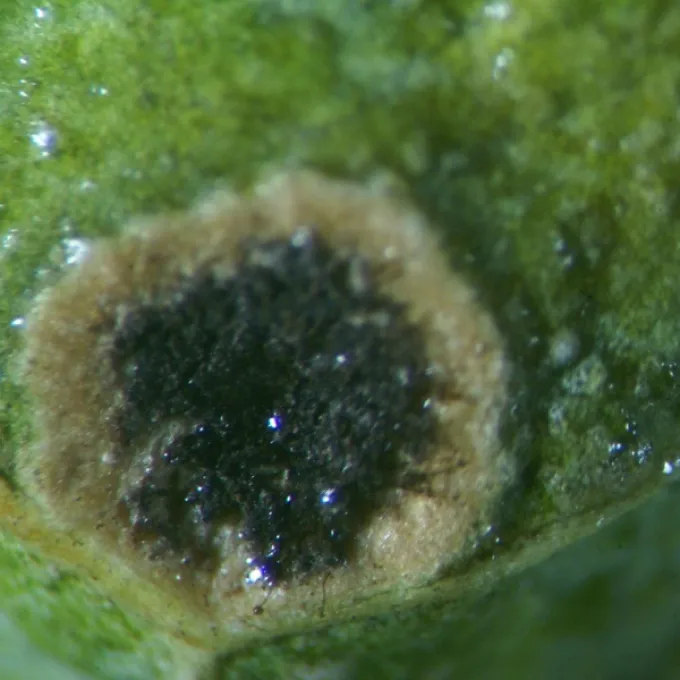
A characteristic olive-brown velvety growth, consisting of conidiophores and spores, emerges from the infected areas. This is a diagnostic sign of active sporulation.
As the infection progresses, individual spots coalesce to cover larger areas of the leaf blade, resulting in chlorosis, drying, and eventual leaf fall.
Fruit symptoms include dark, sunken, and sometimes cracked lesions on the skin. These lesions are highly indicative of the pathogen's presence on the fruit surface.
Affected trees often show signs of overall stunted growth, especially in young plants, due to the persistent loss of photosynthetic leaf area throughout the growing season.
Control measures
The foundation of control is strict orchard sanitation. Collecting and destroying all fallen leaves and infected twigs is necessary to reduce the primary inoculum load.
Pruning strategies should focus on increasing air circulation within the canopy to reduce humidity levels around the foliage, making the environment less favorable for the fungus.
- Apply copper-based fungicides as a preventative measure.
- Monitor the orchard closely during periods of high precipitation.
- Prune out heavily infected branches to minimize spore spread.
- Select resistant cultivars if available for new plantings.
- Ensure balanced fertilization to keep trees resilient against infection.
Chemical control programs often involve systemic fungicides applied at the onset of favorable conditions for the disease to prevent widespread outbreaks.
Rotating fungicides with different modes of action is vital to prevent the development of resistant fungal populations within the orchard ecosystem.
Causes diseases · 1
Discussion
No discussions yet — be the first.