
Papaya aspergillosis
Asperisporium caricae
Description
How to identify
Papaya aspergillosis is a fungal plant disease caused by the pathogen Asperisporium caricae. This fungus belongs to the class Dothideomycetes and is a specialized parasite that primarily attacks plants within the Caricaceae family.
The fungus propagates via conidia, which are efficiently spread by wind and rain splashing. Upon landing on a suitable host surface and in the presence of moisture, these spores germinate and infect the plant tissue through stomata.
The biological cycle is deeply dependent on environmental factors, particularly humidity. In optimal conditions, the fungus can produce several generations of spores, facilitating rapid spread across an orchard.
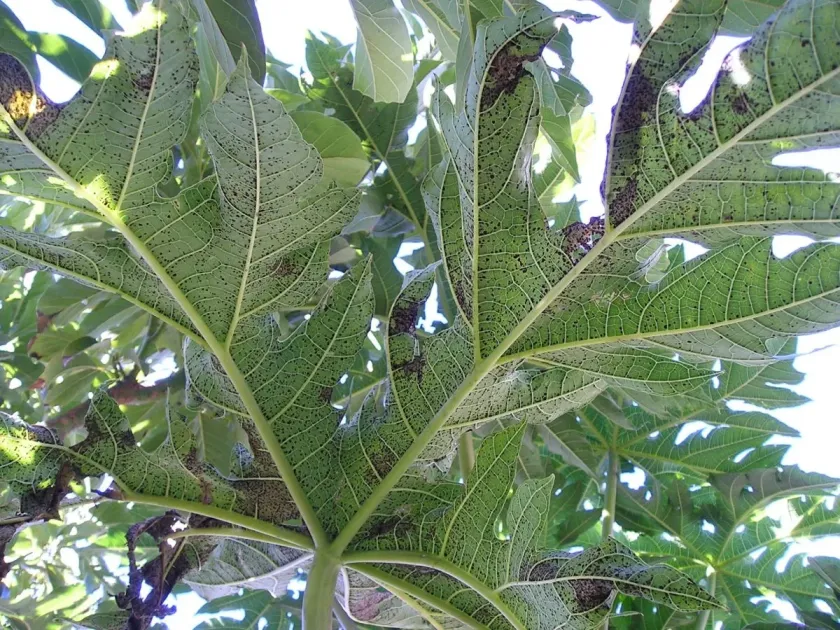
Identification often requires a combination of visual symptoms and microscopic verification. The presence of dark, velvety sporulation on the underside of the leaves is a hallmark of this specific fungal pathogen.
Understanding the life cycle is crucial for effective management. Because the fungus can persist on crop debris, sanitation remains the most critical non-chemical component of disease control.
What it damages
The primary host for this fungus is the papaya (Carica papaya). The infection can manifest on leaves, stems, and fruits, leading to a reduction in the overall vigor and yield of the tree.
Leaf infection is particularly damaging because it directly reduces the photosynthetic capacity of the plant. As infected leaves die prematurely, the tree struggles to accumulate enough energy to support fruit development.
Fruit damage manifests as dark, sunken lesions on the peel. While these lesions might not reach the edible flesh, they severely affect the commercial quality of the fruit, making it unsuitable for export markets.
Severe infestations can lead to heavy leaf drop, exposing the fruit to sunburn and further weakening the plant. This loss of canopy cover also affects the microclimate around the tree.
Economic impact is significant in papaya-producing regions where high humidity is frequent. The loss of produce and the added cost of fungicide applications increase the total production cost per hectare.
When it appears
The disease flourishes during periods of high humidity and rainfall. The ideal conditions for the fungus include temperatures ranging from 20°C to 28°C combined with extended leaf wetness.
In tropical climates, the disease is most prevalent during the rainy season or periods of high fog and dew. The water films on the foliage allow the conidia to germinate and penetrate the plant surface.
In drier periods, the activity of the pathogen significantly decreases. However, the fungus can survive in a dormant state within fallen debris or protected areas on the plant stems.
Orchards with poor drainage or insufficient spacing between trees are at a much higher risk, as they remain humid for longer durations after rain events, favoring fungal growth.
Proactive management based on weather monitoring is essential. Applying protective fungicides before expected prolonged rainy spells can prevent the initial establishment of the disease.
Signs of infestation
The initial signs of infection appear as small, chlorotic or yellow spots on the upper side of the leaves. As the disease develops, these spots turn into dark brown or black necrotic areas.
The underside of the leaf in the affected area displays a dark, olive-green to black velvety coating. This is a mass of fungal conidiophores and conidia and is the most reliable diagnostic feature.
As the infection progresses, the spots may coalesce, covering larger portions of the leaf blade. The tissues in the necrotic spots may become brittle, often resulting in small holes in the leaf surface.
Fruit symptoms are equally distinct, showing dark, circular, and slightly sunken spots. These lesions can be numerous, resulting in a mottled and unappealing appearance of the fruit surface.
- Yellow spots developing on the upper leaf surface.
- Velvety dark sporulation on the underside of leaves.
- Necrotic spots that turn dark brown or black over time.
- Sunken lesions appearing on young and mature fruits.
- Early leaf senescence and premature abscission.
Control measures
Integrated Pest Management (IPM) is the best strategy for controlling papaya aspergillosis. Sanitation is the first line of defense; removing and destroying infected leaves helps to reduce the inoculum level.
Providing adequate spacing between plants improves airflow, allowing the canopy to dry more quickly after rain or irrigation. This is an effective way to break the humidity cycle required by the fungus.
Chemical control involving copper-based fungicides or systemic fungicides (such as triazoles or strobilurins) is effective. Applications should be performed on a regular schedule during high-risk seasons.
Choosing resistant cultivars is the most sustainable approach to long-term disease control, reducing reliance on chemical inputs and protecting the profitability of the orchard.
Monitoring the plantation regularly for the first signs of disease allows for spot-treatment or targeted removal of infected materials, which can prevent a widespread epidemic from occurring.
Causes diseases · 1
Discussion
No discussions yet — be the first.