
Aspergillus versicolor
Aspergillus versicolor
Description
How to identify
Aspergillus versicolor belongs to the kingdom Fungi, phylum Ascomycota, and the genus Aspergillus. It is a filamentous fungus widely recognized for its high adaptability to diverse environments.
Morphologically, colonies of this fungus exhibit striking color variations, ranging from green and yellow to pink and brown, which is the reason for its specific name.
The mycelium grows rapidly on various substrates, forming a dense mat. Conidia (spores) are highly resistant to desiccation and fluctuations in environmental temperatures, allowing long-term survival.
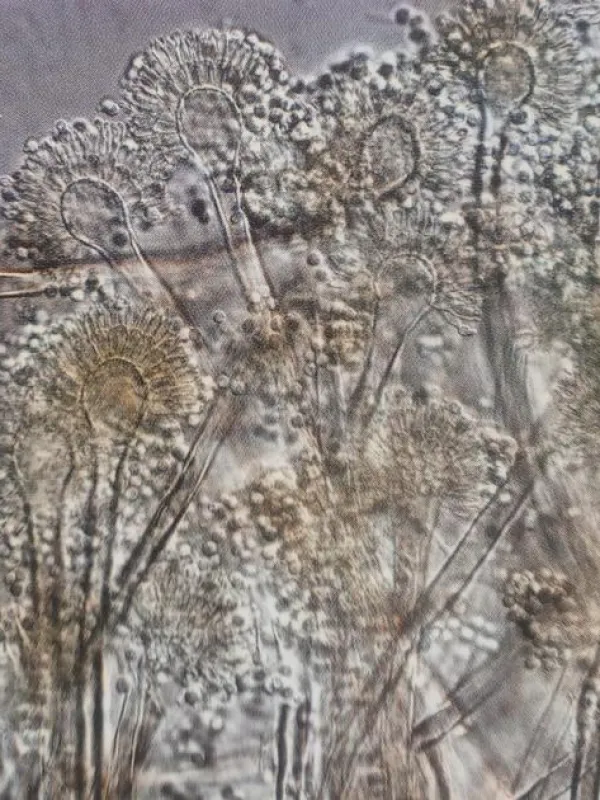
Laboratory identification relies on the microscopic examination of conidiophores, specifically the biseriate structure of the phialides arranged in a distinct pattern.
This fungus is well-known for producing secondary metabolites, including mycotoxins like sterigmatocystin, which pose a significant risk to food safety and livestock health.
What it damages
Aspergillus versicolor is primarily a post-harvest pathogen that infects a wide array of crops, including cereals, oilseeds, legumes, and various vegetables during storage.
In the field, it typically acts as a secondary invader, colonizing tissue that has already been damaged by other pests, diseases, or mechanical injuries.
The fungus causes significant losses in germination potential, making seeds unsuitable for planting. Its enzymatic activity degrades carbohydrates and proteins within the grain.
Contaminated grains lose their nutritional value and commercial grade, often becoming toxic due to the accumulation of mycotoxins produced during the metabolic process.
In storage facilities, the infection promotes grain heating, a self-sustaining process that significantly accelerates the spoilage of the entire grain mass.
When it appears
The fungus thrives when the substrate moisture content exceeds 15-18%. The post-harvest period is the most critical window for infection when drying is inefficient.
In storage environments, the pathogen can develop throughout the year if the temperature remains between +20 and +30 degrees Celsius and airflow is restricted.
In open fields, spore dispersal is most active during periods of high humidity and rainfall, especially as crops approach maturity and tissues soften.
Spore transmission is primarily via wind currents, allowing the fungus to spread quickly from contaminated fields or debris to fresh produce.
Soil serves as a permanent reservoir, where the fungus overwinters in the form of spores or mycelium on buried crop residues.
Signs of infestation
Early symptoms include a powdery growth on the grain surface, which starts light and gradually deepens into characteristic green, yellow, or brown shades.
Infected crops develop a distinct, musty, moldy odor that indicates an advanced state of fungal colonization. Grains may become brittle or discolored.
Clumping of seeds or grains is a classic sign, caused by the extensive network of fungal hyphae acting as a binder between individual particles.
Laboratory culture on standard media reveals rapidly growing colonies with a velvet-like texture and clear zonal differentiation in pigmentation.
Temperature monitoring in grain storage bins often shows localized "hot spots," which are reliable physical indicators of active microbial proliferation.
Control measures
The most effective strategy for control is the rapid cleaning and drying of harvested grain to a safe moisture level (typically below 14%) to inhibit fungal growth.
Strict maintenance of climate control in warehouses, including consistent aeration and humidity regulation, is essential to prevent pathogen colonization.
Seed treatment with systemic fungicides belonging to the triazole or benzimidazole classes helps protect seeds from soil-borne and seed-borne infections.
Agricultural practices such as crop rotation and the prompt incorporation of crop residues into the soil help to minimize the buildup of fungal inoculum.
Regular sanitation of harvesting machinery, storage bins, and transportation equipment is crucial to eliminate reservoirs of spores and prevent cross-contamination.
Discussion
No discussions yet — be the first.