
Aspergillus fumigatus
Aspergillus fumigatus
Description
How to identify
Aspergillus fumigatus is a member of the Fungi kingdom, belonging to the genus Aspergillus. It is a cosmopolitan, thermotolerant fungus found in soil, decomposing organic matter, and various agricultural environments.
The fungus is characterized by its rapid growth and the production of dense, gray-green to smoky-colored conidia. It thrives in temperatures ranging from 30°C to 55°C, which distinguishes it from many other common storage fungi.
As a potent producer of secondary metabolites, including the mycotoxin gliotoxin, it poses significant health risks to both plant tissues and animals that consume infected products.
In agronomy, it is identified as a secondary pathogen that colonizes seeds, grains, and fruits primarily during post-harvest storage and processing when conditions become suboptimal.
The life cycle is primarily asexual, relying on the mass production of airborne conidia that settle on substrates, germinating quickly under conditions of high humidity and heat.
What it damages
This fungus affects a wide range of crops, including wheat, corn, rice, and oilseeds. It is particularly notorious for causing severe damage to stored grain stocks worldwide.
The primary damage is the loss of seed viability and vigor, leading to poor germination rates. It degrades the nutritional components of the grain, including starch and protein, rendering the product unmarketable.
Infection results in the discoloration of the grain and the development of a musty odor. The presence of Aspergillus fumigatus is often associated with significant mycotoxin contamination, making the product unsuitable for food or feed.
In the field, it can affect corn ears that have been previously damaged by insects or environmental stress, accelerating the decay process and reducing yield quality.
Economic losses arise not only from the total spoilage of grain but also from the significant costs required to manage, remove, and safely dispose of contaminated batches.
When it appears
The risk of infection is highest during the post-harvest period and during storage. It specifically thrives in environments where grain temperature exceeds 30°C and humidity is consistently high.
During the growing season, it remains largely saprophytic in the soil. However, it can become active on plant tissues during late stages of maturation if the weather is hot and humid.
In storage facilities, the fungus is most active when hot spots develop within grain piles due to poor aeration, allowing the thermotolerant conidia to germinate and colonize large volumes of grain.
The fungus can persist in the soil for long periods as dormant spores, creating an inoculum pool that remains available for the subsequent cropping season under favorable temperature conditions.
Spring planting into soil with high organic residue and moisture can trigger the development of the fungus around the seeds, potentially reducing plant stand and vigor.
Signs of infestation
The visual presence of a fine, powdery, gray-green to smoky-colored mold on the surface of seeds or plant organs is the most common diagnostic sign of infestation.
Grain that is colonized often exhibits a dark, dull appearance compared to healthy seeds. When grain piles are inspected, a distinct, strong musty odor indicates active fungal growth.
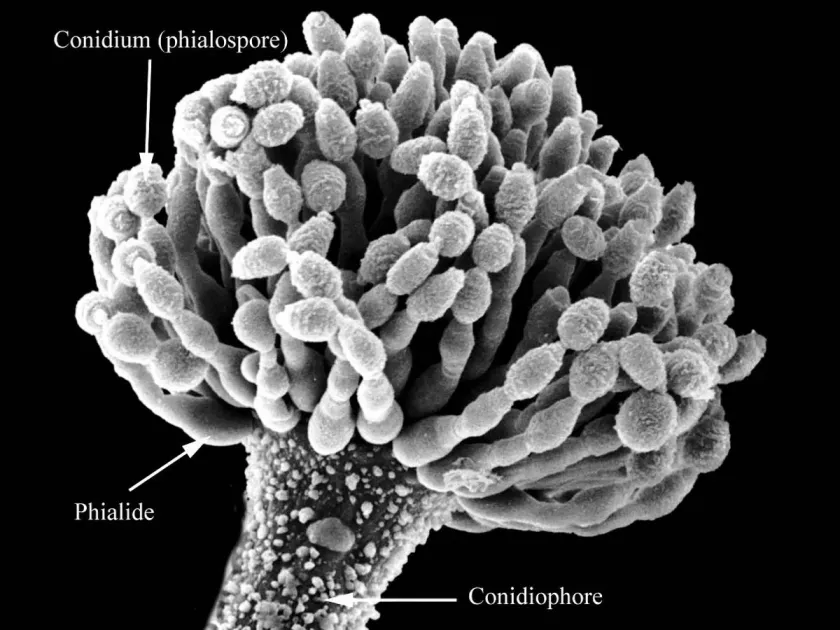
Microscopic examination reveals the characteristic conidial heads, which have a specific structure that differentiates this species from other Aspergillus or Penicillium species.
Seeds infected in the field may show softened tissues and necrotic areas that are covered by the characteristic fungal mycelium, often leading to total embryo destruction.
An increase in the temperature of the stored grain mass is a critical warning sign, signaling that biological activity and colonization by thermophilic fungi have begun.
Control measures
Effective moisture management is the primary control strategy; grain should be dried to below 14% moisture content to prevent fungal proliferation during storage.
Proper aeration and temperature monitoring systems in grain silos are essential to prevent the development of hot spots where thermotolerant fungi like A. fumigatus flourish.
Cleaning grain to remove fines, chaff, and damaged seeds is vital, as these impurities act as high-nutrient starting points for fungal colonization.
Seed treatment with broad-spectrum fungicides can protect the seeds during the early stages of germination in the soil, especially in cool or moist field conditions.
Regular sanitation of storage facilities, including cleaning conveyors, silos, and transportation equipment, is necessary to minimize the fungal load in the post-harvest environment.
Discussion
No discussions yet — be the first.