
Aspergillus alutaceus
Aspergillus alutaceus
Description
How to identify
Aspergillus alutaceus is a fungal species belonging to the genus Aspergillus. It is a common filamentous fungus known for its role as a significant decomposer and a potent producer of mycotoxins in various agricultural products.
The fungus produces dense colonies that typically exhibit an ochre or yellowish-brown pigmentation. These colonies are characterized by prolific conidial production, allowing for efficient dissemination via air currents.
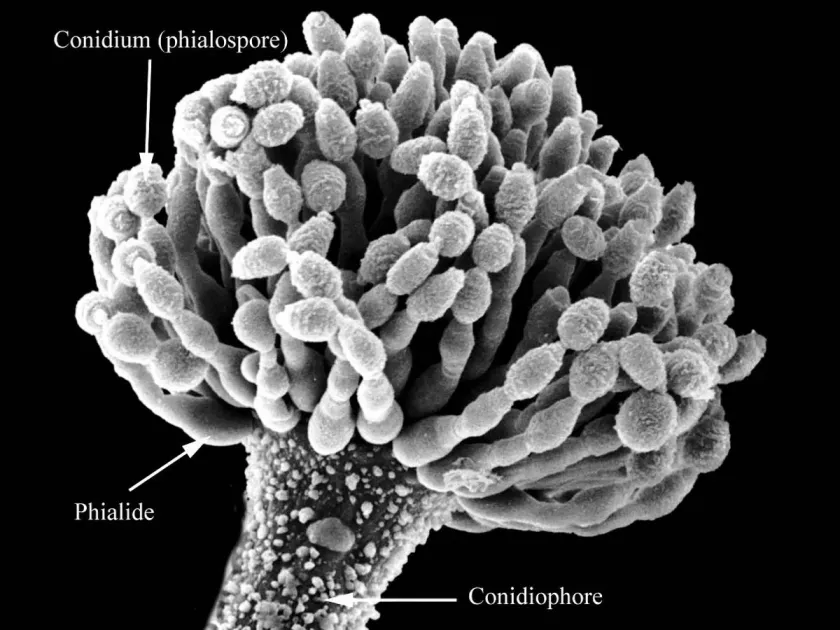
Identification is primarily achieved through morphological examination of conidiophores and conidia using microscopy. The species exhibits high metabolic versatility, enabling it to thrive on diverse substrates under varying conditions.
In laboratory settings, selective media are utilized to isolate the fungus from crop samples. The identification process is crucial due to the potential threat posed to food safety by its mycotoxin production.
As a saprophytic fungus that can turn pathogenic, it survives in the soil and on crop debris. Its ability to adapt to high-stress environments makes it a persistent challenge for agricultural systems worldwide.
What it damages
Aspergillus alutaceus primarily attacks cereal grains, including wheat, maize, rice, and barley. It is also frequently found contaminating oilseeds, legumes, and various processed animal feeds.
The fungus is particularly destructive during the post-harvest phase. It colonizes grains with high moisture content, leading to rapid deterioration of quality and significant losses in stored biomass.
Damage is not limited to physical degradation of the grain structure. The primary concern is the synthesis of ochratoxin A, a potent mycotoxin that poses severe health risks to both humans and livestock if ingested.
Grain affected by this fungus loses its germination viability, rendering it useless for seed stocks. Furthermore, the presence of fungal mycelium results in an unpleasant musty odor, making the product commercially unviable.
Economic damage is substantial, encompassing both the direct loss of grain and the high costs associated with decontamination, grain rejection, and public health impact from tainted food supply chains.
When it appears
The development of Aspergillus alutaceus is closely linked to environmental conditions during harvest and the subsequent storage season. Elevated moisture levels in the grain are the primary trigger for fungal growth.
The life cycle begins with spore germination on the substrate, followed by rapid hyphal expansion. Once established, the fungus produces secondary spores, which can re-infect nearby materials within the storage facility.
Dissemination often occurs via wind, agricultural machinery, and storage pests. Insects are particularly important as they create physical pathways for spores to penetrate deeper into the grain mass.
Although the fungus is active in warm and humid conditions, it can survive periods of dormancy during colder seasons. It resumes growth immediately once favorable temperature and moisture conditions return.
In grain silos, the accumulation of metabolic heat produced by the fungus can create a self-sustaining microenvironment, allowing the pathogen to spread even if the external climate is not ideal.
Signs of infestation
The initial visual sign of infection is the appearance of ochre or yellowish-brown dust-like mold on the grain surface. In early stages, this growth might be restricted to specific spots or damaged kernels.
Grain infected by Aspergillus alutaceus often develops a distinct musty or earthy smell. Affected kernels may lose their luster and exhibit discoloration, particularly around the germ region.
Internal heating of the grain bulk is a critical indicator of severe fungal infestation. Thermometer readings in storage facilities showing a steady rise in temperature suggest the development of a mold hotspot.
Laboratory confirmation involves culturing samples and conducting chromatographic analysis to detect the presence of associated mycotoxins like ochratoxin A.
Microscopic examination of the affected material reveals characteristic fruiting bodies of the fungus. Visual monitoring is often supplemented by moisture testing to identify lots at high risk of infestation.
Control measures
Effective moisture management is the most critical control measure. Ensuring grain moisture is kept well below levels conducive to fungal growth is essential for long-term storage safety.
Rigorous pre-storage cleaning to remove broken kernels and foreign material is necessary, as these impurities act as primary sites for infection. Storage facilities must be kept clean and sanitized.
Active aeration and ventilation systems are vital for maintaining uniform temperature and humidity within the grain silo, preventing moisture migration and condensation that could trigger mold growth.
Controlling stored-grain insect populations reduces the risk of physical damage to kernels, which significantly limits fungal penetration. In some cases, antifungal treatment of storage surfaces may be required.
Regular monitoring of stored lots for mycotoxin levels is mandatory. Any grain determined to be contaminated must be isolated to prevent its entry into the human or animal food supply chains.
Discussion
No discussions yet — be the first.