
Asparagus (as a phytopathogen)
Asparagus
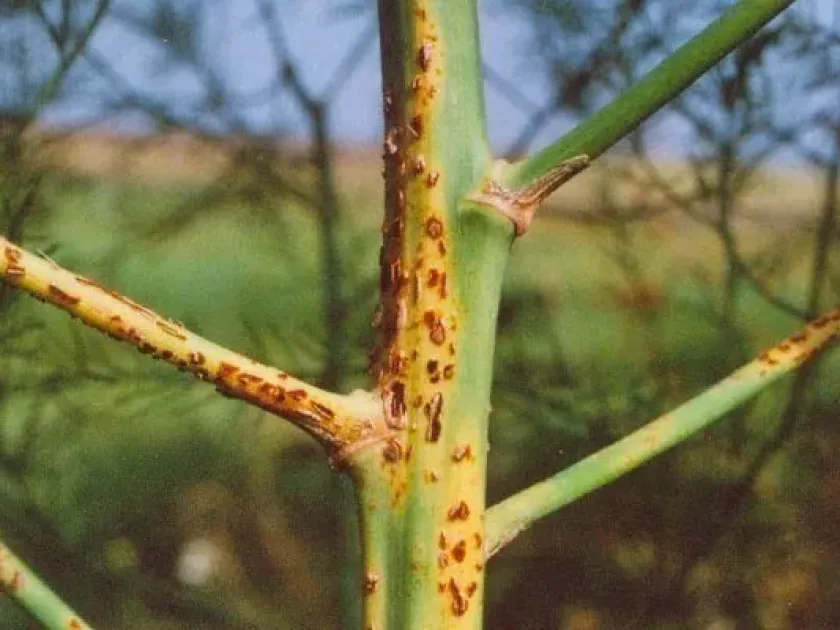
Description
How to identify
Asparagus (Asparagus officinalis) is a member of the Asparagaceae family. In agronomic practice, it is recognized as a host and reservoir for various phytopathogens, particularly fungi that cause systemic plant diseases.
The primary concern regarding asparagus in pathology is its ability to harbor Fusarium species. These fungi colonize the vascular system of the asparagus plant, remaining viable within the crown and root tissue for many years.
From a biological standpoint, the plant acts as a silent host. The pathogen does not necessarily kill the asparagus plant immediately but utilizes its root architecture to persist in the field environment.
Infection spreads through the movement of contaminated soil, irrigation water, and the presence of leftover root debris in the soil profile. It serves as a continuous source of inoculum for subsequent crops.
Identification of this pathogenic risk requires regular field scouting and laboratory screening of soil samples. Detecting the presence of fungal spores is crucial before deciding on the planting schedule for highly susceptible species.
What it damages
Asparagus poses a significant risk to various agricultural families, including Solanaceae and Cucurbitaceae. It facilitates the build-up of soil-borne pathogens that severely limit crop yield potential.
The pathogens transferred from asparagus fields cause severe vascular wilt and root rot in tomatoes, peppers, and beans. The disease leads to rapid plant decline and substantial harvest losses.
The interaction involves direct contact between the roots of susceptible crops and fungal hyphae present in the soil. This results in the infection of seedlings at a stage where they have limited defense capabilities.
Economic damage includes not only direct crop loss but also the long-term contamination of land. Once the pathogen is established in the soil, the field may become unsuitable for sensitive crops for several years.
Furthermore, asparagus roots can serve as a refuge for parasitic nematodes, which damage crop roots and create entry points for opportunistic fungal pathogens, leading to complex disease profiles.
When it appears
The pathogenic cycle is most active during the spring when soil temperatures rise to 15–18°C. This period marks the start of vegetative growth for asparagus and the simultaneous activation of fungal spores.
Throughout the summer, the fungal mass expands within the root system. Increased humidity and rainfall promote the spread of spores from the infected asparagus crowns to the surrounding soil area.
The peak of disease risk often follows heavy rainfall events, which facilitate the transport of pathogen propagules across the field. This movement frequently results in localized outbreaks in adjacent crop rows.
As the season ends and plants undergo senescence, the fungi enter a survival mode. They form chlamydospores, which are highly resilient structures capable of withstanding extreme cold and dry conditions during winter.
Development is continuous in the absence of intervention. Without careful management of the plant debris, the soil becomes a permanent reservoir for these pathogens, cycling between asparagus and subsequent crops.
Signs of infestation
Infected asparagus plants often show early signs such as yellowing of the cladodes, followed by premature browning and wilting of the stalks that does not recover after irrigation.
Root systems inspected at this stage typically exhibit brown or necrotic discoloration. Cross-sections of the crowns often reveal darkened vascular bundles, a classic sign of Fusarium colonization.
For neighboring crops, signs include sudden wilting of the lower foliage, which progresses rapidly. Plants lose turgor and fail to thrive, despite adequate fertilization and watering practices.
Internal examination of the stems of affected vegetables will reveal browning of the internal vascular tissue. This clearly indicates that the plant's supply system has been disrupted by the fungal pathogen.
A white or pinkish fungal mycelium might sometimes be visible at the crown or base of the plant. This is a clear warning sign of a high concentration of spores, indicating a significant risk for the entire field.
Control measures
Implementing a strict crop rotation schedule is the most effective management strategy. Avoid planting susceptible vegetable crops on land previously used for asparagus for at least 5 to 7 years.
Proper sanitation is essential. All asparagus plant residues, including root systems, should be removed and destroyed by burning or intensive composting to minimize the carry-over of pathogens.
Chemical control involving systemic soil fungicides may be necessary in high-risk areas. Biological control, specifically using beneficial fungi like Trichoderma harzianum, can help suppress the pathogen population.
Monitoring is vital; immediate removal of plants showing symptoms of wilt can help reduce the localized inoculum density. Always disinfect tools that have come into contact with soil from high-risk fields.
- Select disease-resistant cultivars for subsequent vegetable plantings.
- Ensure efficient soil drainage to prevent spore movement via runoff.
- Apply balanced fertilization to strengthen the natural defenses of the crops.
- Use certified healthy seeds or transplants to avoid introducing new infections.
Discussion
No discussions yet — be the first.