
Ascochyta leaf spot of sorghum
Ascochyta sorghi
Description
How to identify
The causal agent of this disease is the fungus Ascochyta sorghi, which belongs to the order Sphaeropsidales. This pathogen is a facultative parasite that persists in soil and crop debris as pycnidia, which serve as the primary inoculum for the next season.
Taxonomically, the fungus is classified under the kingdom Fungi, phylum Ascomycota (in its sexual state). It is specifically adapted to infect the sorghum genus, relying on moisture-mediated dispersal of spores.
What it damages
The pathogen infects various sorghum cultivars, including grain sorghum, forage sorghum, and sudangrass. It primarily targets the foliage, significantly reducing the green leaf area available for photosynthesis.
Reduced photosynthetic activity negatively impacts biomass production, sugar accumulation in stalks, and final grain yield. Under severe infestation, the disease can lead to significant quantitative and qualitative losses in harvest.
When it appears
Disease development is highly dependent on environmental conditions, particularly high humidity and moderate temperatures. The fungus typically emerges during wet periods of the growing season when spores can be splashed onto leaves by rain.
Optimal conditions for pathogen activity include temperatures ranging from +20°C to +25°C. Prolonged dew or frequent rainfall cycles accelerate the spread of pycnospores, leading to potential outbreaks in dense crop stands.
Signs of infestation
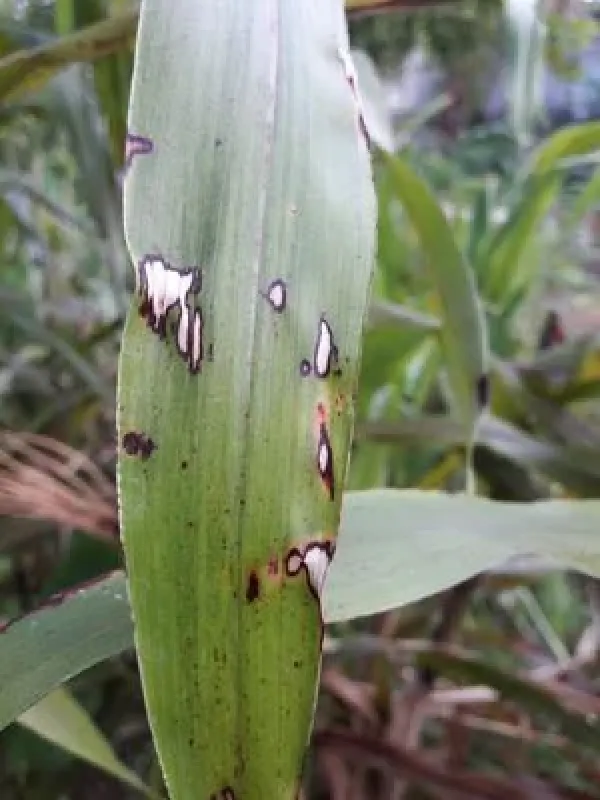
Initial signs include the appearance of small, irregular to circular spots on leaf blades. These spots are initially brown and may feature a distinct dark margin with a lighter, straw-colored center as they age.
Small black fruiting bodies, known as pycnidia, eventually develop within the necrotic spots, which is a diagnostic feature. Heavy infection results in lesion coalescing, leaf blight, and premature defoliation of the plant.
Control measures
Management strategies focus on cultural practices, including crop rotation and the destruction of infected plant debris through deep plowing. Using high-quality, fungicide-treated seeds is crucial for preventing seedling blight.
Foliar fungicides may be applied during the early stages of disease development to curb widespread infection. Utilizing resistant sorghum varieties is considered the most sustainable and efficient approach for long-term disease control.
Causes diseases · 1
Discussion
No discussions yet — be the first.