
Ascochyta blight of pea
Ascochyta pisi
Description
How to identify
Ascochyta blight of pea is caused by the fungus Ascochyta pisi, which belongs to the class Coelomycetes. It is one of the most common and damaging diseases affecting pea crops globally.
The fungus survives primarily as pycnidia and mycelium in infected crop debris left in the field and within contaminated seed coats. It can persist in the soil for several years under favorable conditions.
During the growing season, the disease spreads through conidia, which are splashed by rain or moved by wind onto healthy plant tissue. High humidity and temperatures between 20°C and 25°C facilitate rapid infection.
The disease cycle can repeat several times during a single season if environmental conditions remain moist. Even a short period of heavy rain is enough to trigger a widespread outbreak in a field.
The pathogen is highly specialized and can affect various pea cultivars, often causing significant stress to plants that are already struggling with other environmental factors.
What it damages
This pathogen attacks all aerial parts of the pea plant, including stems, foliage, pods, and seeds. The damage leads to stunted growth, leaf senescence, and reduced overall plant vitality.
Seedlings derived from infected seeds often suffer from pre-emergence or post-emergence damping-off, which causes thin, patchy stands and necessitates costly reseeding.
When the disease impacts pods, the fungus invades the developing seeds. This not only reduces the nutritional value and yield weight but also renders the harvested seed unsuitable for future planting.
Yield losses can range from 20% to over 50% in severe cases, depending on the time of infection and the weather conditions during the pod-filling stage.
The reduction in green leaf area due to necrosis significantly lowers photosynthetic capacity, preventing the plant from reaching its full potential in grain development.
Signs of infestation
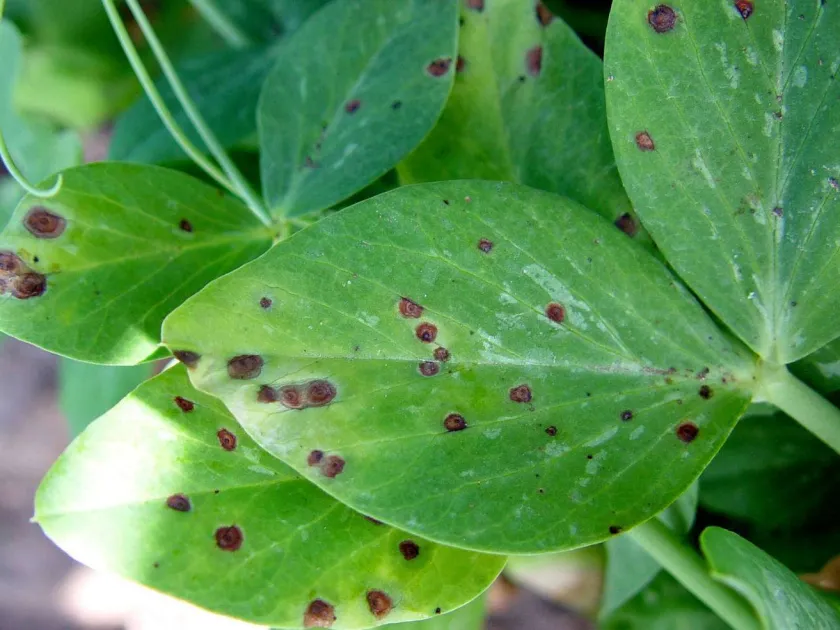
Typical symptoms include small, circular, tan-colored lesions with distinct dark brown borders on leaves and stipules. These spots often coalesce, covering large parts of the leaf surface.
On stems, lesions are usually elongated and may be sunken. In moist conditions, these spots may develop small, black, pinhead-sized pycnidia in the center of the necrotic area.
Pods show characteristic sunken, dark lesions that may eventually turn into a greyish-brown rot. During wet weather, pinkish-white spores ooze from the pycnidia present on the pod surface.
Infected seedlings often display dark, necrotic lesions at the base of the stem near the soil line, which can lead to the wilting and death of the young plant.
In the field, severe infection manifests as a general brownish appearance of the canopy, followed by premature lodging and the shriveling of seed pods.
Control measures
The most important control strategy is the use of disease-free certified seeds. Seed treatment with systemic fungicides is highly recommended to eliminate seed-borne pathogens.
Crop rotation is essential; peas should not be planted in the same field for at least 3–4 years to allow for the natural degradation of infected crop residues in the soil.
Good field sanitation, including deep plowing after harvest to bury stubble, reduces the primary inoculum source for the following season significantly.
Foliar application of fungicides during the growing season is necessary if weather conditions are conducive to the spread of the fungus, particularly before the pod-setting stage.
Selecting resistant or tolerant pea varieties is a sustainable approach to managing Ascochyta blight, reducing the reliance on chemical control methods while maintaining yield stability.
Causes diseases · 1
Discussion
No discussions yet — be the first.