
Pea ascochyta blight
Ascochyta pinodella
Description
How to identify
Pea ascochyta blight is caused by the fungus Ascochyta pinodella, a pathogen that affects various legumes. It is classified under the kingdom Fungi and is known for its ability to persist in soil for several years.
The fungus produces pycnidia, which are small, flask-shaped fruiting bodies that contain pycnidiospores. These spores are released during wet weather and serve as the primary source of infection.
Ascochyta pinodella is highly adapted to temperate climates and survives as chlamydospores in soil or as mycelium in infected plant debris and seeds.
The pathogen is taxonomically categorized in the order Sphaeropsidales, reflecting its morphological characteristics of producing spores within enclosed structures.
Accurate identification in the field relies on the presence of distinct zonated lesions on stems and leaves, which are diagnostic indicators of this fungal infection.
What it damages
The primary hosts are field peas, vetch, and lentils. This pathogen severely impacts crop stands, often leading to reduced plant density and poor overall development.
Root and collar rot are the most devastating forms of the disease, causing seedlings to wilt and die before or shortly after emergence, leading to uneven field stands.
Infection of the pods and seeds significantly degrades seed quality, reducing germination rates and overall market value of the harvested pulse crop.
The reduction in photosynthetic area due to leaf lesions limits the plant's ability to produce biomass, resulting in lower yields of seeds and reduced protein content.
Severe infestations can lead to significant economic losses, especially when weather conditions favor rapid fungal spread during the vegetative growth phase.
When it appears
The disease cycle begins when contaminated seeds are sown or when spores from the soil are splashed onto young plants by rain or irrigation water.
Optimal environmental conditions for infection include temperatures between 15°C and 25°C and high relative humidity, which facilitate spore germination and growth.
The pathogen spreads most rapidly during periods of frequent rainfall and moderate heat, which allow for multiple cycles of secondary infection throughout the growing season.
In fields where peas are grown in short rotations, the concentration of spores in the soil reaches levels that make early-season outbreaks almost inevitable.
As the plant progresses toward maturity, the infection can move upward, affecting upper leaves and pods, especially if the canopy remains humid for extended periods.
Signs of infestation
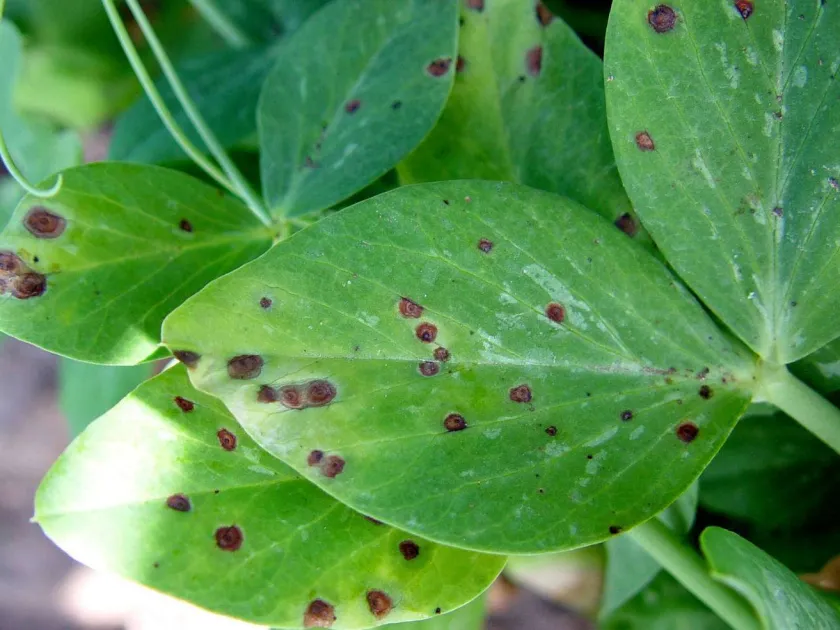
Symptoms appear as dark brown or purplish-brown spots on stems, leaves, and pods, which are often circular but can expand to cover large areas of the plant.
At the base of the stem, the fungus causes black, necrotic lesions that can lead to collar rot, a condition where the stem decays and the plant collapses.
Tiny, black, pinhead-sized pycnidia are visible within the necrotic lesions, often arranged in concentric circles as the tissue dies.
Defoliation is common in severely infected plants, starting from the lower canopy and progressing upward, severely reducing the plant's metabolic capacity.
- Zonated necrotic leaf spots
- Stem girdling and collar rot
- Black pycnidia on infected tissues
- Shrivelled and spotted seeds
- Premature wilting and plant death
Control measures
The most important control measure is a long crop rotation (at least 4 years) to reduce the fungal inoculum density within the soil profile.
Using certified, disease-free seed and applying appropriate seed treatments can prevent early-season infection and ensure successful germination.
Field hygiene is essential; deep plowing can help bury crop residues, which encourages the breakdown of infected plant material by soil microflora.
Fungicide application during the early flowering stages can mitigate the spread of spores, particularly in regions prone to high humidity and frequent rainfall.
Selecting resistant or tolerant pea varieties is a sustainable approach to managing ascochyta blight and reducing reliance on chemical crop protection products.
Causes diseases · 1
Discussion
No discussions yet — be the first.