
Ascochyta leaf spot of walnut
Ascochyta juglandis
Description
How to identify
The disease is caused by the fungus Ascochyta juglandis, which belongs to the kingdom Fungi and the division Ascomycota. It is a specialized pathogen that primarily targets walnut trees.
The fungus overwinters as pycnidia or mycelium in fallen leaves and on infected twigs. When conditions turn favorable in spring, the pycnidia release spores that are spread by splashing rain and wind.
High humidity and moderate temperatures are the most critical factors for the rapid development of the disease. Infections are frequently observed after prolonged rainy periods during the growing season.
The pathogen enters the host plant through stomata or physical wounds on the leaf surface. Once inside, it spreads intercellularly, consuming nutrients and causing tissue necrosis.
Several generations of conidia can be produced during a single growing season, leading to rapid disease progression within the canopy and spread to nearby trees.
What it damages
The primary impact of the disease is the development of leaf spots, which lead to premature defoliation. This reduces the tree's photosynthetic capability and disrupts energy storage for the following season.
In cases of severe infection, young green shoots are also affected. This stunts the growth of young walnut saplings and significantly lowers their vigor.
Premature leaf drop weakens the overall health of the tree, making it significantly more susceptible to winter frost damage and other environmental stressors.
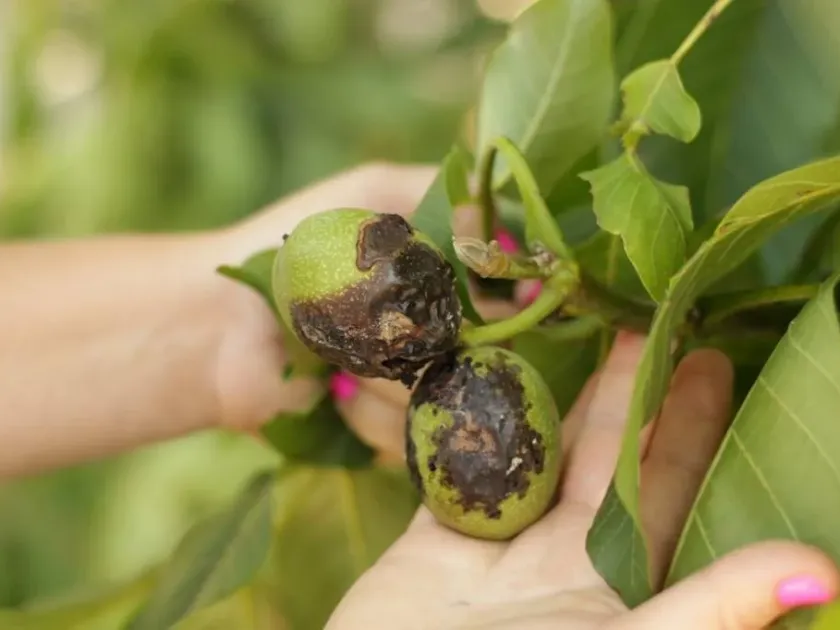
While fruit infection is less common, the fungus can attack the husk, resulting in necrotic spots that negatively affect the quality and marketability of the harvested nuts.
Chronic infestation decreases the overall longevity of an orchard, as repeatedly weakened trees become targets for secondary pests and opportunistic woody pathogens.
Signs of infestation
Symptoms initially appear as small brown spots on the leaves. As the lesions expand, they often take on an irregular or circular shape with a yellowish halo around them.
A diagnostic feature is the center of the spot, which becomes pale gray or ash-colored, contrasting sharply with the dark, necrotic border of the lesion.
Small, dark, pinhead-sized spots visible on the surface of the lesions are the pycnidia, which are the fungal structures responsible for releasing new spores.
Infected shoots exhibit elongated, sunken brown spots, which can lead to bark cracking. Under high humidity, these spots may show signs of fungal spore mass.
Extensive infections cause leaves to curl, wither, and drop prematurely, resulting in a sparse canopy that is easily recognizable compared to healthy trees.
Control measures
Good sanitation is the cornerstone of management. Removing and destroying all fallen leaves in autumn is crucial to reduce the primary inoculum load for the next season.
Pruning out infected branches and twigs helps maintain orchard hygiene. All pruning tools should be disinfected to prevent the spread of the pathogen between trees.
Preventive fungicide sprays, particularly copper-based products, should be applied during the early stages of bud break and throughout the spring to protect new growth.
If the infection occurs during the summer, systemic fungicides may be required to curb the growth of the fungus within the leaf tissue.
- Provide adequate spacing between trees to improve airflow and reduce canopy humidity.
- Avoid overhead irrigation that keeps the leaf surface wet for long periods.
- Maintain optimal tree vigor through balanced fertilization and stress reduction.
Causes diseases · 1
Discussion
No discussions yet — be the first.